Sagrada Família (Barcelona, part 1)
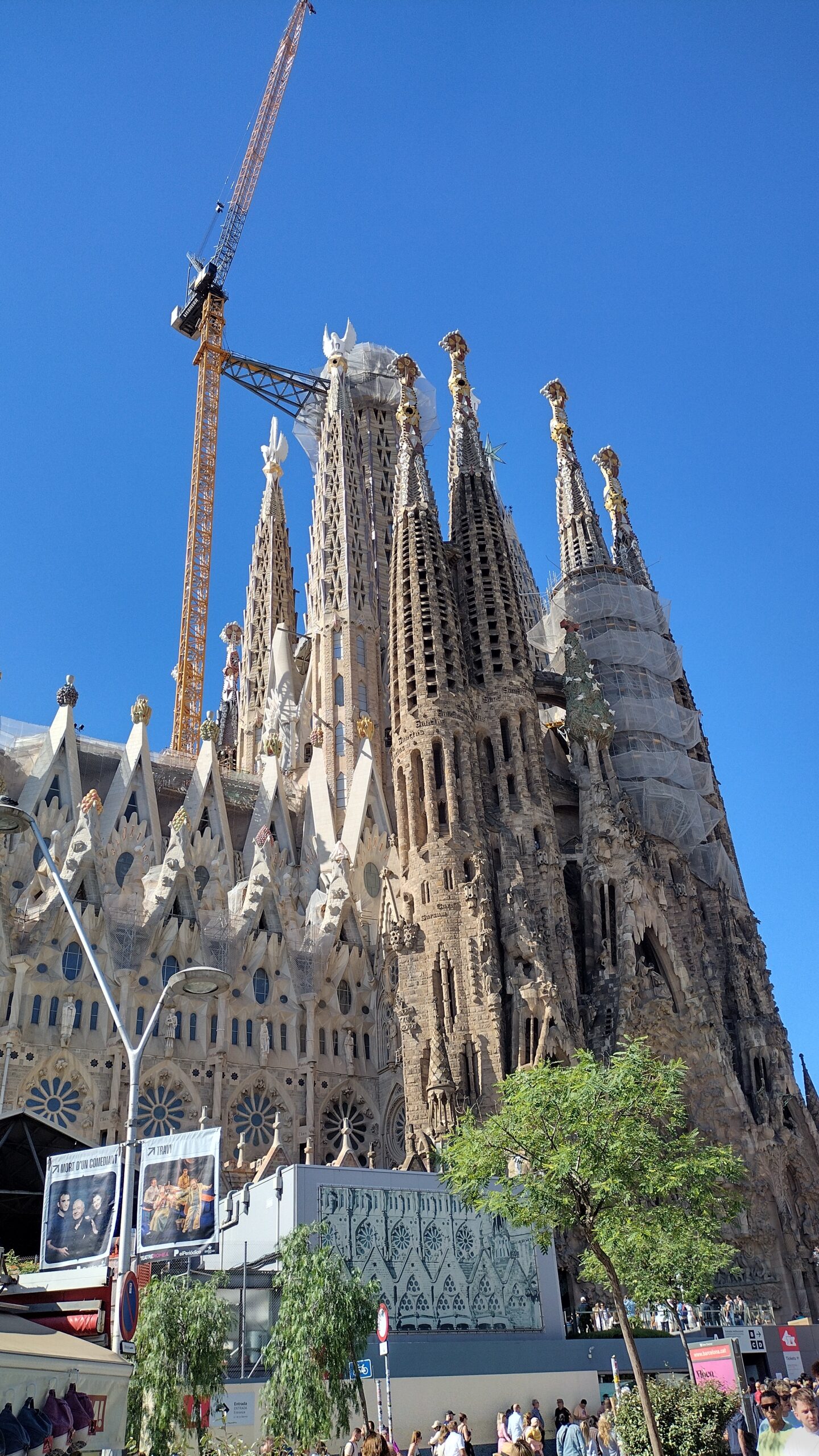
I'm standing in a queue in a hot room full of bad-tempered, impatient people, ready to walk through a metal detector. Anyone would think I was waiting to catch a plane, but I'm not. I'm trying to get into what is probably Barcelona's best-known tourist attraction. If I wasn't with my partner and her brother, I'd be tempted to turn tail and run, despite the expensive ticket in my hand.
This dismal experience is a symptom of how much tourism in Barcelona has grown in the 25 years I've lived in Catalonia. When I first came here in 1999 you could walk in off the street, pay for a ticket and go up and down the towers of the older part of the building at will. The next time I visited, a few years later, you had to queue all the way up and down those towers, following a set route. Now, you have to pay extra for the towers, and don't even bother turning up if you haven't booked in advance on the internet.
I can't help thinking the Barcelona residents who've turned against mass tourism may have something of a point. There are places in the city, such as the Park Güell, also designed by the great Catalan architect Antoni Gaudí, that are so horrible to visit I won't be blogging about them simply because the last time I went the experience was so horrible that I'm never going back.
And yet... the Sagrada Família is one of the most amazing buildings in the world. It's the last medieval cathedral, if you like, because work is still going on today after the best part of a century and a half, following the pattern of all those great medieval buildings: long construction periods to create something truly remarkable.
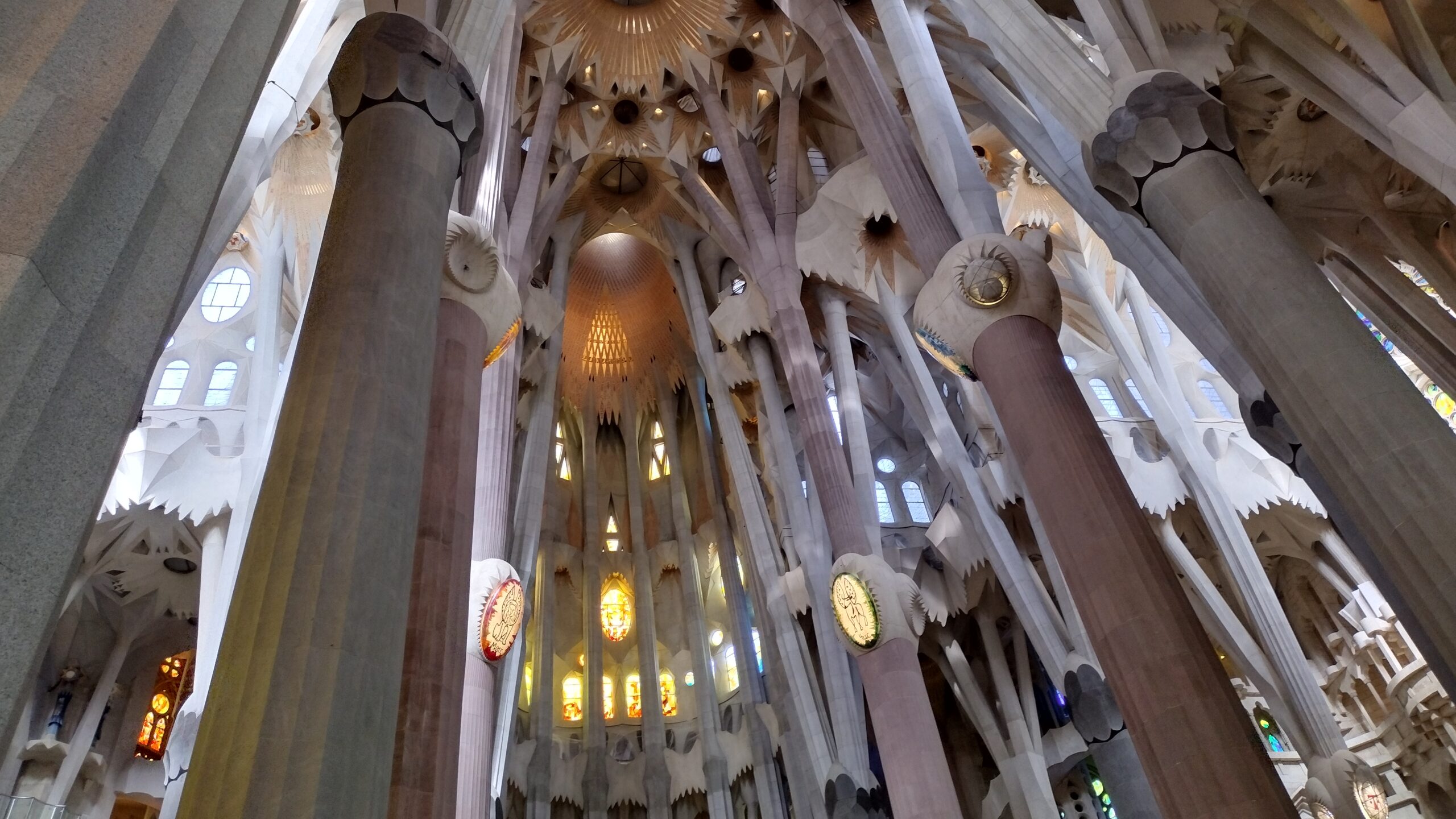
Also, like many medieval cathedrals, building work has proceeded at a very uneven pace. There have been long periods of complete inaction, when the Barcelona saying "it'll get done when they finish the Sagrada Família" really did mean never. In the time I've been watching progress, however, quite a lot has been achieved. When I first went there wasn't even a roof. Now you can visit the church inside - and what an astonishing experience that is, despite the worst efforts of the eager hordes who are in there with you.
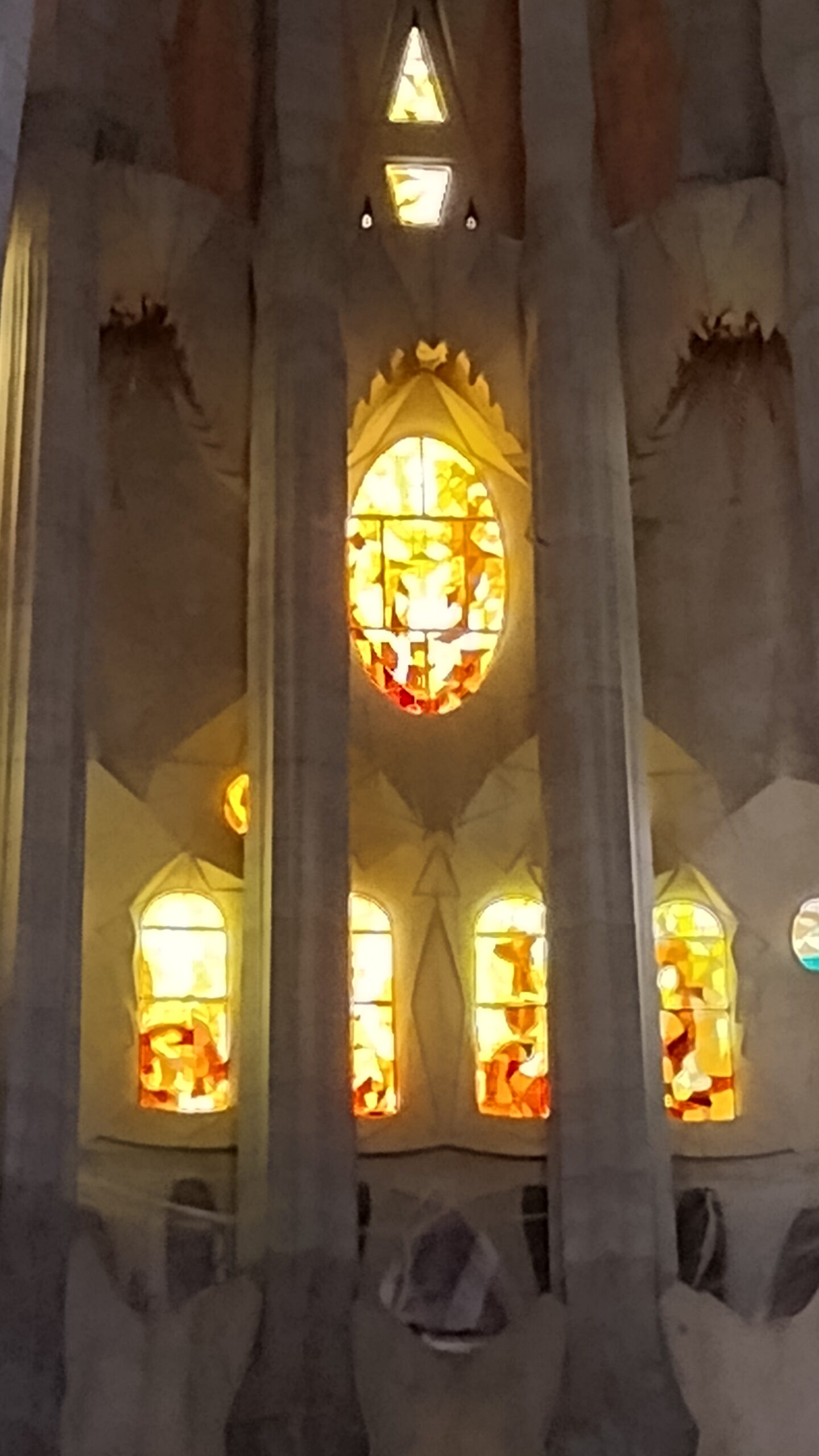
Most have us have seen one of those medieval cathedrals I’ve been talking about: soaring Gothic columns and towering arched windows letting in floods of light. Gaudí’s church reminds me of these, except that the columns here resemble palm trees, supporting the roof with their graceful strength. Coloured light pours in through beautiful stained glass, now gold and green but changing with the moving sun. Even for a firm non-believer like me, being inside this place is a spiritual experience.
This interior has been built in the 21st century based on Gaudí’s models and drawings rescued from the chaos of his workshop. The architect became obsessed with the church project. It was all he worked on for the last years of his life, even living on site, before the fateful day in 1926 when he stepped out in front of a tram and was accidentally run over and killed. Gaudí had been applying his brilliantly unconventional architectural approach to the church - begun as a straightforward neo-Gothic construction by Francisco de Paula del Villar - for 43 years, but less than a quarter of it had been completed.
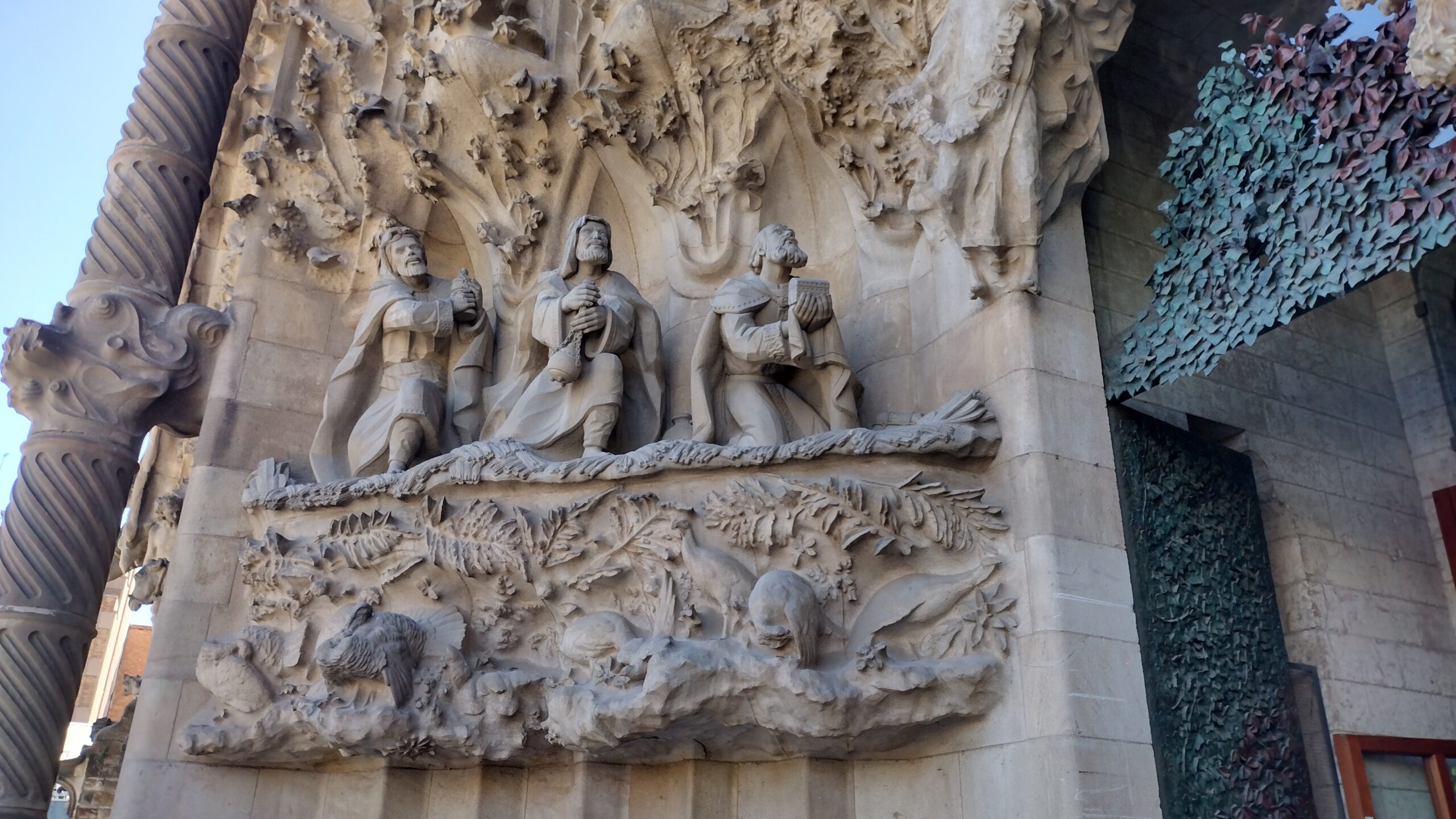
Ten years later, the prospect of the Sagrada Família ever being finished looked even more unlikely. At the outbreak of the Spanish Civil War, anarchists set fire to the church, destroying Gaudí’s workshop and with it some of the original plans. So what we see today is not necessarily exactly how Gaudí would have built it. This particularly applies to the sculptures on the facade depicting the Passion of Jesus Christ by Josep Maria Subirachs, heavily criticised and even likened to Star Wars figures. But in some ways it seems fitting that this side of the church - directly opposite Gaudí’s own Nativity facade, with its intricate depictions of plants and animals (there’s even a Christmas turkey in there somewhere!), should be in a completely different and even opposing style.
Against all expectations for a good part of the 20th century, the building is now mostly complete. It lacks only the final mighty tower of Christ the Saviour, and forecasts are that it will be finished by the end of 2026. The monumental flight of steps leading up to it - controversial because it will require the demolition of a number of neighbouring buildings - may take another decade, however.
Ironically, the relatively rapid progress of recent years has been financed largely by Japanese donors - non-Christian lovers of Gaudí’s architecture - and, of course, all the tourists who crowd the church to bursting point every day at €26 a head. I wonder what the medieval cathedral-builders would have made of it?