Sant Jordi (Barcelona, part 2)
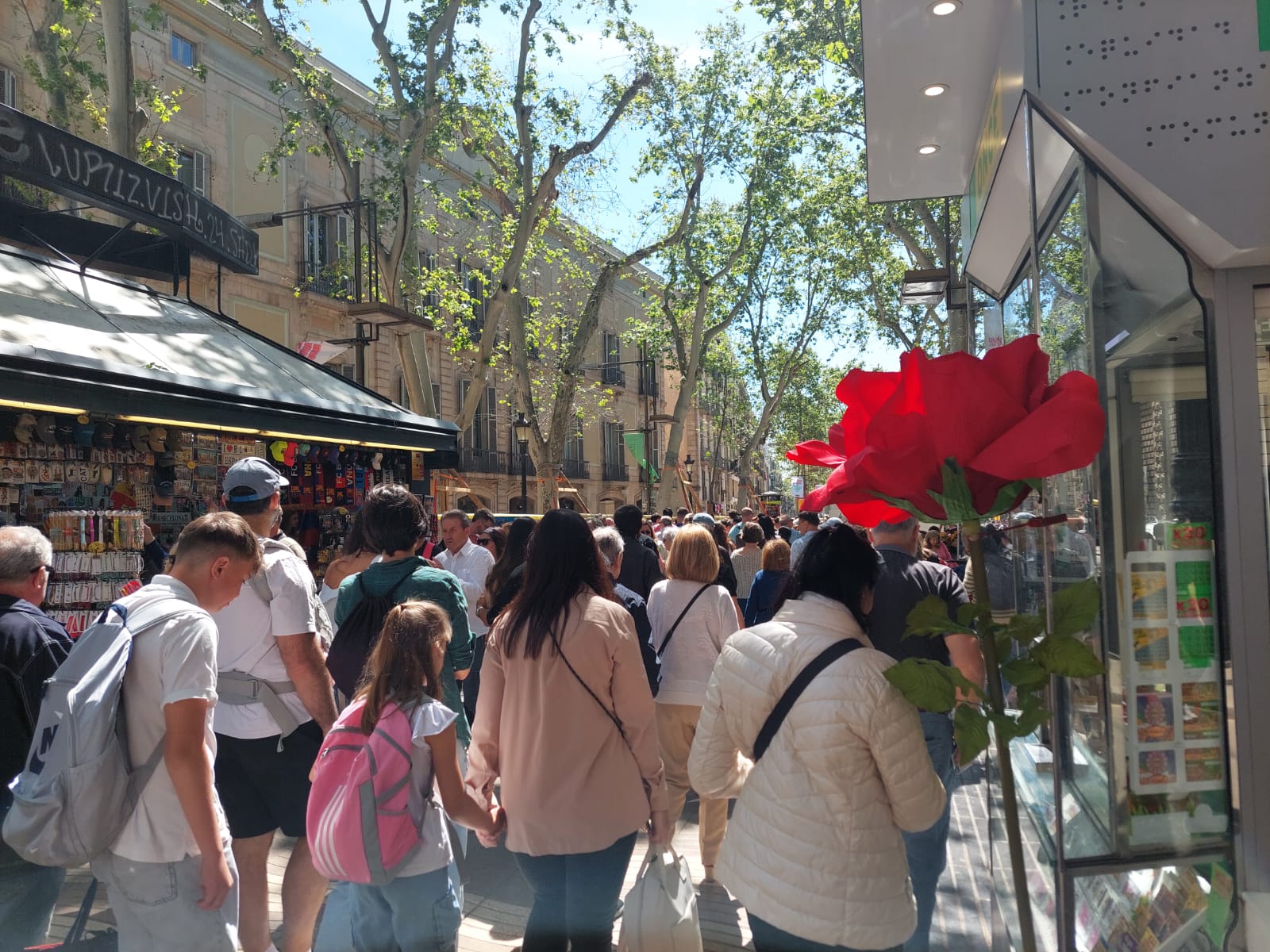
Imagine your city's busiest street - somewhere you wouldn't normally think of setting foot because it's thronged with tourists. But instead of tasteless souvenir shops and overpriced bar terraces, imagine it full of stalls selling books and flowers. Now imagine it filled with a good-natured procession of people out for a stroll in the sparkling spring sunshine and intent only on browsing the stalls and soaking up the incomparable atmosphere.
Once a year, on 23 April, that dream comes true in Barcelona when the Rambla, normally these days a rather depressing and best avoided street leading down from Plaça Catalunya to the Harbour, is taken back by the city for Sant Jordi - Saint George's Day. My partner, Ana, is here for the first time to see Catalonia celebrate its patron saint's day in its own tradition and style, a long way from the borderline fascist glorification of the red cross flag I'd become warily used to in England before I moved.
In total contrast to that, a Catalan Sant Jordi is all about books and roses. In the centre of Barcelona, everyone is carrying one or the other or both. The romantic tradition that makes Saint George a kind of Saint Valentine without the tacky plushie hearts says that today's the day for a man to give his partner a rose, while she should give him a book. The rose comes from the St George legend, which says that when he killed the dragon and its blood dropped on to the ground, a rosebush sprang up, bright with red flowers.
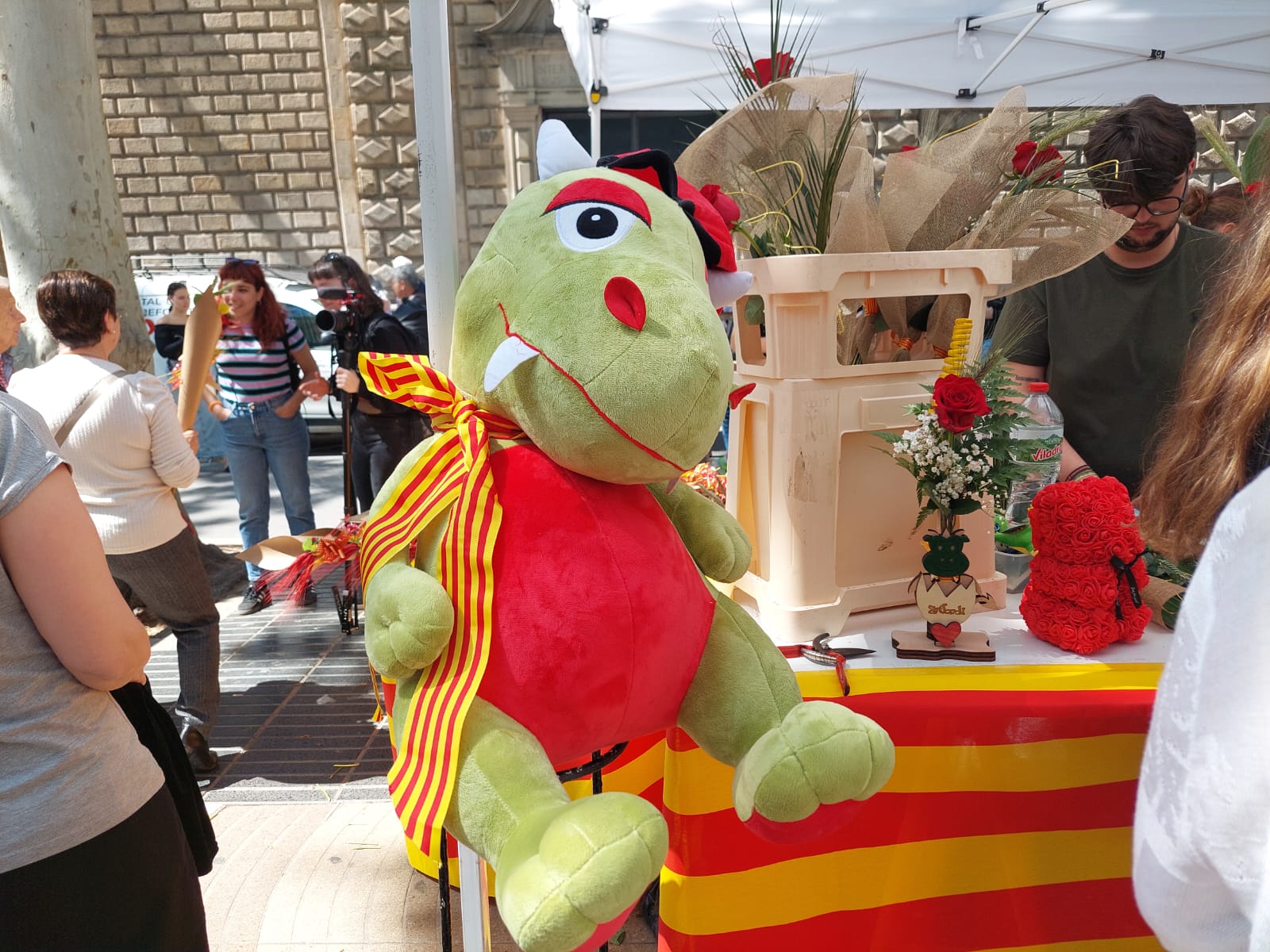
As for the books, that idea was a purely commercial one, from publishers in the 1920s. They picked 23 April because, by literary coincidence, it is supposed to have been the day of William Shakespeare's birth and Miguel de Cervantes' death. None of this stands up to much scrutiny, because scholars are not actually sure that either of those events happened on that day, but there's no doubt about the success of Sant Jordi in literary terms - the run-up to it and the day itself are easily the most profitable period in the entire Catalan publishing year. And punters queue at the book stalls to have their copies signed by their favourite authors.
There are stories in the streets too. Why is that man carrying three roses? One for his wife, one for his daughter and one for his lover, maybe? Why does that woman have two? What about those four girls? They each have a rose and there's no partner in sight. Have they bought them for each other? For themselves? There are enough novel plots here to make me eager to write one.
The tradition nowadays has become delightfully blurred. Women get books and men get roses, because why the hell not, and everyone is humming with unaccustomed contentment. That's one of the secrets of the Sant Jordi vibe. Everyone is doing their own thing, probably on a mission, but we're also quietly enjoying ourselves and benevolently aware of what other people are up to. It's nothing like the biff-bang-crash Saturday afternoons in exactly the same city centre when no-one seems to have any spatial awareness whatsoever.
The other secret is that it's NOT a public holiday. No-one's here feeling obliged to have a good time. Instead we all have the delicious feeling you get when you sneak off work for an hour or two to do something you really love. That all puts it far ahead of Christmas, my birthday or the rest of them as my favourite day of the year. The books and the roses, the happy faces, the unrivalled atmosphere and the delightful absence of pressure to do anything other than relax and take it all in are simply not found anywhere else or on any other day. This is Sant Jordi and nothing I've ever found runs it close!