Heritage in conflict
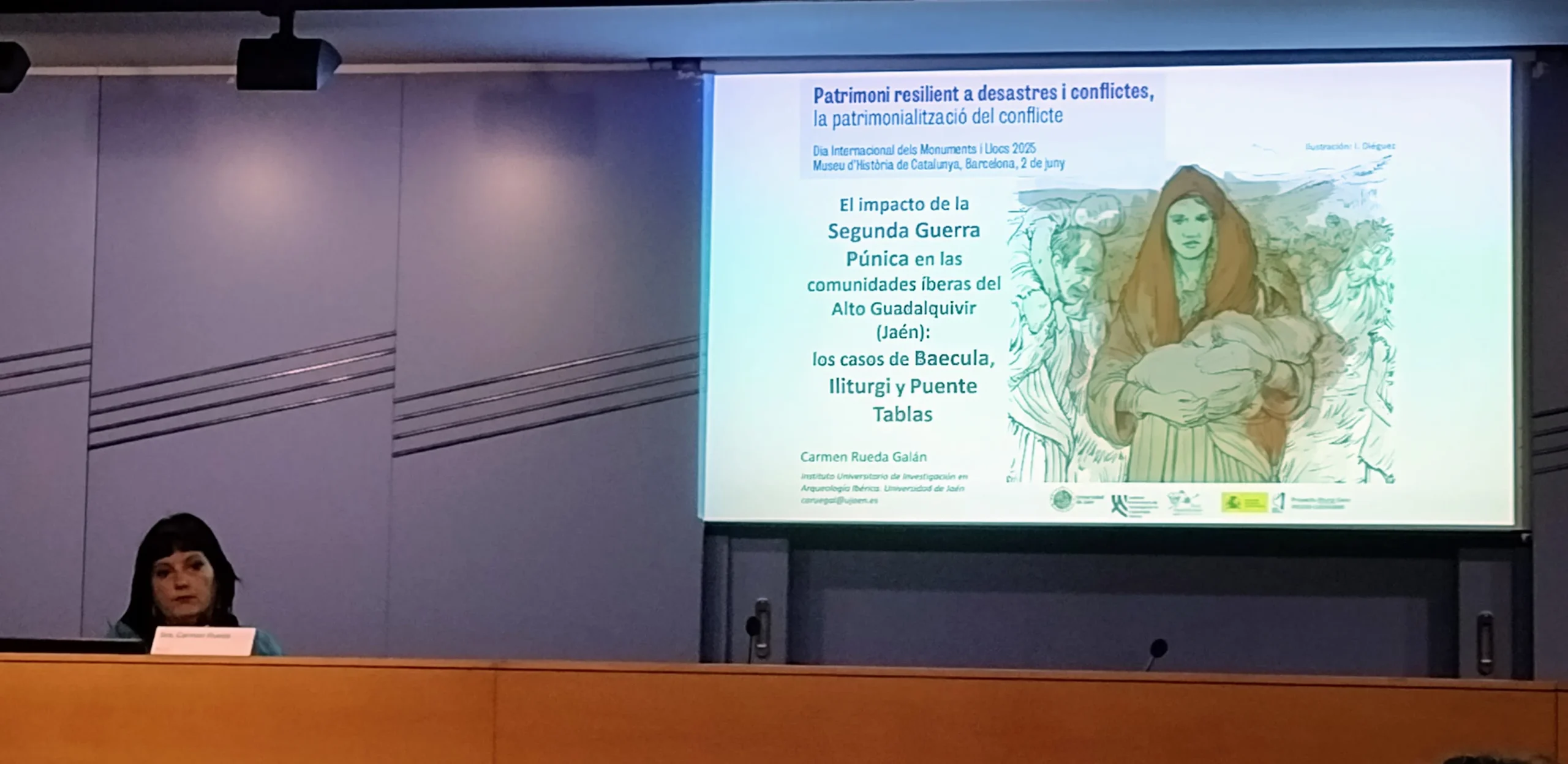
Is our heritage telling us the right stories in the right way? This was the underlying question I took away from an interesting conference I attended this week in Barcelona. Organised by the Government of Catalonia, the event focused on the ways in which conflict, and more specifically evidence of conflict, can be turned into heritage and made interesting and intelligible to visitors. This is by no means a straightforward task.
As Jordi Principal, the director of the Museum of the History of Catalonia which hosted the conference, put it, the challenge is to turn places of conflict - many of them still surrounded by tension - into spaces of memory. This is particularly true in Catalonia, and in Spain as a whole, where the dictatorship that followed the Spanish Civil War created all kinds of taboos, some of which are only now being broken, almost a century later.
Francesc Xavier Menéndez, the director general of democratic memory with the Catalan government, spoke of the challenge of turning cemeteries and mass graves from this period into decent memorials. He also raised the more difficult issue of what to do with heritage left over from Franco's dictatorship. Is outright removal always the best idea if we want future generations to know about the repression inflicted by that regime? This has been the traditional approach, but he suggested it might not be the best one.
And what stories should we be telling about war anyway? The traditional tales of bravery and struggle, of strategy and conquest, are perhaps wearing a little thin. What about the civilians affected by war; the women; the children? Their stories, if we can unpick them, might give us a more balanced overall account. The point was tellingly made by Carmen Rueda, of the University of Jaén, in an image she used in her work publicising finds at 2nd-century battle sites between Romans and Carthaginians in the south of Spain. As she pointed out, the illustration, of a woman tightly holding her child and surrounded by conflict, might have been taken from modern wars in Ukraine or Gaza.
Other speakers also focused on alternative stories. Researcher Laura Muñoz spoke of uncovering traces of Franco's concentration camps from the Spanish Civil War period and afterwards, and the effect they had not only on inmates but also on their wives, partners and children left outside with little means of support. And Eulàlia Mesalles and Anna Camats explained how history can still have a huge impact on the present. They are involved in the Catalan government's ongoing campaign to excavate mass graves from the Civil War period, sometimes the result of summary executions but also of hurried burials after battles or near hospitals. If possible, they identify the remains and confirm for modern families, many years after the event, exactly what happened to the people who died there.
Another type of alternative story is one that few particularly want to hear. Researcher Valentina Febrero is involved in tellingthese in her country, Uruguay, where most of society would prefer to forget about the enslavement of black and indigenous people embedded in its rural past. She is involved in excavating sites associated with this strand of the country's history and making sure they are pointed out so as not to be forgotten.
Meanwhile, back in Catalonia, the Museum of Immigration was founded with a particular story in mind - that of immigrants to Catalonia from southern Spain in the decades following the Civil War. But, as its director, Imma Boj, explained, with immigration continuing to be a living issue it has taken on many new strands, some of them difficult, but rewarding, to deal with. She particularly highlighted work done with a group of young immigrants from all over the world in the care of the Government of Catalonia who were taken on a visit to Barcelona's Museum of World Cultures, making a video record of their experiences as they explained objects from their countries of origin to their companions.
So the story matters, as does the way it's told, and who is telling it. I would add to this the importance of communication to outsiders. There is a tendency for the kind of site spoken about throughout the conference to be considered of interest only to local people, with information boards only in the local language or languages. This is not unique to Spain. Sometimes there may be other reasons for this approach too. When I visited Finland last year it was easy to find all kinds of rather mystifying evidence of the country's awkward role during the Second World War, forced as it felt itself to be into fighting alongside Nazi Germany to keep its greater enemy - Soviet Russia - at bay. But few of these sites had any explanation in English or languages other than Finnish. It took considerable internet research and a couple of more helpful museum explanations before we could piece together the story behind some of these odd-looking graves and mysterious plaques.
I believe it's important for all visitors to a place to understand what went on there, however much that might jar with the surroundings. At the conference, Josep Font, of the network of museums and sites in Catalonia related to events during and after the Civil War, spoke of how incongruous it can be to go to a beach and find a sign explaining that there was once a concentration camp there, for example. But everyone should know about this, particularly if the surroundings look too idyllic to make it believable, and even more so as it seems these days that we're closer than ever to repeating some of the more horrific errors of the not-so-distant past. Putting that kind of message into concise English with impact is something I will always be proud to be involved in.