Orange and Vienne
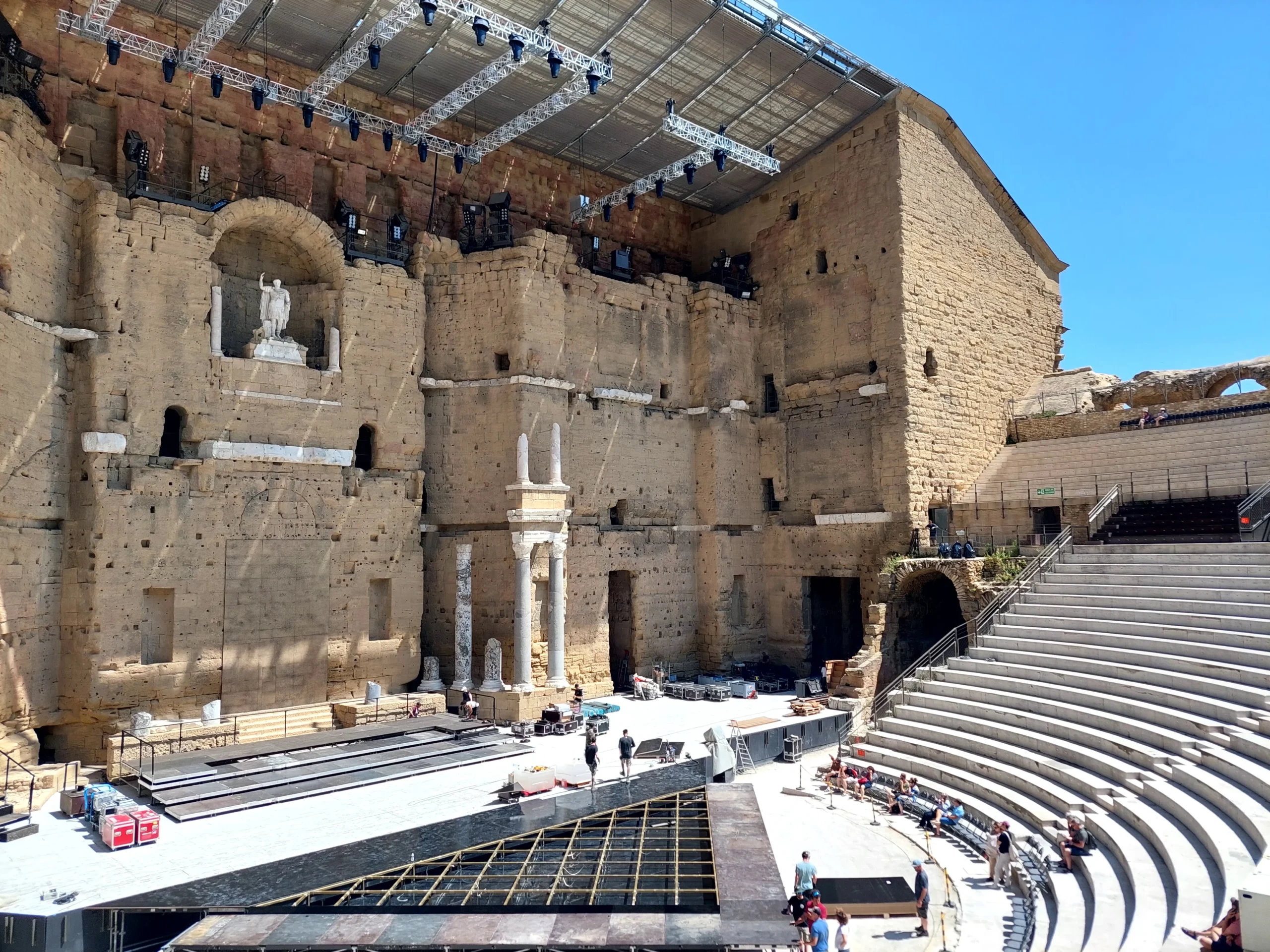
We're in Orange for a visit to the theatre, but we're already running out of patience. The traffic's terrible and there's nowhere to park in sight. After driving backwards and forwards through the centre, eventually we have to settle for somewhere a fair way out of town. It's hot and blowing a fiery gale. We're not in a good mood.
And yet the Roman theatre in Orange can't fail to impress. Built in the 1st century, it is remarkably well preserved 2,000 years later, maintaining the stage and its back wall with statues, including one of the emperor - any emperor, because his head was changed every time someone new succeeded to the throne. Sitting half way up the seating, even though workers are making a lot of noise building a special stage for a concert that evening, and even though we're clinging on for dear life against the wind, it's possible to imagine the actors of Classical times performing down there.
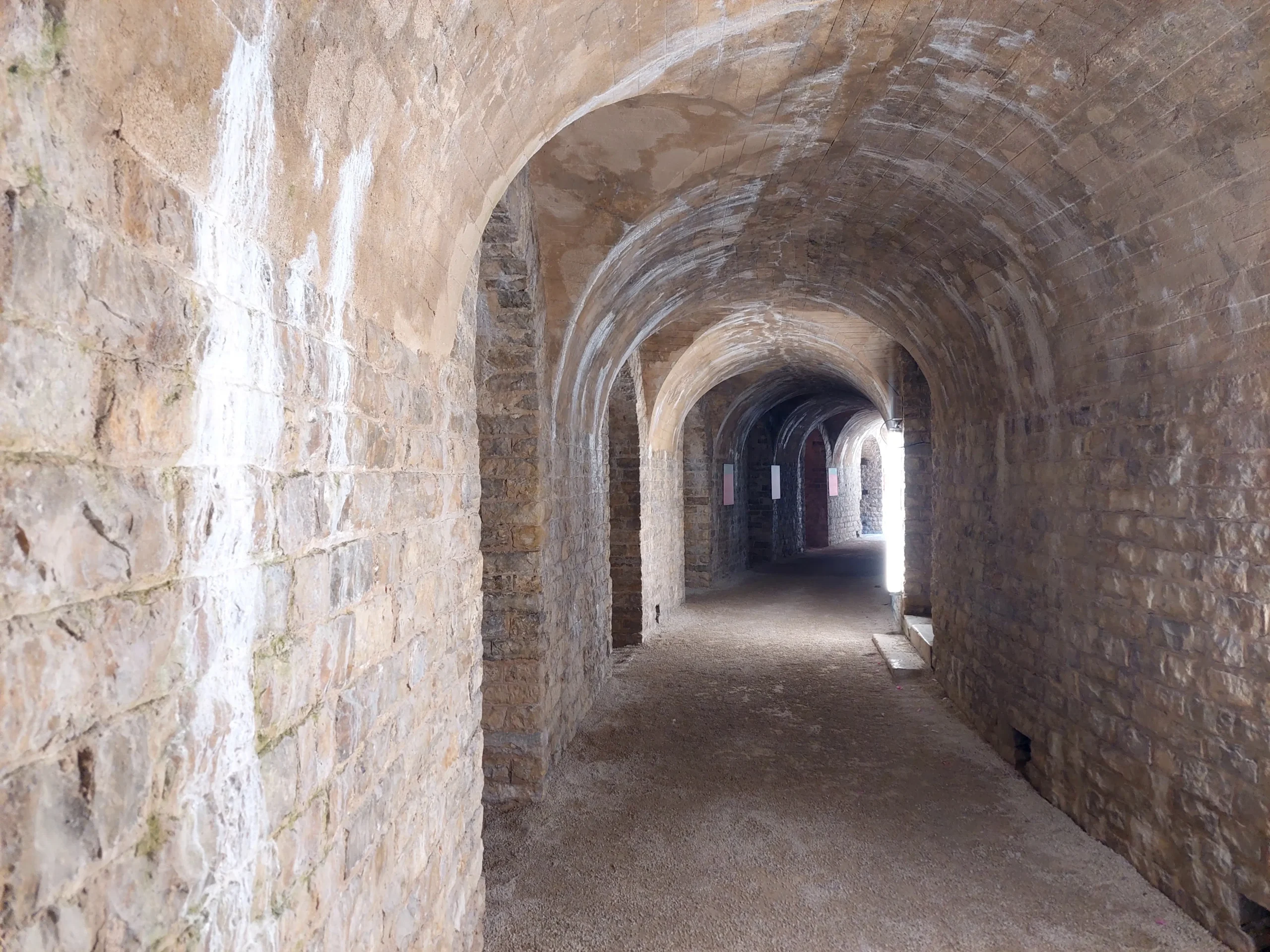
Except maybe they wouldn't have been performing quite what we expect. The Romans took on the theatrical tradition from the Greeks, but it turns out they didn't have a great deal of patience for it. There were comedies and tragedies following the Greek pattern, but audience tastes, it seems, leaned more towards shows with singing, dancing, lewd dialogue and revealing costumes. Not quite strip shows, but almost.
This is explained in the fascinating museum in the corridors where once the audience would have walked. Covering all aspects of Roman life, it also talks about their preferences when eating out, which seemed to be for fast food bought from the kind of bar known as a thermopolium. This they would either take home with them or eat in the establishment itself or outside in the street.
This comes to mind afterwards, when we go across the road from the Roman theatre to find some lunch. It all seems perfect: a little square, a pleasant-looking restaurant, some tables outside in the shade. The food is good - at least our starters are - but this is French lunchtime and the service...is...so...slow. We virtually have to beg to have our empty starter plates removed and then issue firm reminders to ensure our main courses haven't been forgotten. If we have dessert we'll probably still be here at dinner time. I'm not sure the Romans would have had the patience for this. We go for a (delicious) French ice cream instead. Why can't we find blackcurrant flavour anywhere else in Europe?
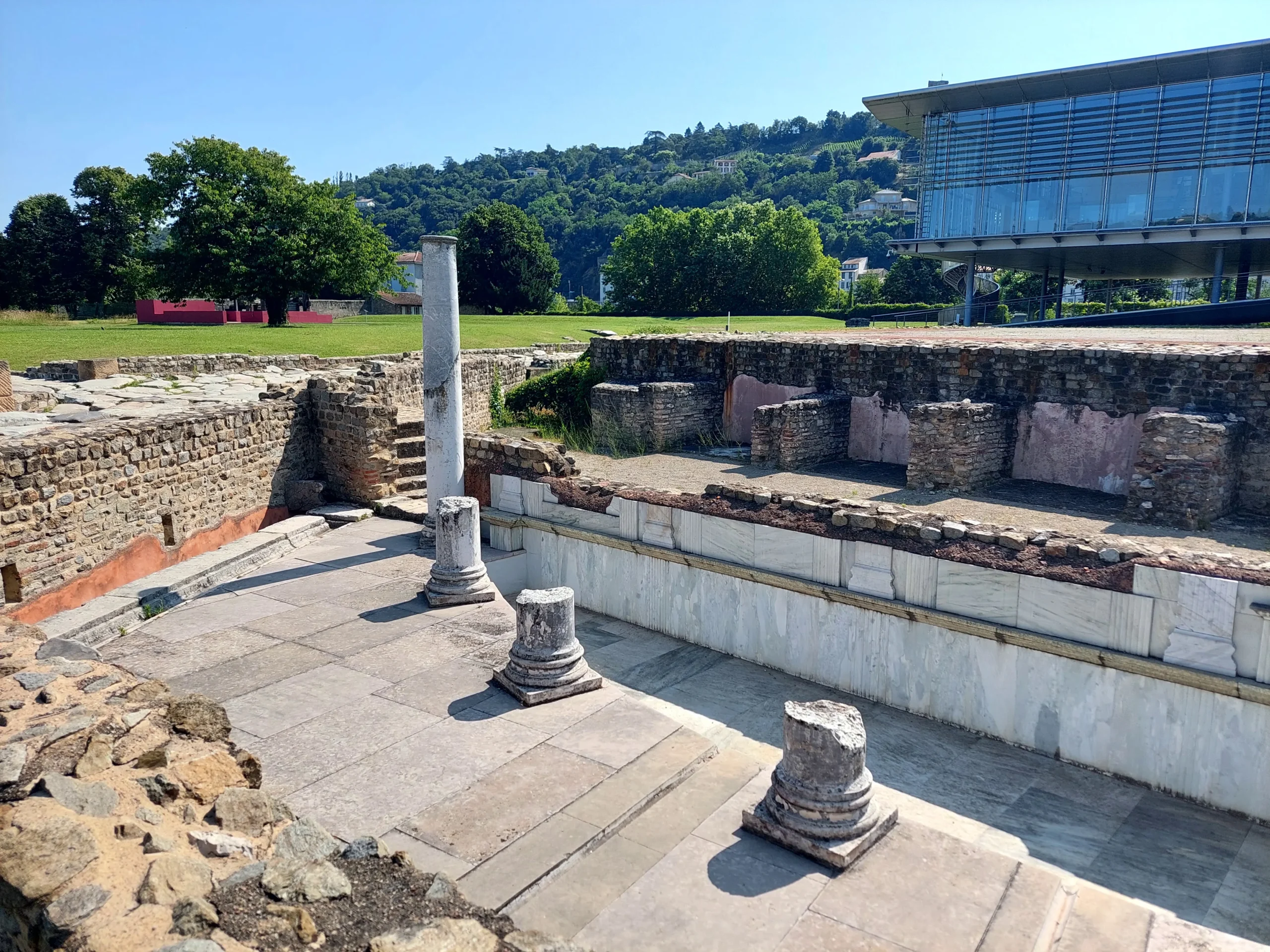
Two days later, we're looking at more Roman history a little further north - and plenty of patience is once again required. We've come to the Roman museum at Saint-Romain-en-Gal, on the opposite bank of the River Rhône from the town of Vienne, and things are not going well. For a start, it seems ridiculous that parking isn't free when we're going to have to pay to get in, and doubly ridiculous when it's one of those pay-and-display car parks where you have to work out how long you're going to want to be there. How should I know? How good is your museum? Then the ticket machine throws several hissy fits and won't accept any of the payment cards I want to use. So by the time we get to the ticket queue inside the museum, we're not in the best of moods.
The queue isn't a long one, but it doesn't seem to move at all. Eventually we work our way to the front and ask for two tickets. My partner goes to pay by card. The operation times out. They ask her to pay with a different card. It times out again. She offers to pay in cash, but the attendants refuse. They are stubbornly determined to fix their card machine and will keep us waiting there as long as it takes. By this time, we are seriously tempted to just walk away.
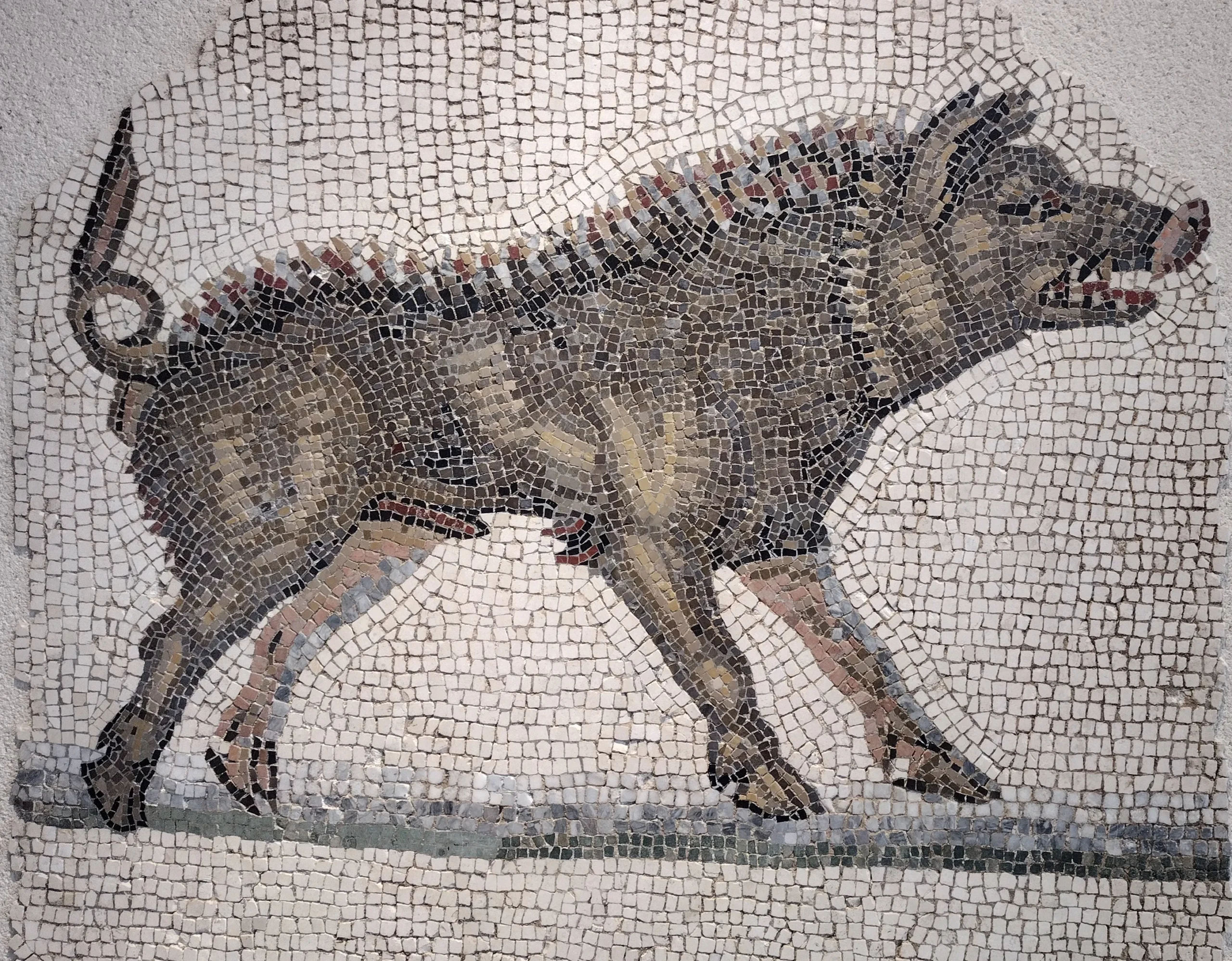
It's a good thing we don't. The museum is splendid - one of the best Roman museums I have ever been in. Outside there are acres of ruins to explore - the remains of the surprise discovery of a whole suburb of the town where archaeologists were expecting just one villa. And inside the bright, modern building there is display after display of what they found, including breathtaking mosaics and revealing artefacts. It is a treasure.
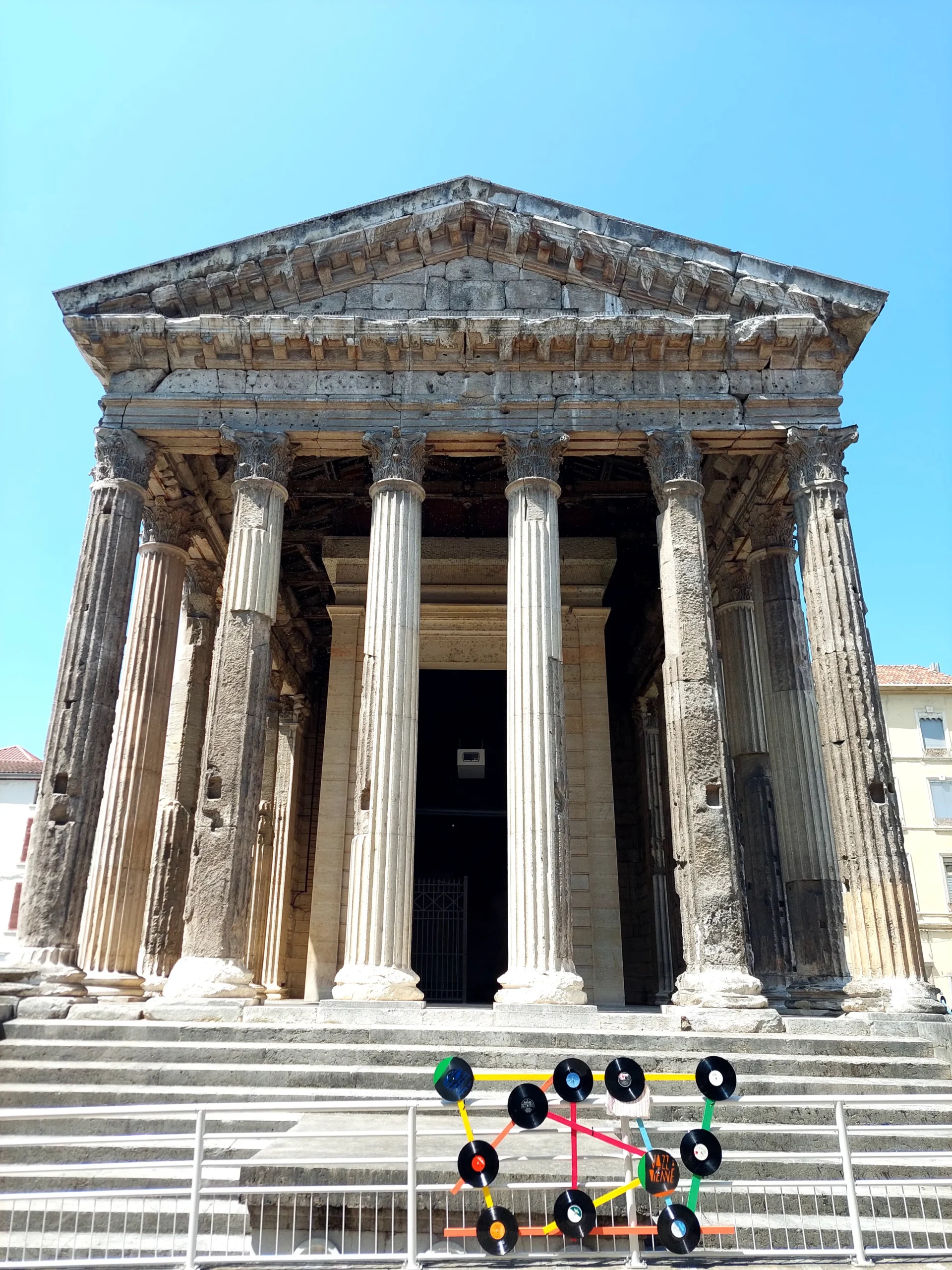
After a couple of hours exploring the whole site, we're in a much better frame of mind and, having made a generous estimate of how long we'd need, we still have time to walk across the bridge into town. Here, there's an entire Roman temple still standing. Built in the 1st century and dedicated to the Emperor Augustus and his wife Livia, it survived, ironically, because for most of its history it was used as a church. I suspect the first Roman God-emperor would not have been amused at being supplanted by a carpenter's son from an insignificant corner of his realm.
We're hungry now and we've just about got time to eat before the car overstays its welcome. But we've learned the French lunchtime lesson the hard way and we take an example from the Romans, choosing not a restaurant but the modern equivalent of a thermopolium - the sandwich bar across the road - where our patience will not be tried.
S