Antwerp
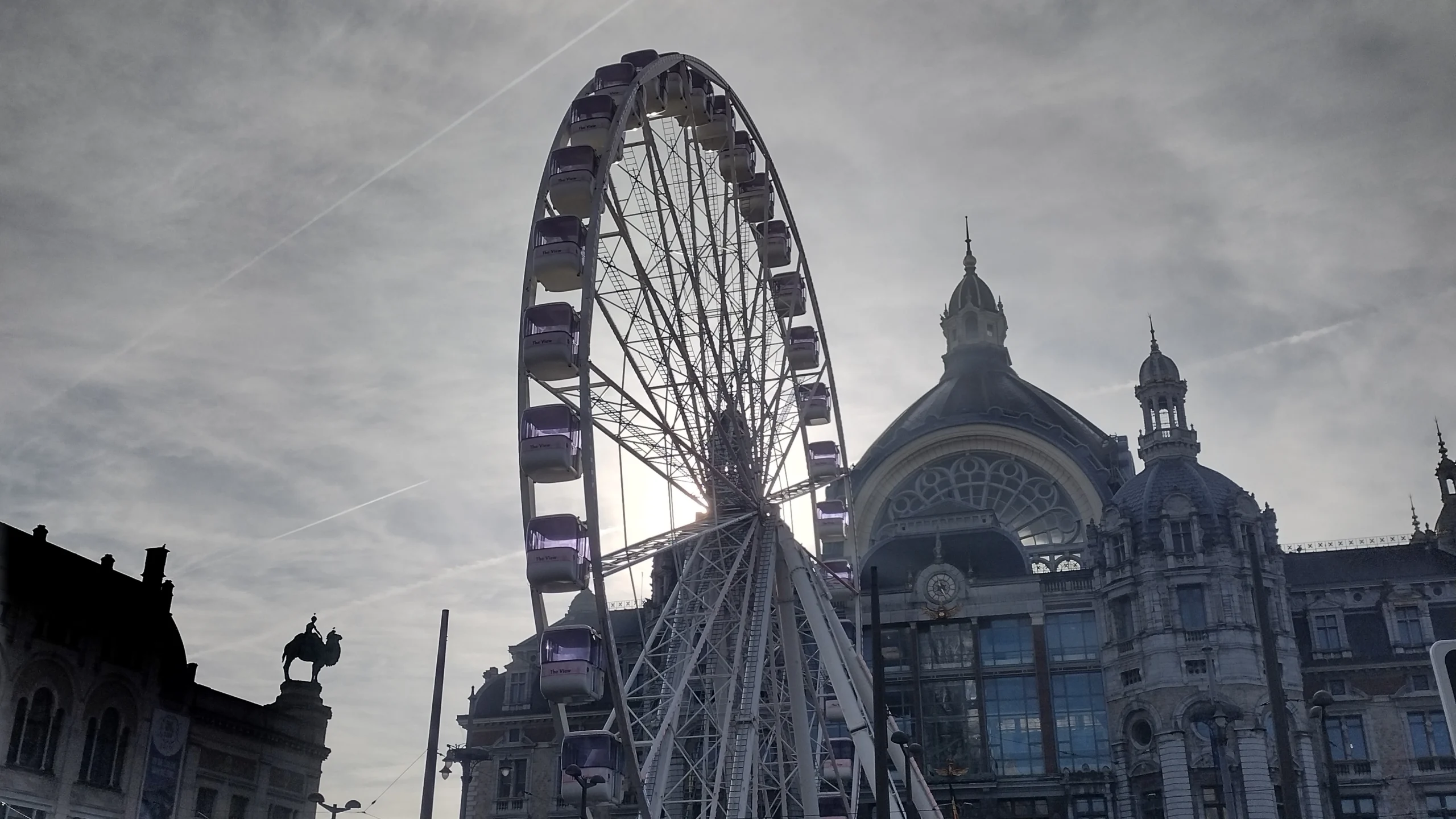
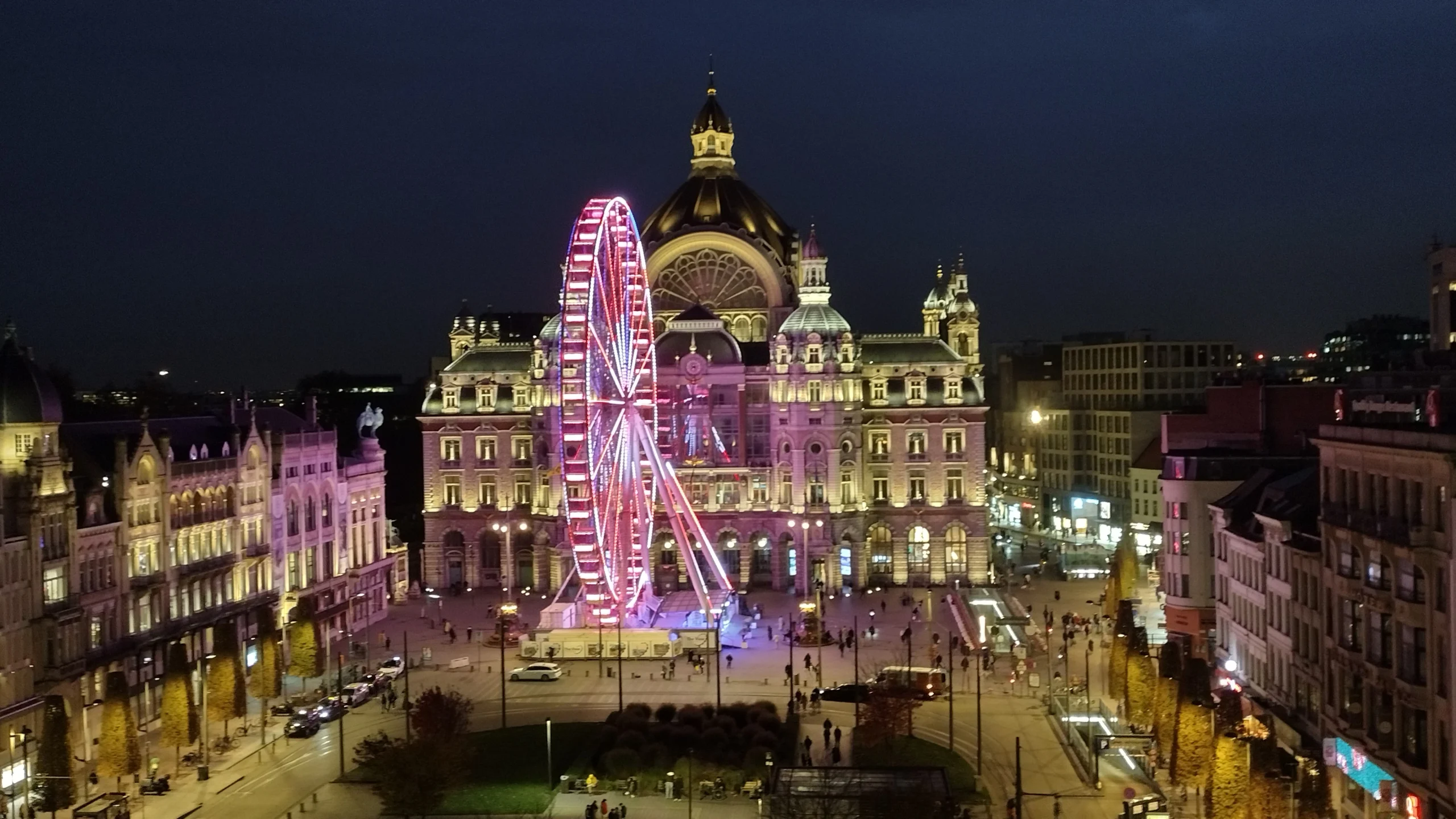
It's relatively easy to write about a place when you love it. The story tells itself and the account of all those enjoyable moments just seems to flow. First impressions seem to suggest that Antwerp could fall into this category. The station seems a little grey but coming out into the large square outside and turning round, we see its truly imposing facade, as if it were some sort of early 20th-century cathedral to that great and all-conquering god: the railway. Opposite is our almost equally imposing hotel, the Radisson Blu, a monument to the late 20th-century cult of the all-powerful tourist. In front of us is a big wheel, clearly modelled on the London Eye, and on top of a building to the right is, well, a rather incongruous statue of a camel. We later discover it has something to do with Antwerp Zoo, which is right there, beside the station.
And then, bash! A passer-by has misjudged the space and bumped rudely into us. And we're still recovering from that when, whizz! a cyclist flashes past, far too close, at tremendous speed. And we're quickly introduced to the real Antwerp, a city where, whatever the streets are for, it certainly isn't walking! I have never been in a place where I've felt less safe, and I'm not talking about the risk of being mugged. The problem is that the Belgians - and particularly the citizens of Antwerp - seem to learn their sense of spatial awareness on fairground dodgem cars.
What makes it even worse when we visit, is that what seems like half the city's streets are being dug up, which means all the pedestrians, cycles, scooter riders and even motorcyclists are often crammed on to one narrow pavement. We take to using the metro just to travel a couple of stops because what anywhere else would be a pleasant stroll is such a deeply unpleasant experience. But even in the metro we're not safe from from the rude and spatially unaware.
Then there's the relentlessly mediocre food and the frankly appalling service in most restaurants, worst of all (although by no means exclusively) the one in our own hotel, where it seems that having a burger and chips arrive at the same time, let alone at the same time as your companion's meal, is far too much to ask. And just you try catching someone's eye to protest! Waiting staff in more than one establishment seem to prefer chatting to one another, looking at their phones or any possible distraction to scanning the dining room where there might be someone who's going to ask something awkward, like "Where's my food?".
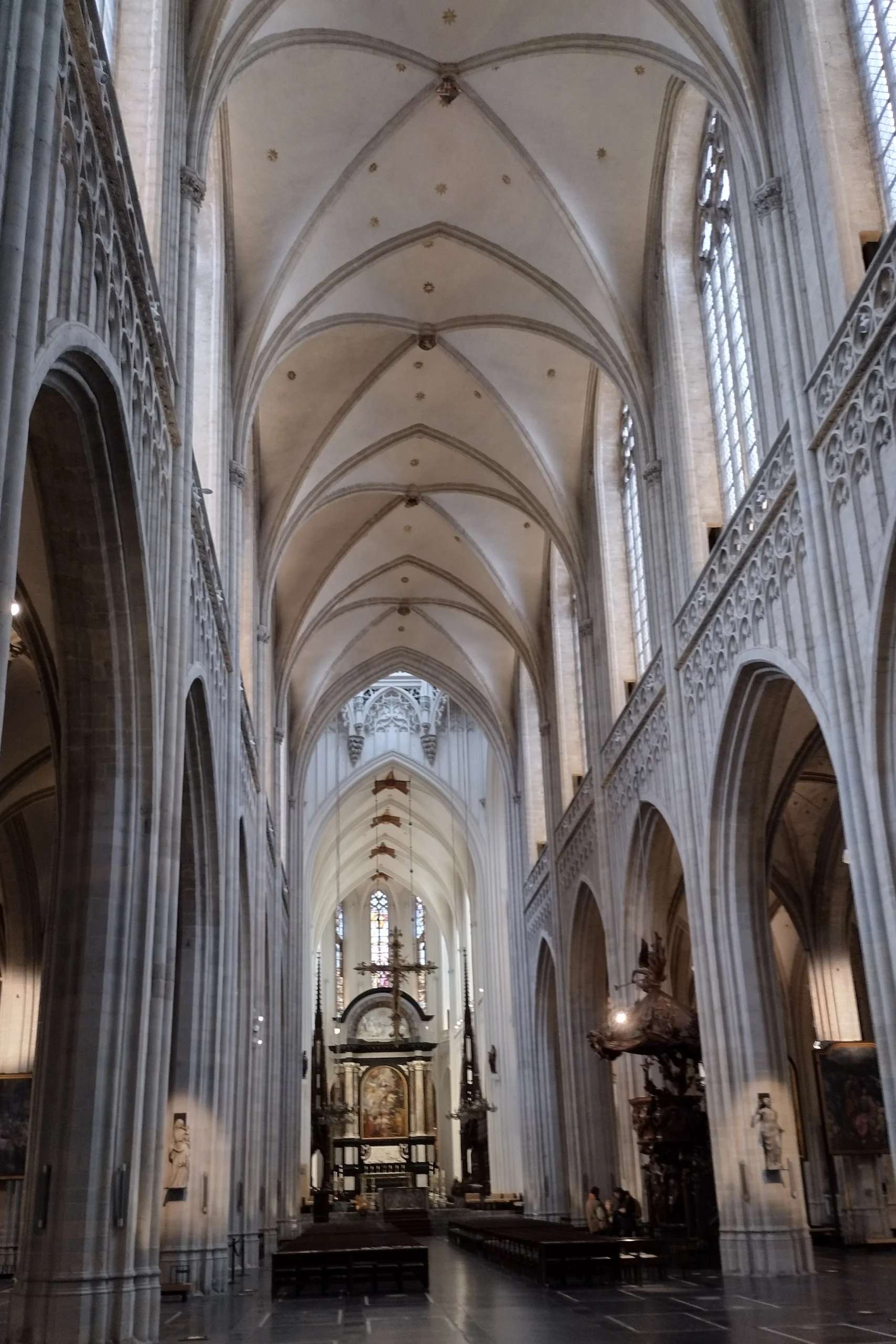
There are highlights, of course. We're really here for a couple of concerts, both of which are superb, and the city does have attractions that are worth risking its pavements for. The cathedral is a triumph of austere Gothic beauty - all bright light and clean lines. This is partly a result of its troubled history: in 1566, only a few decades after its completion, many of its religious images were destroyed by Protestants. It was only later that it came back under the control of the Catholic Church. There are famous paintings by one of Antwerp's favourite sons, Peter Paul Rubens, for those who like that sort of thing, but our attention is attracted by a strange statue of a man balancing a cross on the palm of his hand. Sadly, there is absolutely nothing to tell us what this piece of clearly modern art is, who created it or what it represents. We might have expected those responsible for installing the sculpture to also be interested in telling us about it. Clearly we would be wrong.
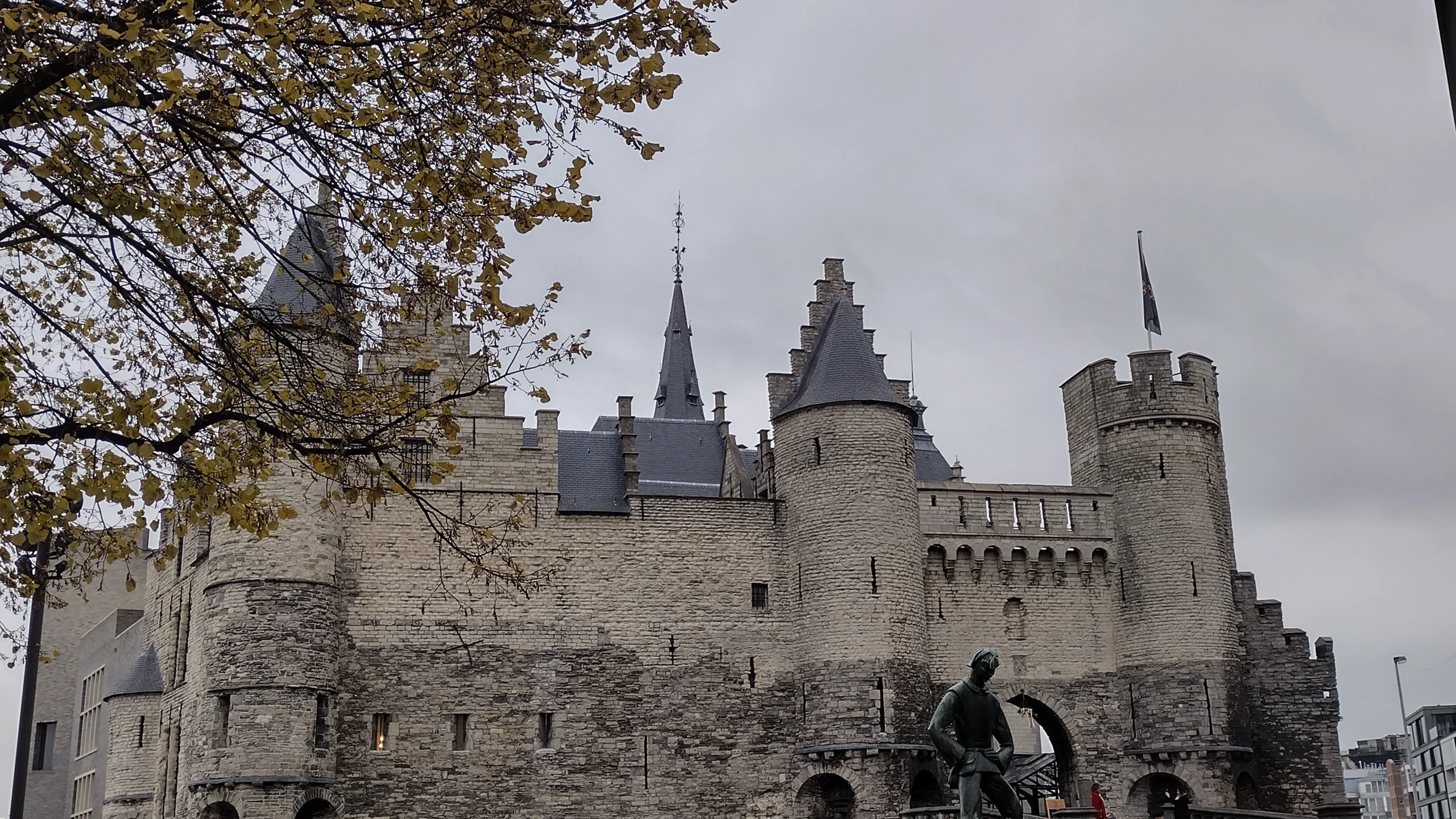
We head on to the castle, although, with little time, we decide to content ourselves with seeing it from the outside - inside it's a tourist information and visitor centre.
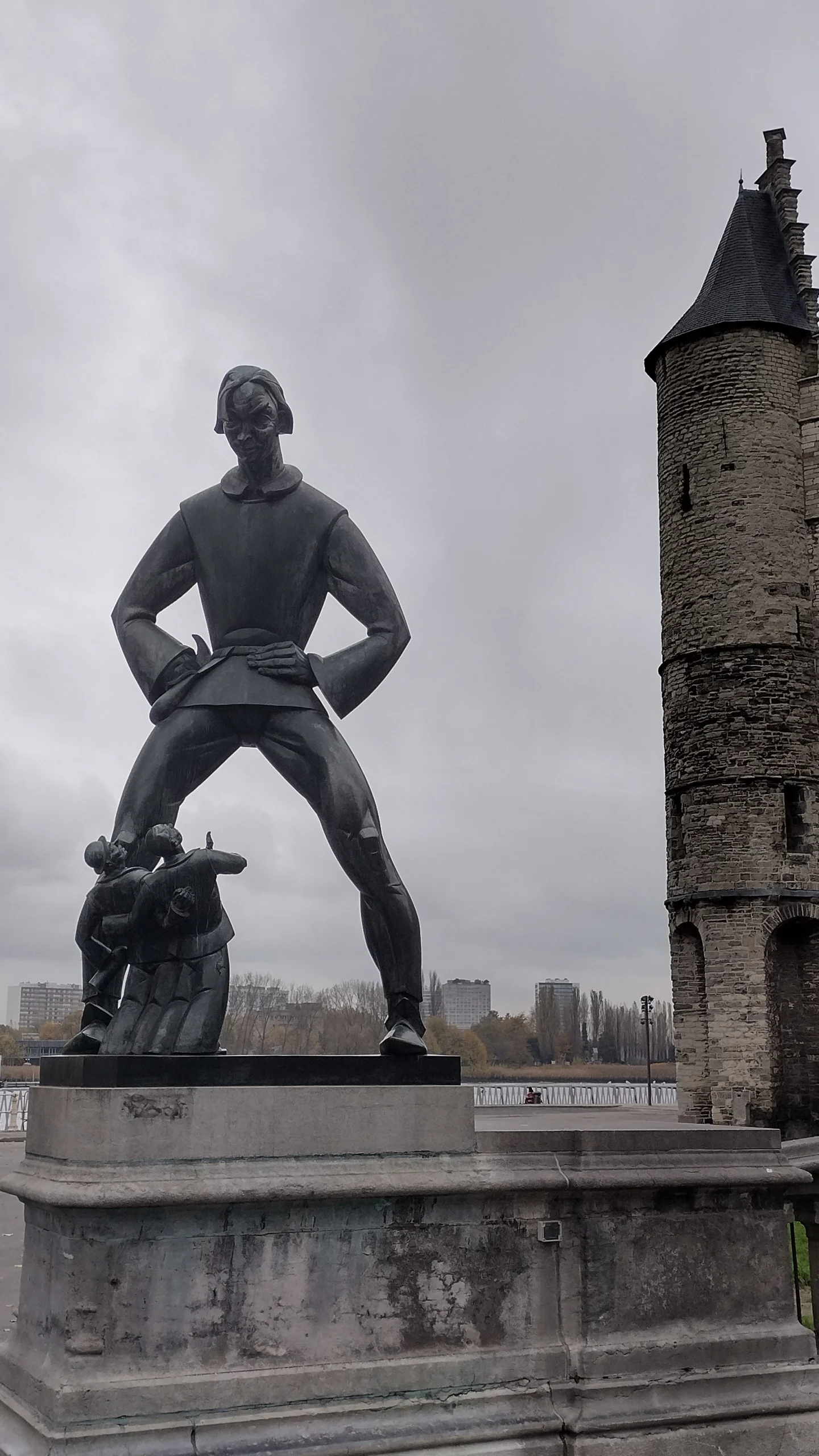
There's a peculiar statue here too, and, once again, no information about it, although this time Google comes up with the answer - it's a giant known as Lange Wapper, who apparently used to tease and torment the inhabitants of Antwerp, particularly drunks, children and breastfeeding mothers. I suppose it's one way of getting yourself commemorated in bronze!
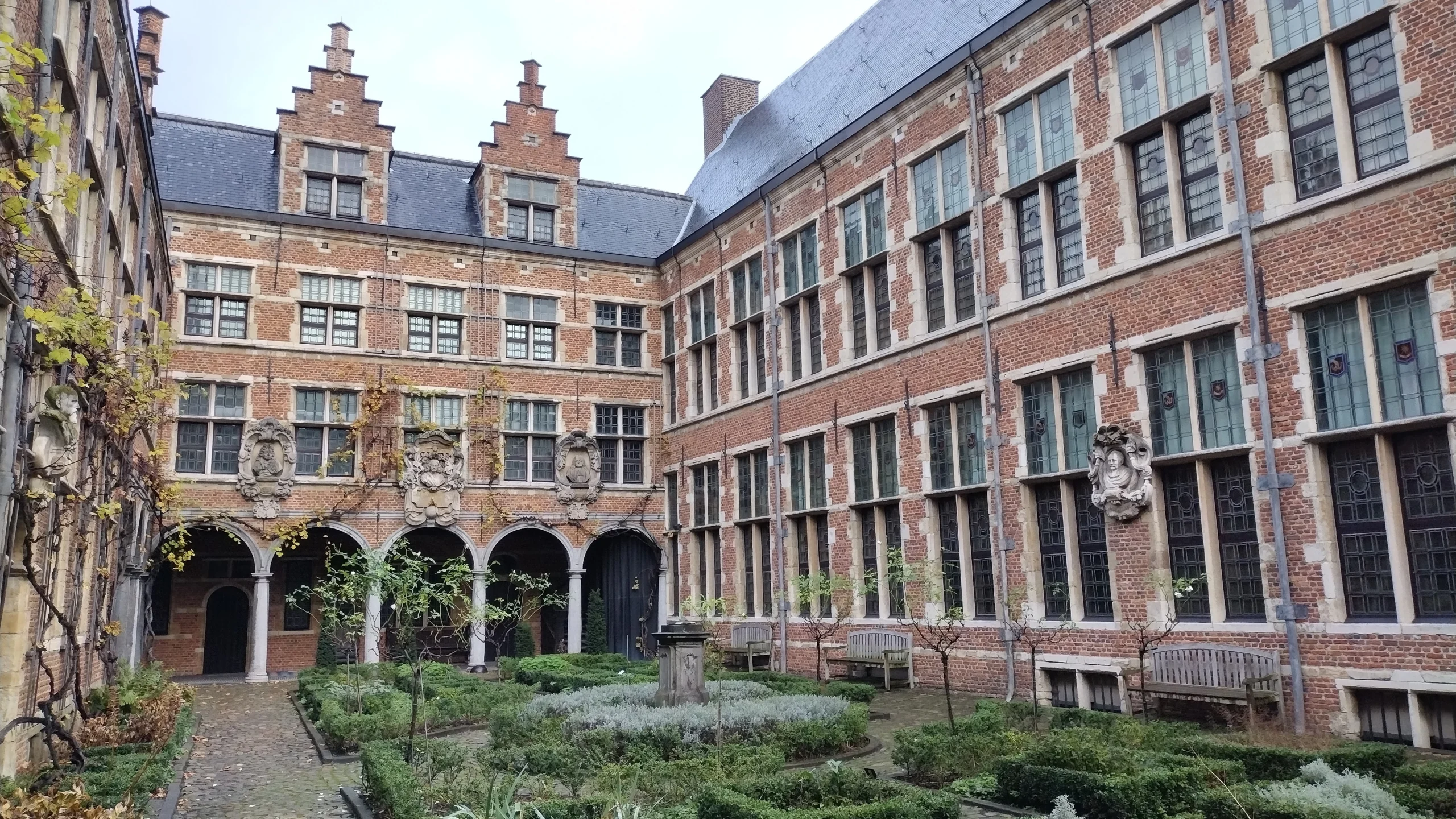
But the real treasure we discover in the city relates to its past as a centre of printing. A beautiful house in the old centre of Antwerp contains what must be its most fascinating museum. It was the home of the Plantin and Moretus families, a dynasty that ran one of the city's biggest printing firms for centuries. As well as the house itself, and its garden, the museum has dozens of fascinating old books, including a 16th-century Bible printed in no less than five languages (Hebrew, Latin, Greek, Aramaic and Syriac), and two of the oldest preserved printing presses in the world, not to mention portraits of the family by the omnipresent Rubens himself.
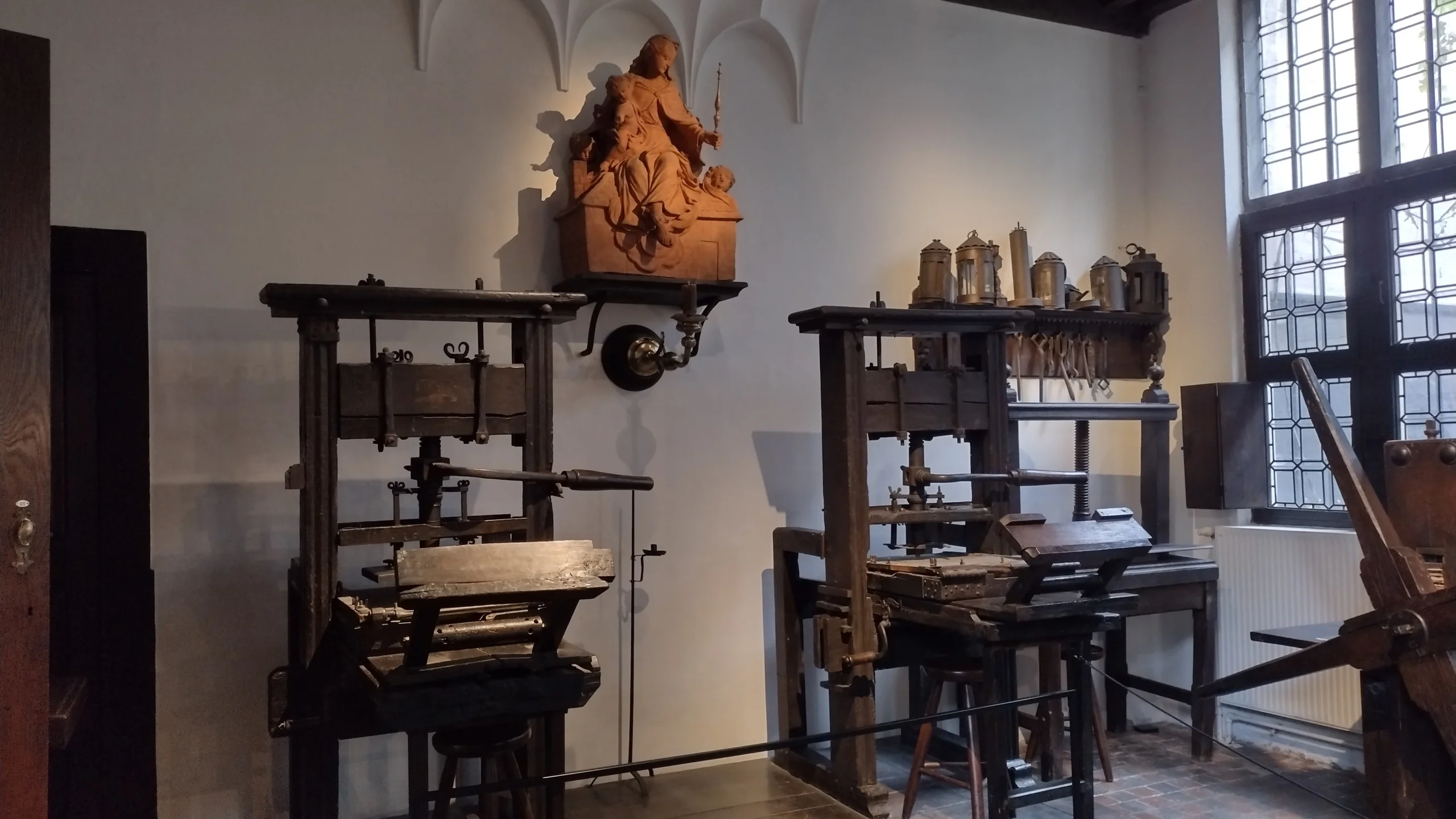
It truly is a glimpse into a vanished world, and we see how printing changed society just as surely and irrevocably as the internet has changed it in our lifetime. Suddenly it was possible to achieve things that would have been unthinkable just a few years before, like atlases including maps of parts of the world being visited by Europeans for the first time. But at the same time there was prohibition of some works, and the chance to produce propaganda - the family trod a careful line during the Dutch wars of independence, working for both the Spanish overlords and the rebels at different times.
We leave the peace and quiet of the museum and go out into the street, where we are promptly nearly knocked flat by another crazed cyclist. It's probably time for one of the things the Belgians do better than anyone - a beer!