Aveiro
Aveiro has been something of a second home to me ever since my partner moved there over a year ago. It’s an attractive town and I’ve become fond of it, so I really wanted to include it in my blog here.
In a minute, we’ll take a walk round the town, but, first of all, there are things every visitor should know about the northern half of Portugal (Aveiro is just south of Porto).
- It rains. A lot. That means if the sun comes out in Aveiro, you go out for a walk, always with a coat and one eye on the sky in case you have to scamper for shelter.
- Portuguese pavements are pretty, but pretty deadly. They’re generally made of mosaics of polished black and white stones, which look beautiful but are lethally slippery after a shower. Be prepared to walk like a penguin to prevent going flat on your backside and make sure you hold on to something going downhill.
- Portuguese pavements are just one example of the Portuguese doing things their way, often in defiance of all logic. I once spent an hour and a half waiting to hire a car from an agency near Porto airport. It could all have been done in half the time if the hard-working people behind the desks had not had to painstakingly copy data from handwritten forms into their computers and then individually go off and look for each vehicle, one at a time. But that was their system and they were sticking to it, come what may.
- Booking a restaurant can be similarly tortuous. My partner phoned up one Saturday to book a place for lunch the following day. She is Brazilian, so there was no language barrier. “Go away,” she was told. “We’re too busy to take bookings now.” She phoned back later (it’s a very good restaurant). “You shouldn’t need to book,” she was told. “We don’t normally have any problems fitting people in.” We knew this not to be true, as the previous time we’d tried to go on a Sunday we’d been turned away, so she insisted. “What time do you want to come?” “About two?” “We don’t take bookings after one o’clock.” “OK, then, at one.” “Just make sure you’re here at one o’clock sharp. Otherwise we’ll give your table away…”
- And talking of language, if you don’t speak Portuguese, you may be tempted to try another language you know. But whatever you do, don’t try to speak to Portuguese people in Spanish. In general, the Spanish despise the Portuguese and the Portuguese know it. So you will be treated MUCH better (this has been empirically tested) if you speak English in Portugal than the superficially similar language of the neighbouring country. You will also find that Portuguese people generally speak better English than their counterparts in Spain.
- If you like eating well, though, don’t allow any of the above to put you off. This is because in Portugal (outside the tourist traps in Lisbon and Porto) you eat better than anywhere else I’ve ever been in Europe, often for the most ludicrously low prices. In Aveiro itself it’s not so much that food is cheap, because the place is quite a tourist attraction, but it is still extremely good value for money. Order fish or seafood at one of the restaurants and you’ll soon see what I mean.
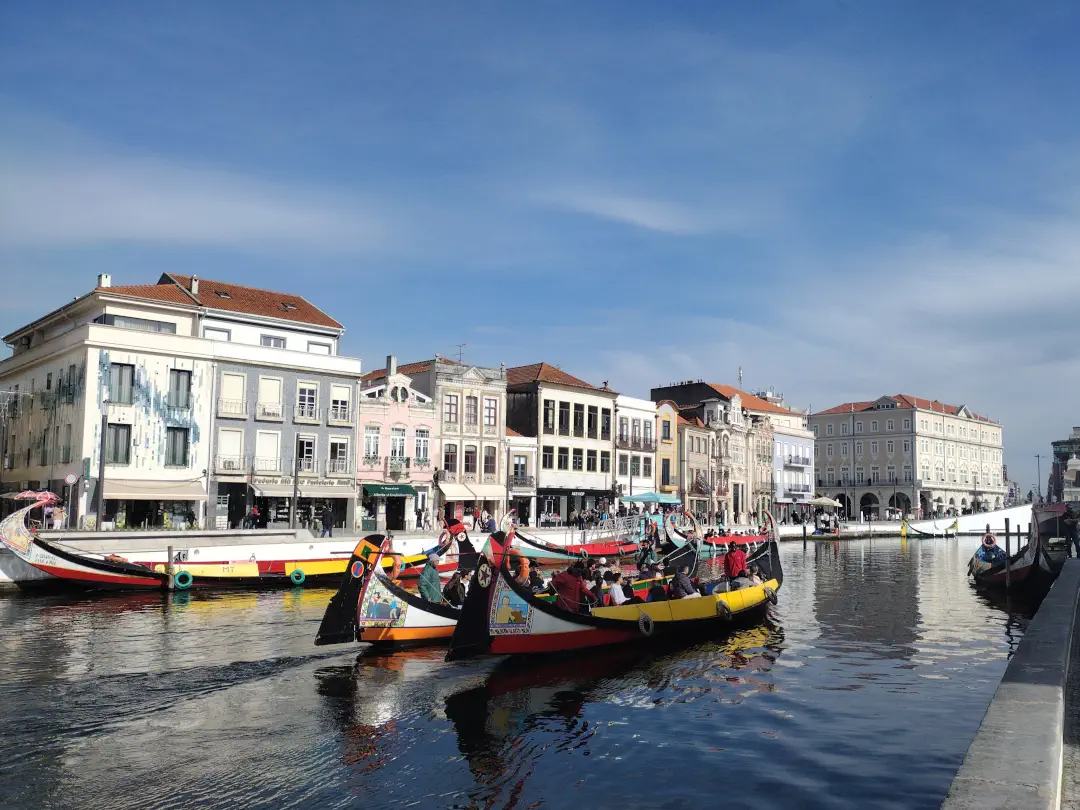
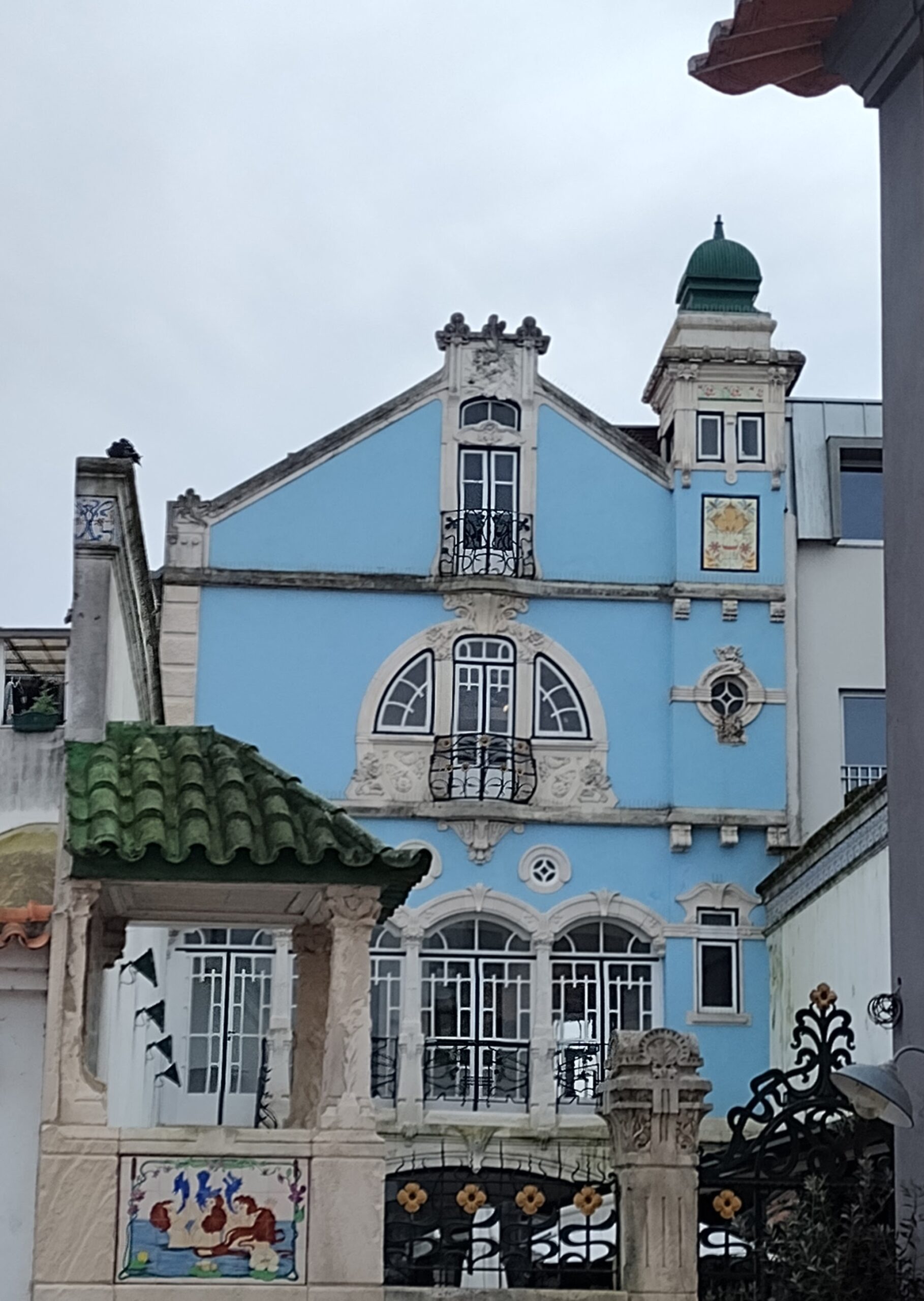
Aveiro has plenty of attractions: there are museums and it’s not far from the beach at Costa Nova, but it’s ideally seen on a Sunday morning stroll. Let’s wander into one of the stately public parks, still green, even in the middle of January. We’ll walk down to the canal. You’ll see the gaudy boats once used to transport goods up and down and to collect seaweed for fertiliser. Now they give rides to tourists. Take a photo if you will, but there’ll be time for a ride another day. We’ll cross the bridge instead to look at some of the astonishing Art Nouveau buildings. None of them quite seem to fit together, and yet the overall effect is a pleasing, soothing one. That’s the charm of Aveiro.
On another day, we might walk down to the indoor market, with its stalls full of vegetables and flowers, some with Brazilian delicacies. We might even walk on along the canal to the attractive old factory, now a conference centre, where they used to turn the local clay into bricks. But today’s Sunday and we’re going for lunch.
Over the bridge, we can happily wander round the old part of the town. There are plenty of upmarket souvenir shops and places to buy the local delicacy, ovos moles, a rather sickly sweet concoction of egg yolks and sugar in wafers. Come with us, though, to the O Telheiro restaurant, where we went to such trouble to book the table. In its dark interior, we can order little fried fish from the handwritten menu – there are different kinds – and a great, steaming pot of rice with prawns and monkfish and plenty of juice. There are pears in red wine for dessert. The wine to accompany it is local and it’s all delicious.
Then we’ll make our leisurely way back across the canal, passing the bar where we unexpectedly found some very decent (Belgian) beer a couple of nights ago – Portuguese beer is, in general, restricted to two rather disappointing lagers. We go up the hill and past the 15th century convent, now the town’s museum. It’s Sunday afternoon, and we’re going home.