Bern
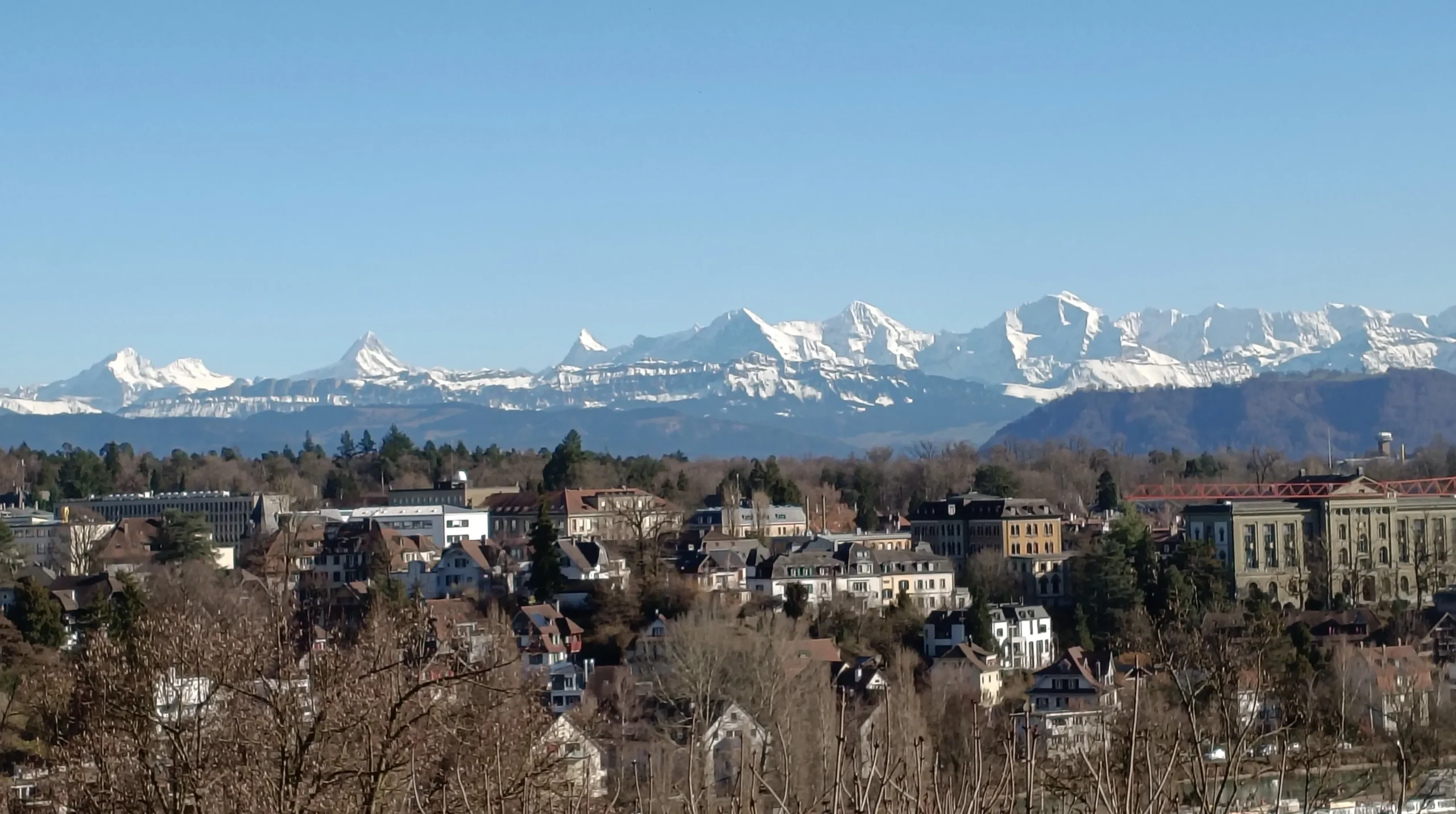
We're in Bern (or is it Berne? As a multilingual country so many of its cities have more than one name). And we've come for two concerts with almost no expectations at all. Any exploring is purely incidental to the purpose of our visit.
And yet... it's a delight. It's early spring and we seem to have arrived in the first good weather of the year. All the people of Bern are joyfully casting off their winter plumage and lapping up the sun. It's caught the spring flowers somewhat unawares too, but they're doing their best to make up for lost time. We're sweltering in our coats, having expected a freeze.
We're staying in the newer part of the city, not far from the university, and the old town, which we want to visit, seems a little far away. No problem. As it turns out, Bern, like some other Swiss cities is so keen to promote public transport that it makes it free for tourists. In no time, we're walking past the Swiss parliament and into the cobbled streets of the old quarter. It's pleasant, without being stunningly beautiful, but the overall effect is solid and welcoming, with arcades on either side of the street.
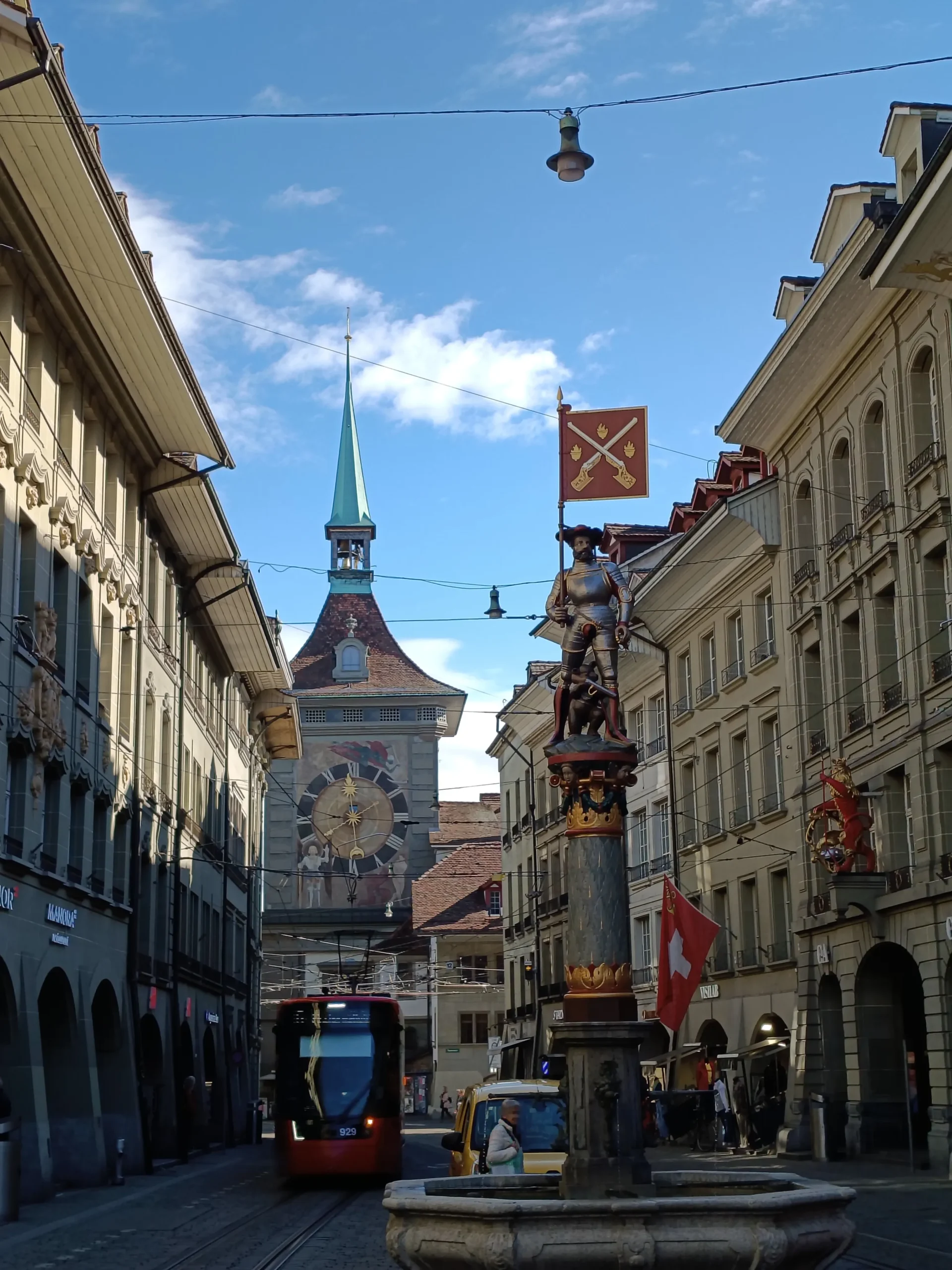
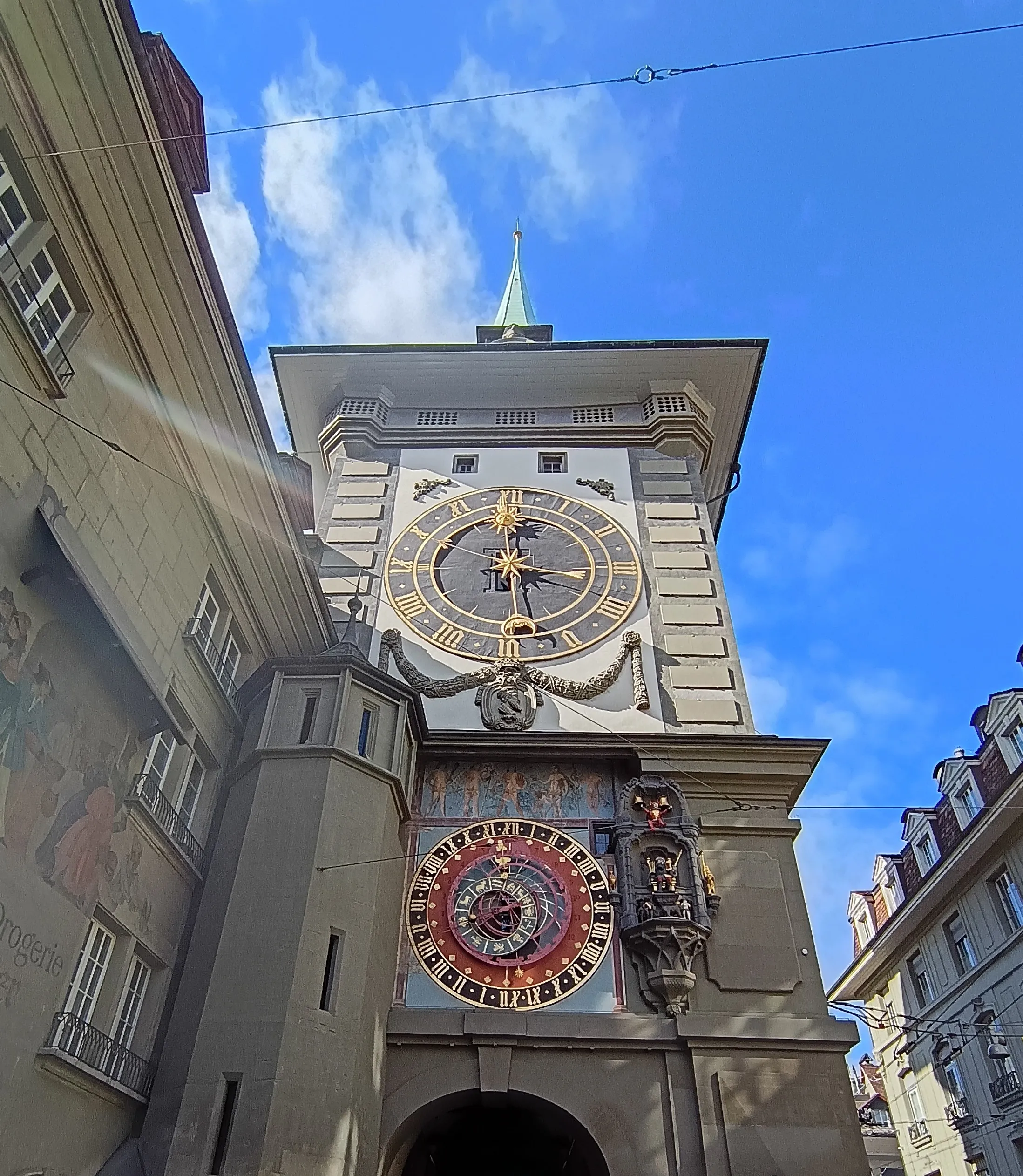
There seems to be a crowd of people clustered around a tower. It's the medieval Zytglogge, with its clock and moving figures. We gather round to wait for it to strike the hour and are so underwhelmed by the little mechanical parade that we can't help wondering whether the point of these mid-European street spectacles was lost somewhere around the time cinemas started to appear. But there are plenty of other medieval buildings to look at, including a cathedral and a city hall. And we find lunch surprisingly good and cheap. It seems that set midday menus are the way to beat the often exorbitant cost of eating in Switzerland. A glass of the local Swiss red is, well, not too bad, but we won't be taking a bottle home with us. Still, we have no complaints at all and, fortified, we decide to go and look at the bears.
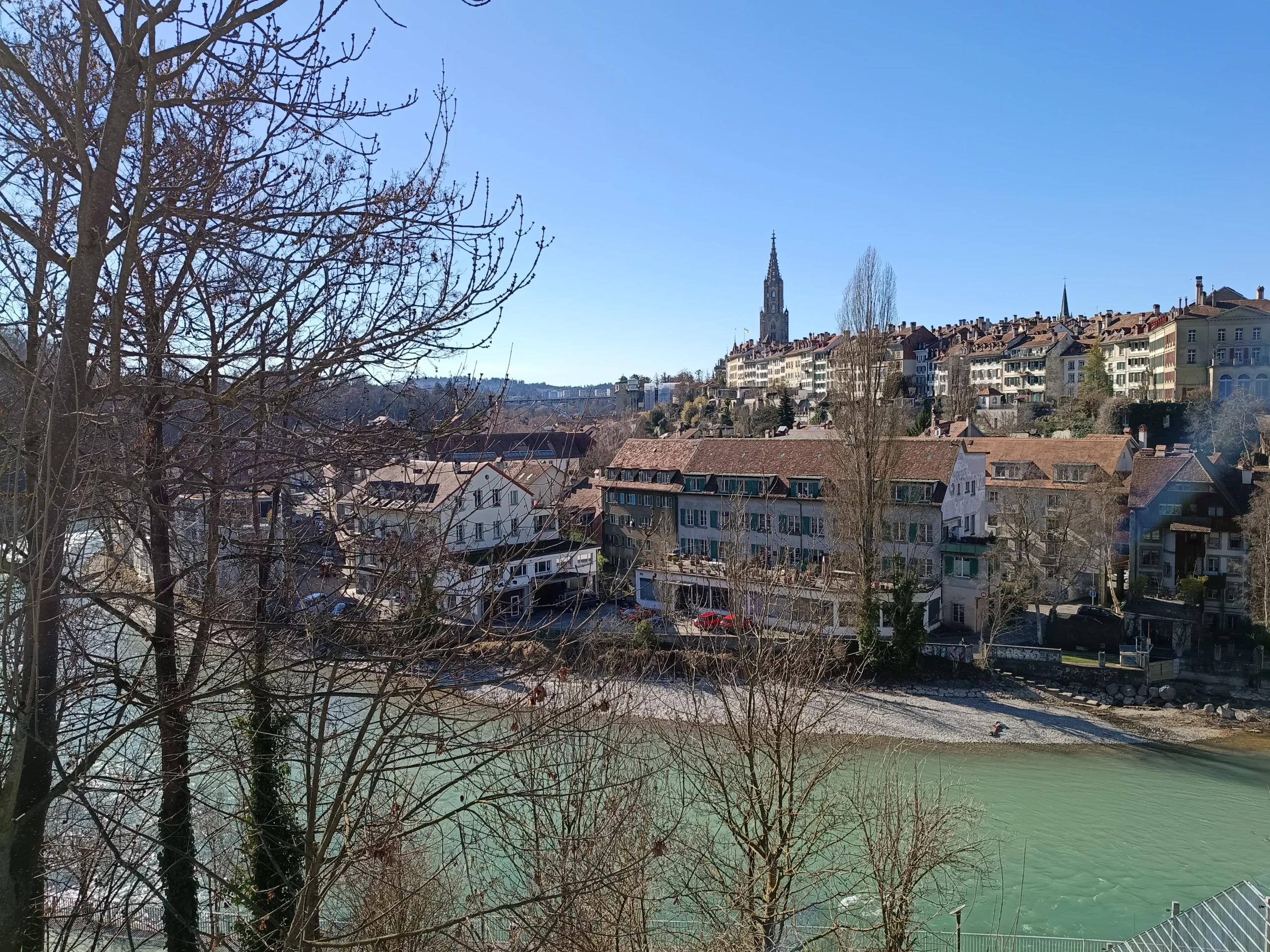
Bears are closely associated with Bern, probably as a play on words (Bären, which sounds a lot like Bern means bears in German). This is probably what managed to get a bear on to the city's coat of arms. And to reinforce the link, bears have been kept in Bern for hundreds of years, first in a bear pit and then in a larger park. So we cross the river from the old town high on a promontory on one side of it in search of the fierce furry figureheads of the city. But we're disappointed. The sun may be out, the crowds may be in shirtsleeves, but the bears are snoring. For them, it's still winter and hibernation goes on. We take some photos of the river and head back into town to rest before the first concert.
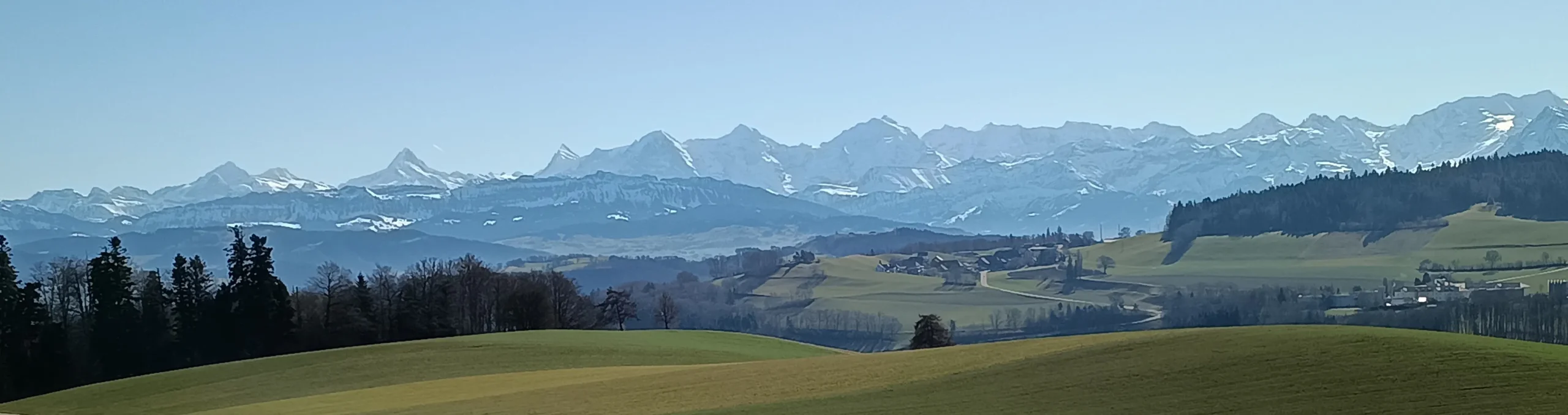
The next morning the sun's shining even more brightly than the day before. We decide to head for the hills, more specifically Gurten, Bern's own mini-mountain, only 858 metres high and just outside the city. It's relatively easy to get there by train (after a few hiccups in finding exactly where to catch it) and funicular railway and we're soon stepping out into Gurten Park at the top. We don't know exactly where we're going, but we take a wide path running slightly uphill in the sunshine, round a corner and there is quite possibly the most spectacular view I've ever seen. Laid out in front of us in panorama beyond rolling green hills, are the Swiss Alps in all their snowy splendour. There's a board so you can put a name to each one of them, but we're content to sit on a bench for half an hour and revel in the magnificent sight. Finally, we manage to tear ourselves away and walk gently back to the park hotel for a coffee before descending the funicular back to the city. Genius awaits.
A real genius - a scientific one - lived in Bern while doing the most important work of his life, including the development of his theory of relativity, while working at the local patent office. Albert Einstein's flat in Kramgasse is still there, furnished as it would have been in the early years of the 20th century, when he lived there with his wife, Mileva Marić, a fellow physicist, who many believe helped him work on his ideas. But whether or not the equation was all Albert's own work, this was the very place where E came to equal mc2. Now a small museum, it tells the story of Einstein's life and his rather sad relationship with Marić, including three children, one of whom was an unwanted daughter resulting from an early pregnancy who was probably sent away to Serbia to live with her grandparents. It all ended in divorce when Einstein found new love along with a proper scientific job in Berlin.
It's time for a snack and a coffee, so we call in at a bakery. And here are the bears at last! These are small biscuity ones known as Mandelbärli, which, it turns out, are a local delicacy. There are all kinds of flavours on offer, but we are happy with the traditional almond ones. Before returning to our hotel to rest before the evening's concert, we take a final look at the magnificent mountain views from the park high above the river. Would we have ever have come to this beautiful, interesting place without the lure of the music? Almost certainly not. But we're both delighted that we did.