Brasilia
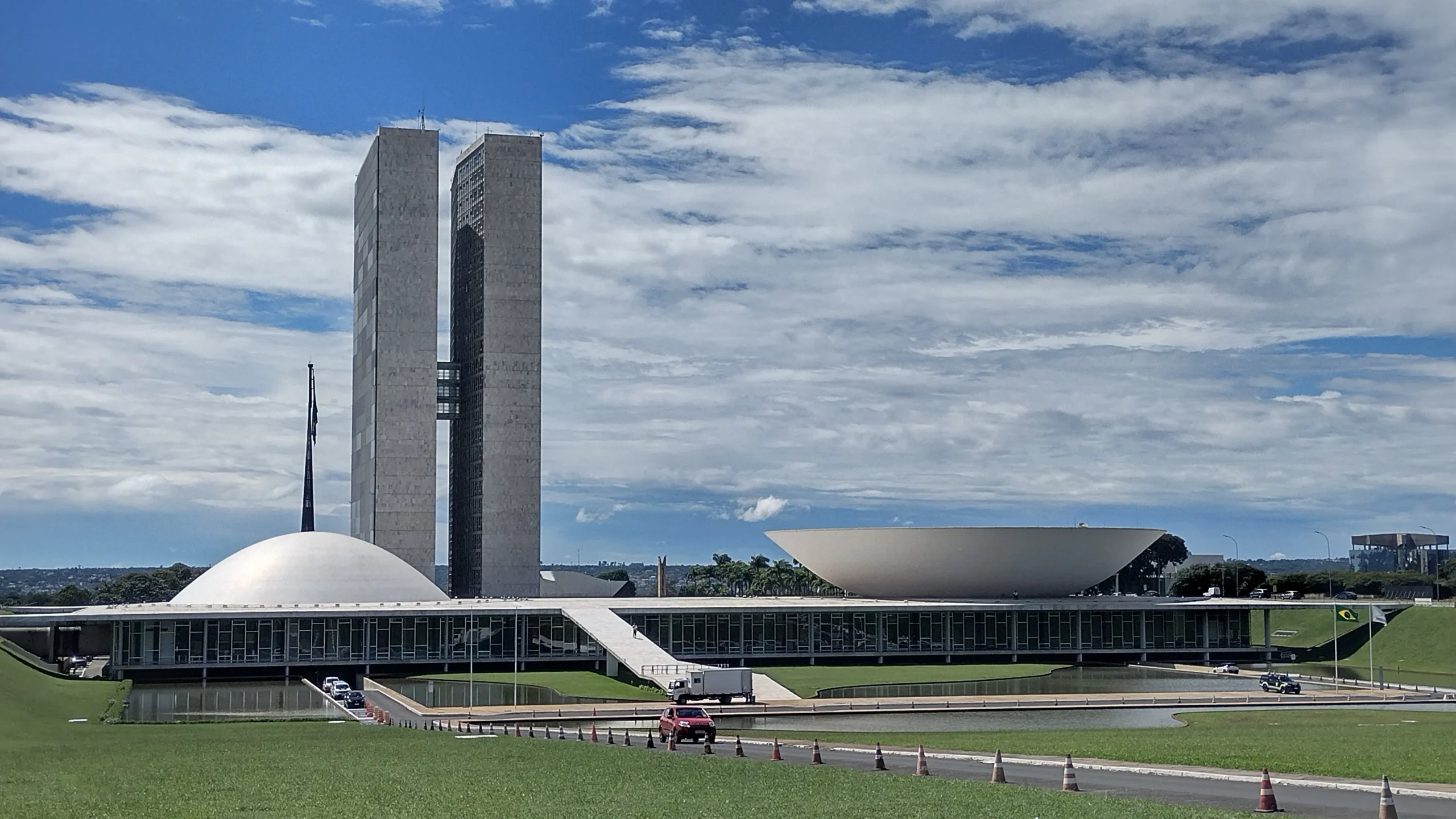
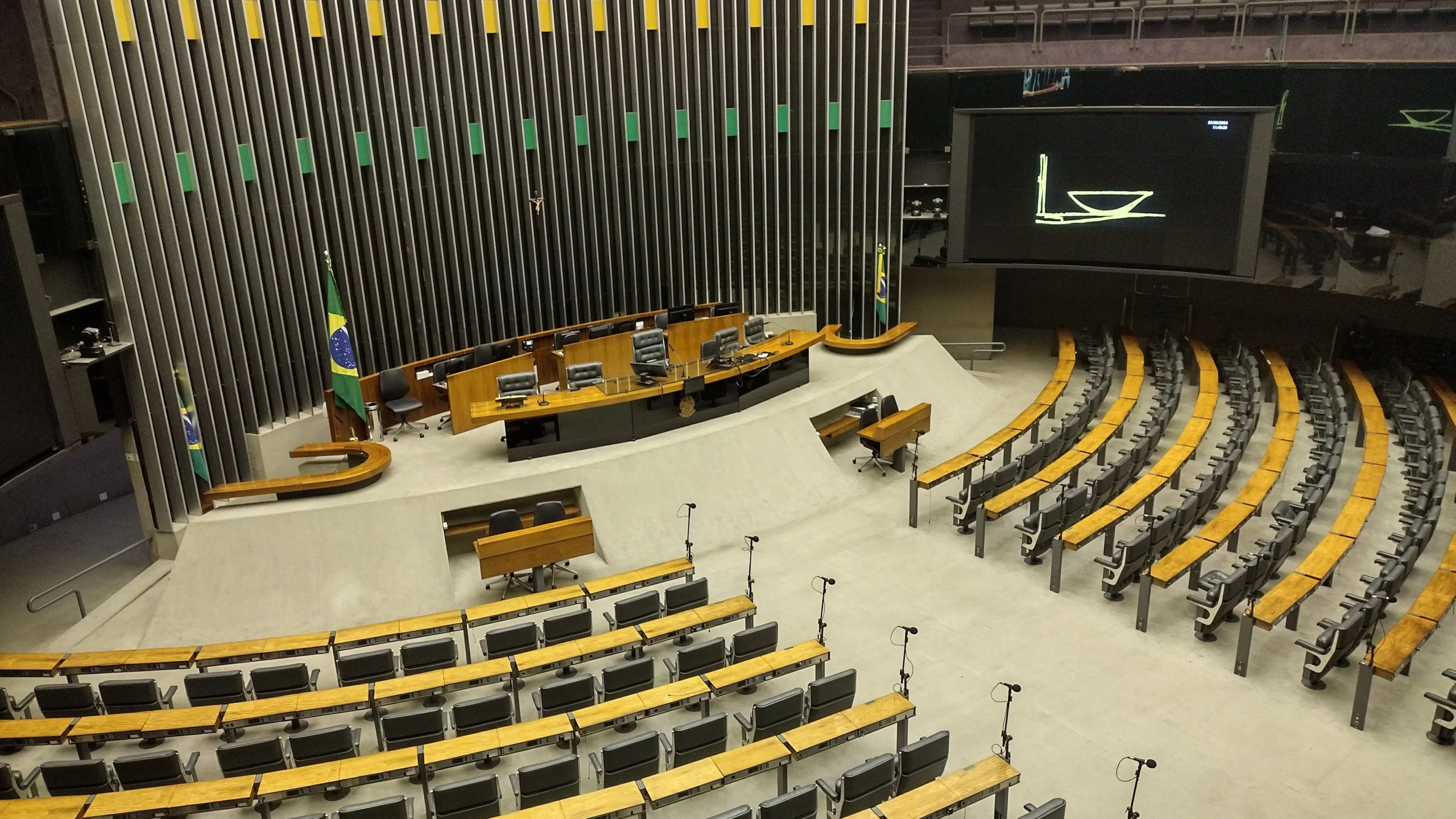
In some cities, history is now. We're touring the dramatic congress building in the Brazilian capital, and the disgust and bewilderment of our guide at events that occurred just over a year before is clear. "They smashed through the doors and came in here," he says. "There was so much destruction. It's still being put right." He is quite emotional. The events evidently affect him still.
That day the Congress, Supreme Court and Presidential Palace were attacked by rioters after former President of Brazil Jair Bolsonaro had been defeated at an election and ousted from office. On 8 January 2023, thousands of his right-wing supporters stormed the building, smashing furniture and works of art in an orgy of destruction as police struggled to expel them. It's something the country - and the city of Brasilia - are still dealing with.
Not that the capital of Brazil, despite being designed to directly symbolise the three branches of democratic federal government, is any stranger to authoritarian behaviour. In 1964, just four years after it was completed and made capital of the country, a military coup installed a dictatorship that ruled Brazil for more than two decades - a dictatorship now glorified by Bolsonaro and his supporters.
It's somewhat ironic that the backward-looking dictatorship of the 1960s got its hands on one of the most modern capital cities in the world. From the air, Brasilia doesn't even look like a city at all - it seems more like a series of open spaces and lakes with buildings arranged around them than a built-up area. When I arrived at the airport I was left slightly surprised, thinking the "real" capital must be just over the hill.
I'm lucky enough to be visiting in early March, when everything's green. Normally, I'm told, the dominant colour is brown - this is one of Brazil's driest regions, chosen for the new capital mainly because it lies more or less in the centre of the country, far from the rival economic and political powerhouses of Rio de Janeiro and São Paulo.
The downside of this open design is that you need a car to get anywhere in Brasilia. Public transport is sketchy to say the least and the distances are huge. It's much too far to walk from one end of the central Monumental Axis, with all the government buildings, to the other, especially in the late summer heat. For the ordinary people who actually live here, particular types of shop are all inconveniently clustered in one area, so if you want to, say, buy a washing machine, you might have to go right to one end of town, whereas if you want to buy paint you have to go to the other. Other than that central axis, there seems to be no city centre - no heart.
And this is reinforced by something else I'm told: no-one is actually from Brasilia, they're all from somewhere else. Like my partner Ana, who's with me here and whose family I'm visiting. She tells people she's from Brasilia, but she isn't really - she was born in Manaus and of the various places she's lived she identifies most with Belo Horizonte, which I talked about in a previous post. And when she was a student here, many of her friends not Brazilians at all, but the children of diplomats from other countries, working at embassies scattered around the capital.
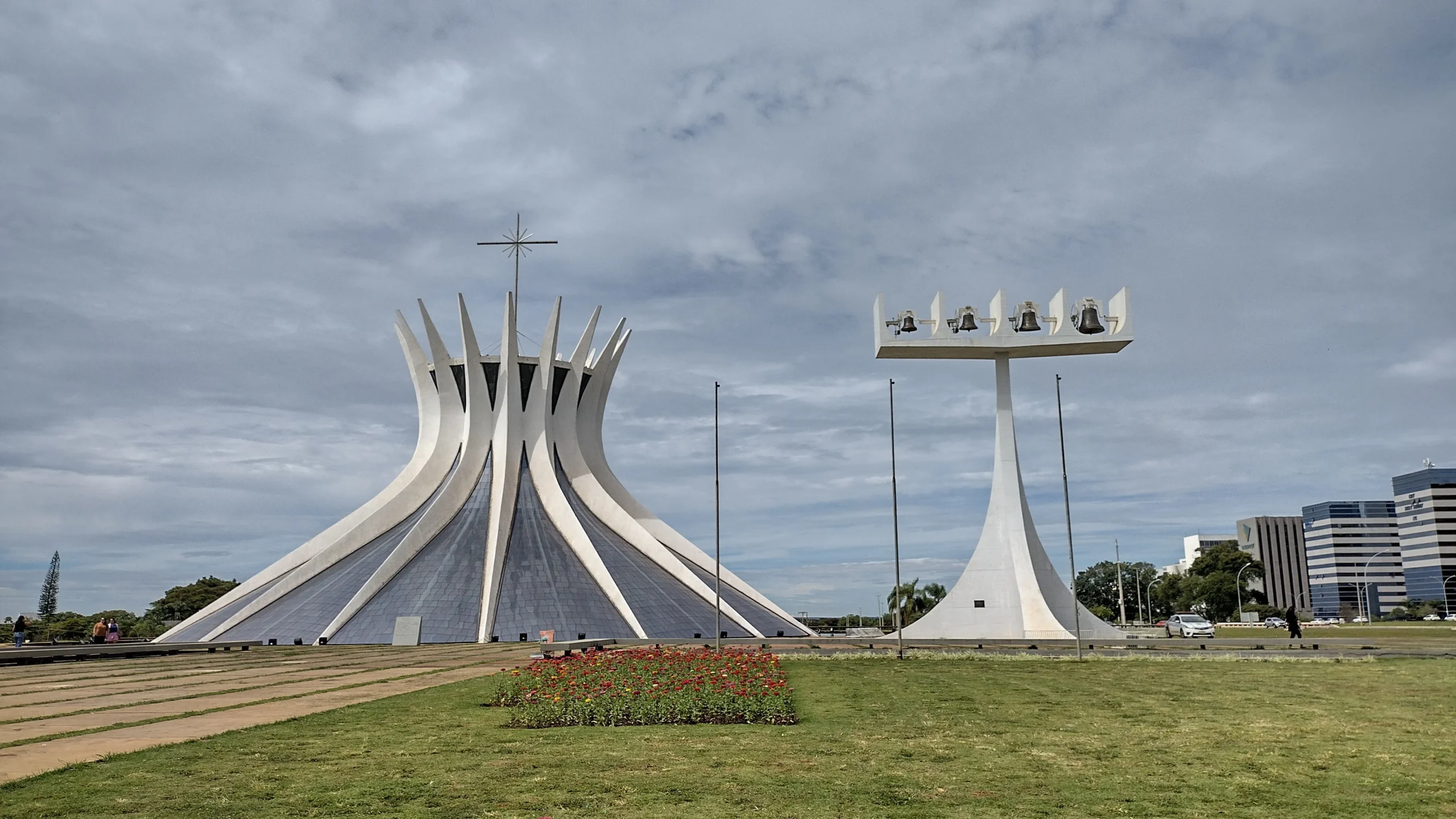
I'm very kindly being driven around, mostly to see modern architecture, something I'm not normally wildly enthusiastic about. Brasilia, though, has some examples to win the respect of even the most virulent sceptic. There's the cathedral, of course, the astonishingly graceful work by Oscar Niemeyer, who is responsible for most of the capital's iconic buildings. It seems barely believable that a lifelong atheist like him could have managed to evoke heaven itself, drawing the gaze of anyone inside the cathedral inexorably upwards to the beautiful glass roof.
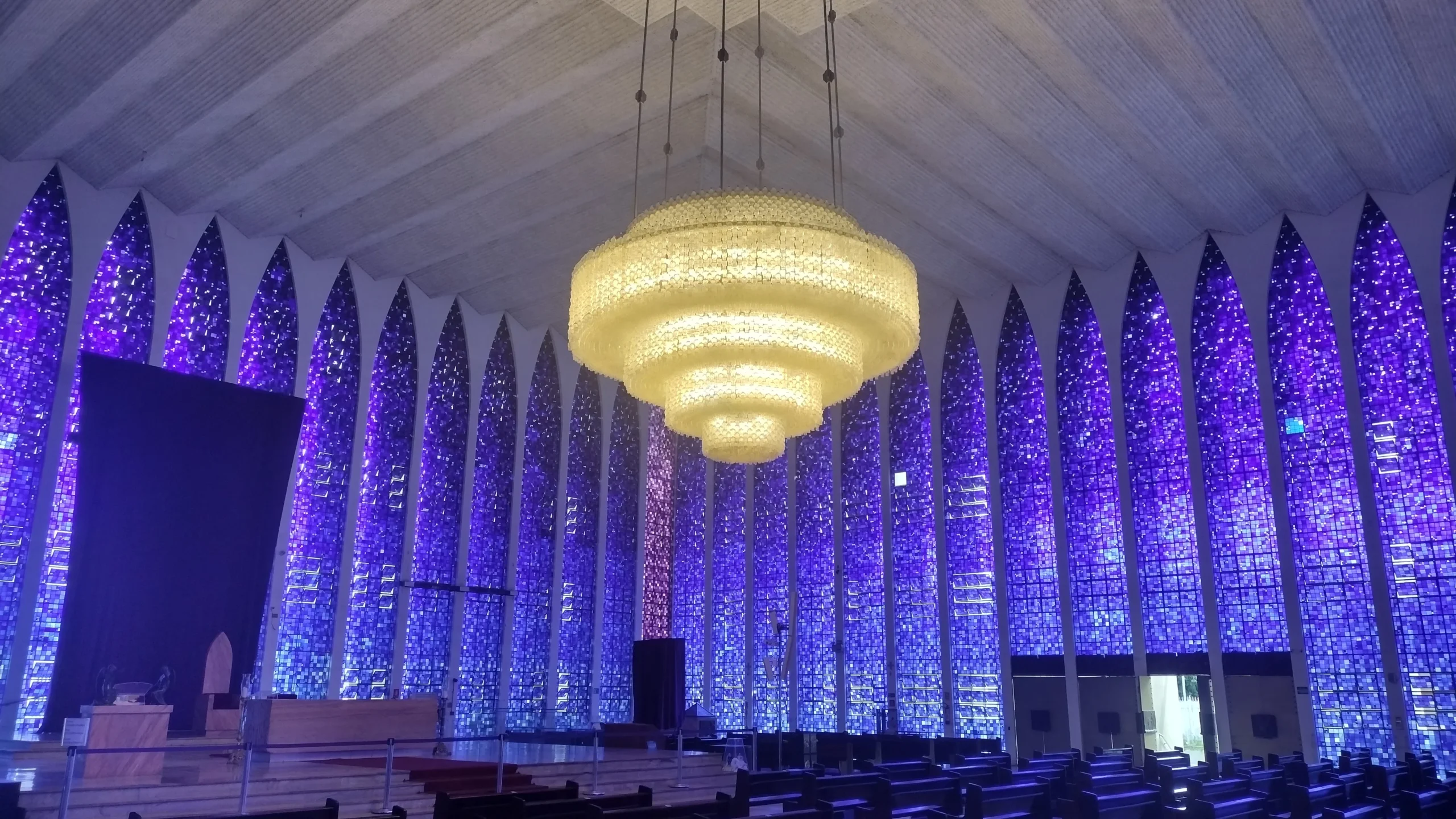
Another Brasilia church, by a different architect, Carlos Alberto Naves, is also deeply impressive, but in a completely different way. Outside the Santuário Dom Bosco seems to be a rather unexciting square punctuated by the outlines of Gothic-style stained glass windows. But inside, those windows flood it with extraordinarily atmospheric blue light in different tones and shades. I can honestly say I've never seen anything like it.
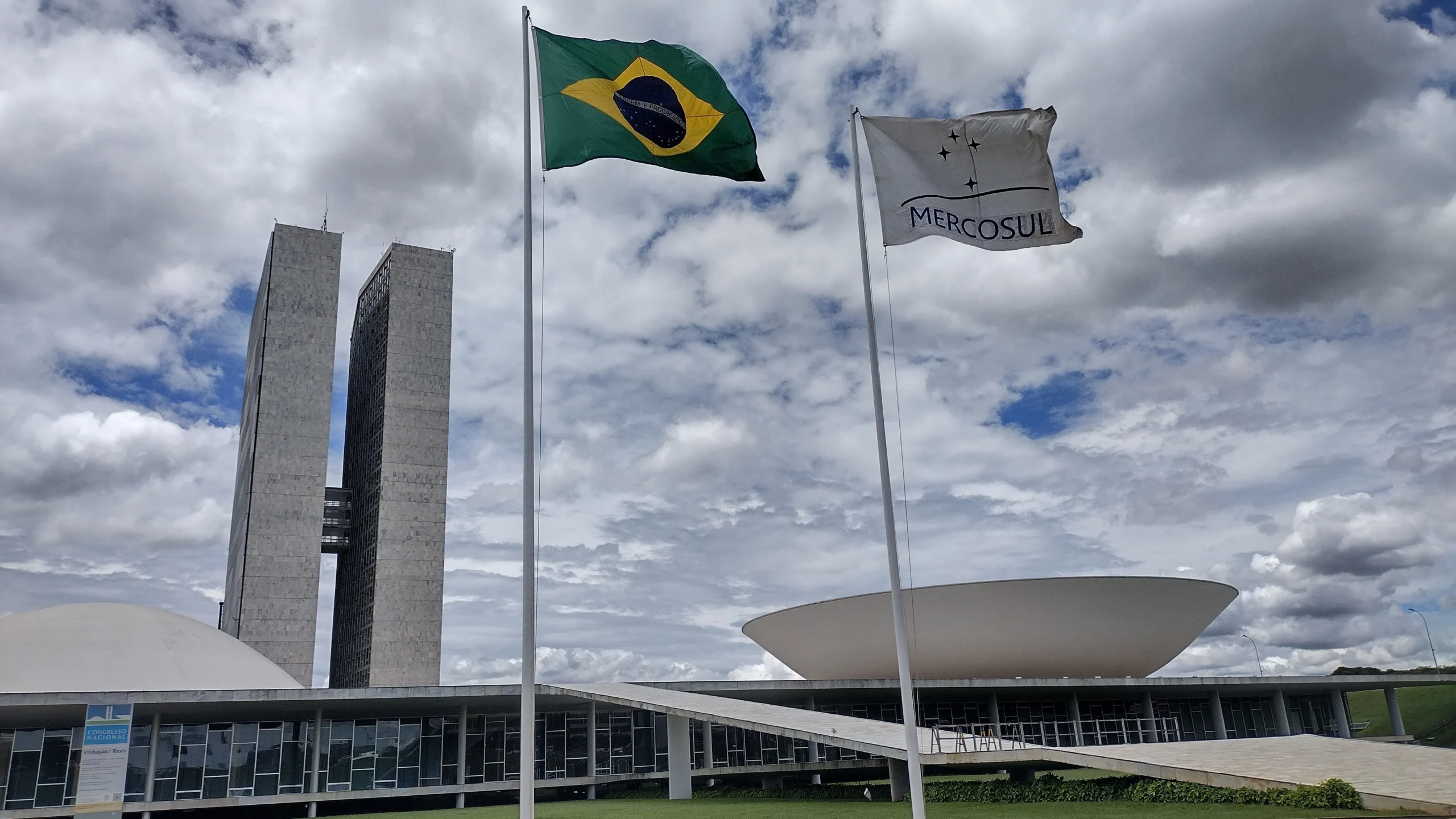
It was Niemeyer, though, who designed the National Congress Palace we are visiting now, with its two opposing hemispheres housing the Senate and Chamber of Deputies separated by soaring towers of offices in the middle. It's another arresting building, but it seems almost too cold and too perfect: a model barely brought to life.
That's until I see what it means to our guide, so delighted to see the building restored to its pre-riot glory. For him, and I can only imagine for many others, the restoration of the congress represents the triumph of democratic values and life in this huge country, so close to being lost. A strange, sprawling city it may be, but it turns out Brasilia does have a heart after all.
Postscript: It's September 2025 and I'm just hearing that former president Bolsonaro has been jailed for 27 years for various offences including trying to organise a military coup and being responsible for the damage to government property done by his followers on the day of the riot in January 2023. I'm delighted, of course, that, in this increasingly morally warped world, an unpleasant fascist leader has been dealt with properly for crimes he committed, but I also can't help thinking of the satisfaction the decision will bring to our guide from my visit to the congress. The democracy symbolised by the buildings where he works has been upheld and vindicated. Long may it continue!