Franeker
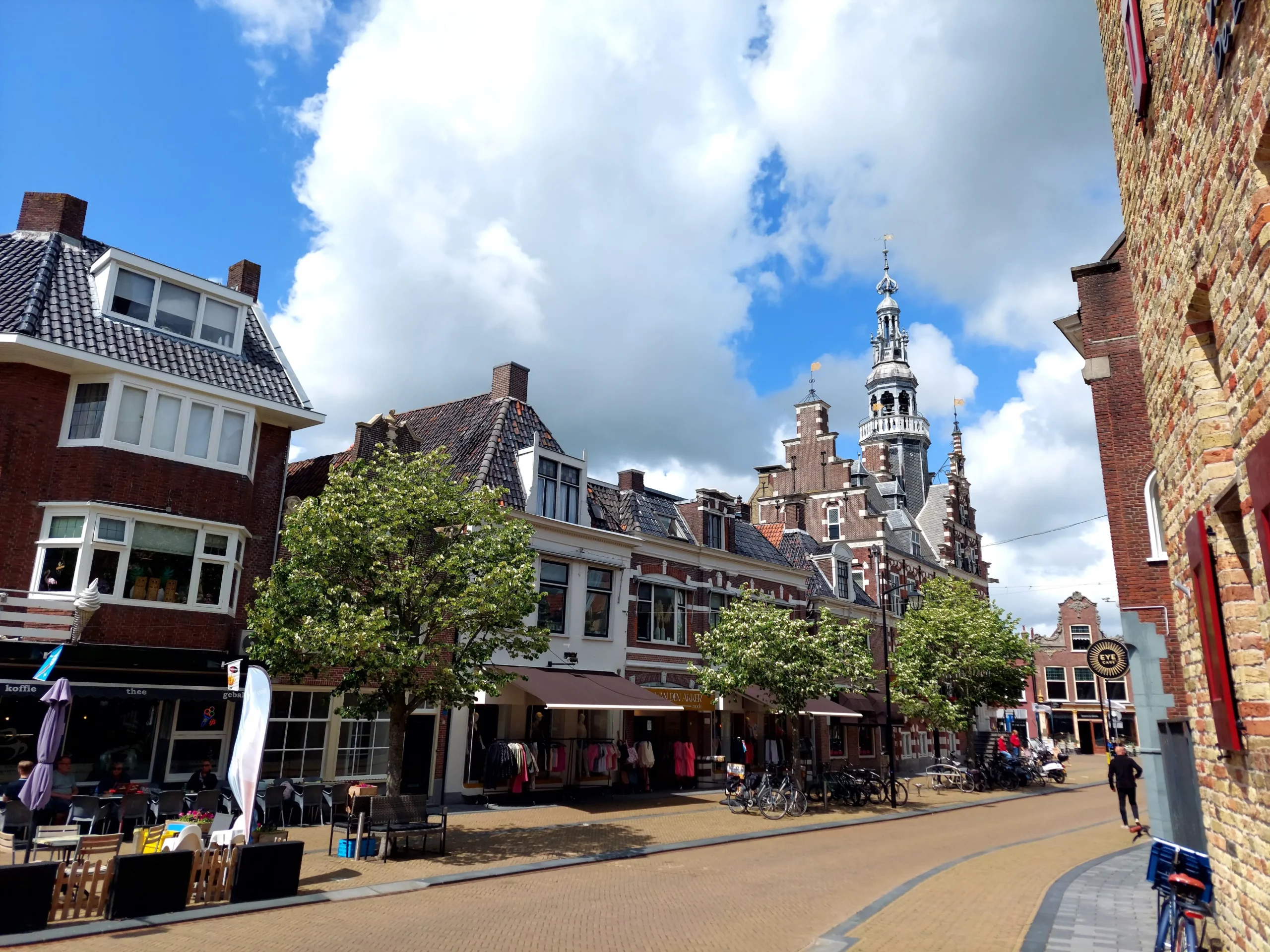
Canals; neat, gabled brick buildings; a windmill... there appears to be nothing about Franeker, right up here in Friesland, in the northern Netherlands, that makes it anything other than a pleasant little Dutch town. A place for an afternoon stroll and little more. But it was here, in 1774, that local wool-carder Eise Eisinga decided to build his own planetarium, a planetarium still working today, more than 250 years later, making it the oldest one in the world still in operation. And that's what we've come here to see on a rather chilly summer afternoon.
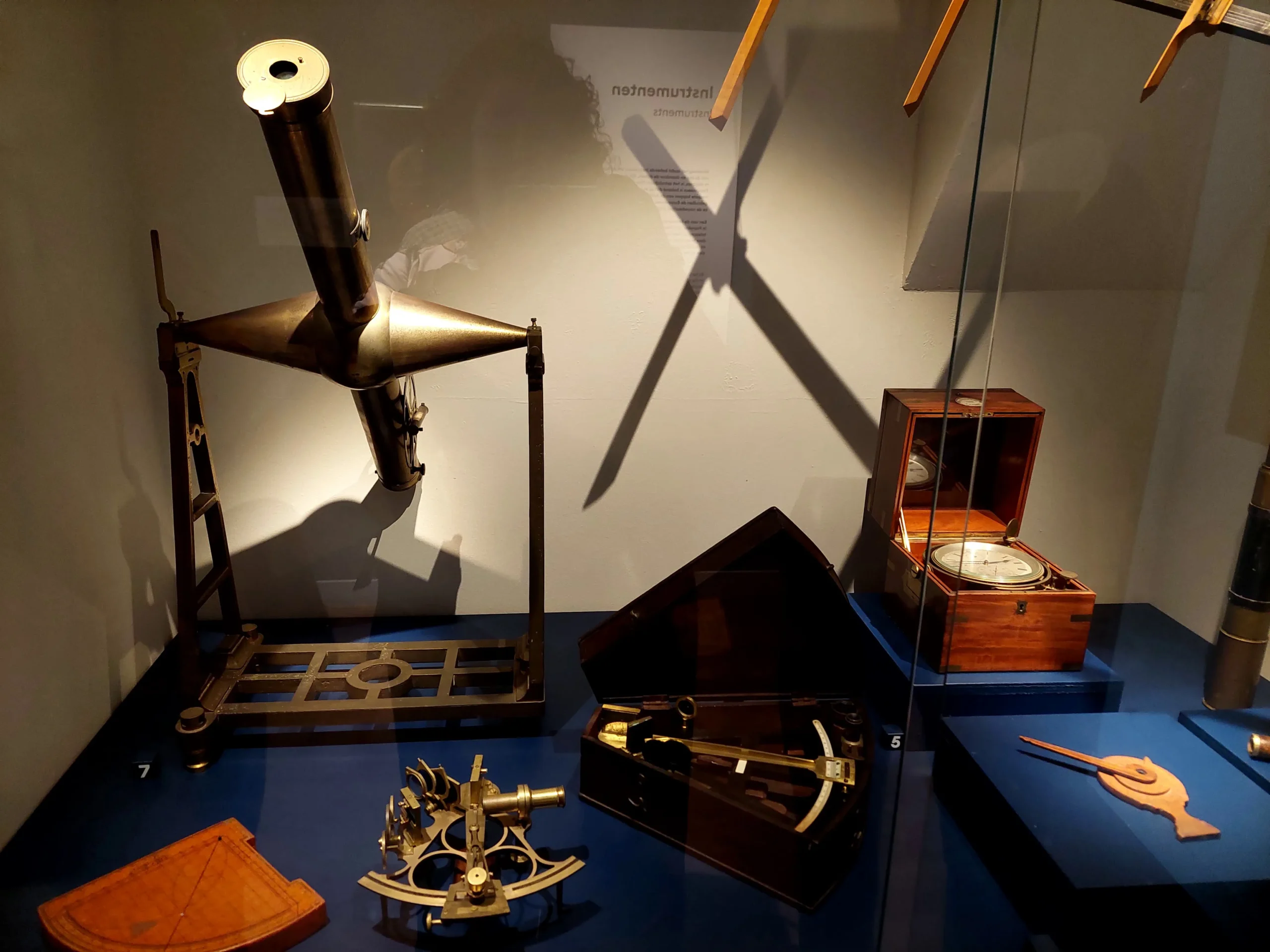
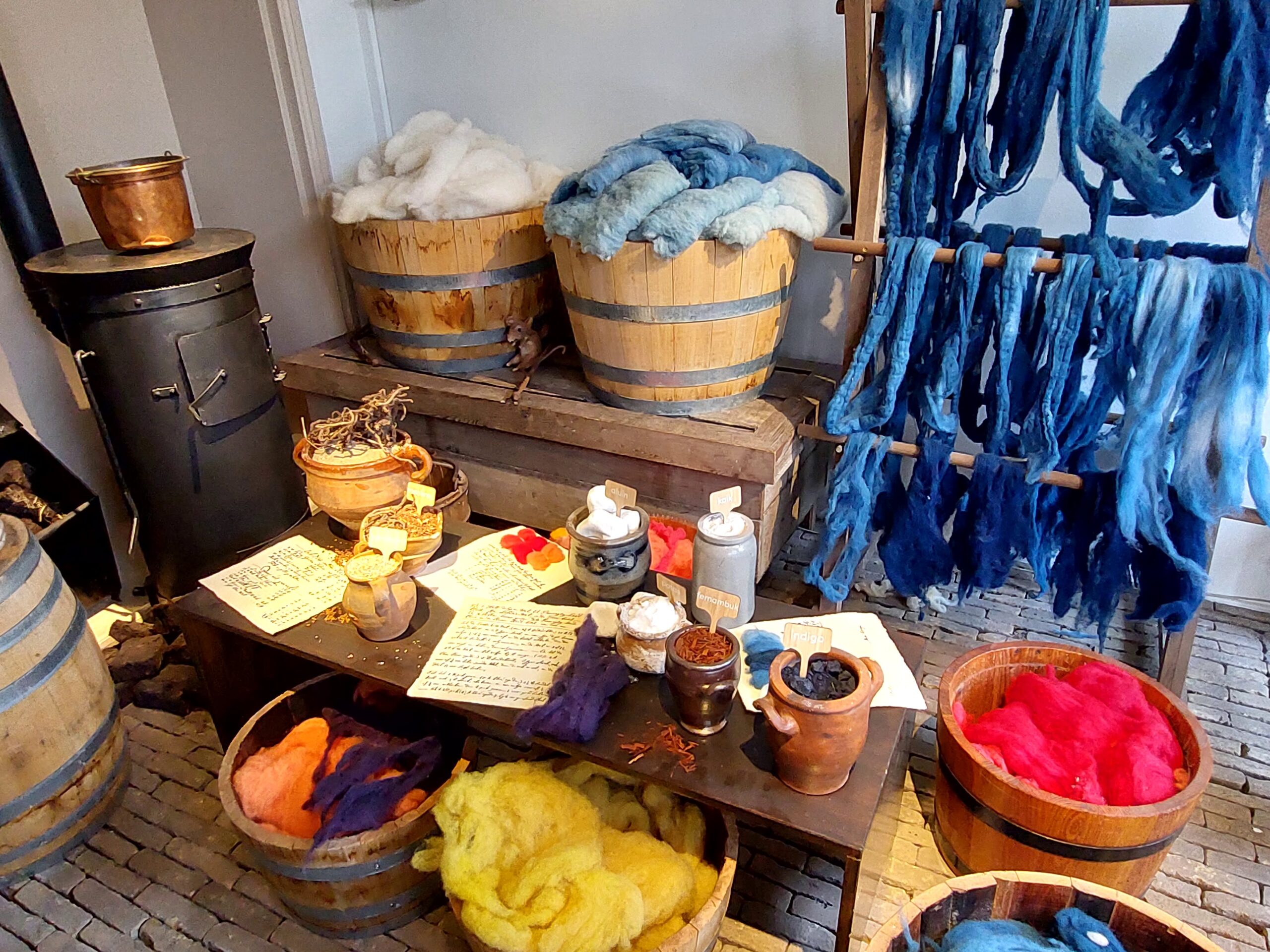
Eisinga's house in the centre of Franeker is now a museum with displays on astronomy, the history of celestial observation, and the life of the man himself. Not allowed even to go to secondary school, Eise followed his father into the wool-carding business, but was always more enthusiastic about astronomy and mathematics, reading voraciously and writing books on both subjects when he was just 17. Just a few years later, he married and started a family, but instead of putting his hobbies aside to concentrate on his wife and his work and his children, he decided to pursue them on a grand scale.
We can only imagine what Eise's wife, Pietje, had to say when he told her of his plans. I visualise a Monty Python sketch. "Yes, dear, I'm going to build planetarium." "A planetarium?" "Yes, an entire scale model of the solar system, here in the living room..." But whatever her reaction, he went ahead with his plan, apparently in an attempt to disprove a local preacher's half-baked theory that a predicted conjunction of the planets was going to lead to the end of the world. The result is nothing if not impressive.
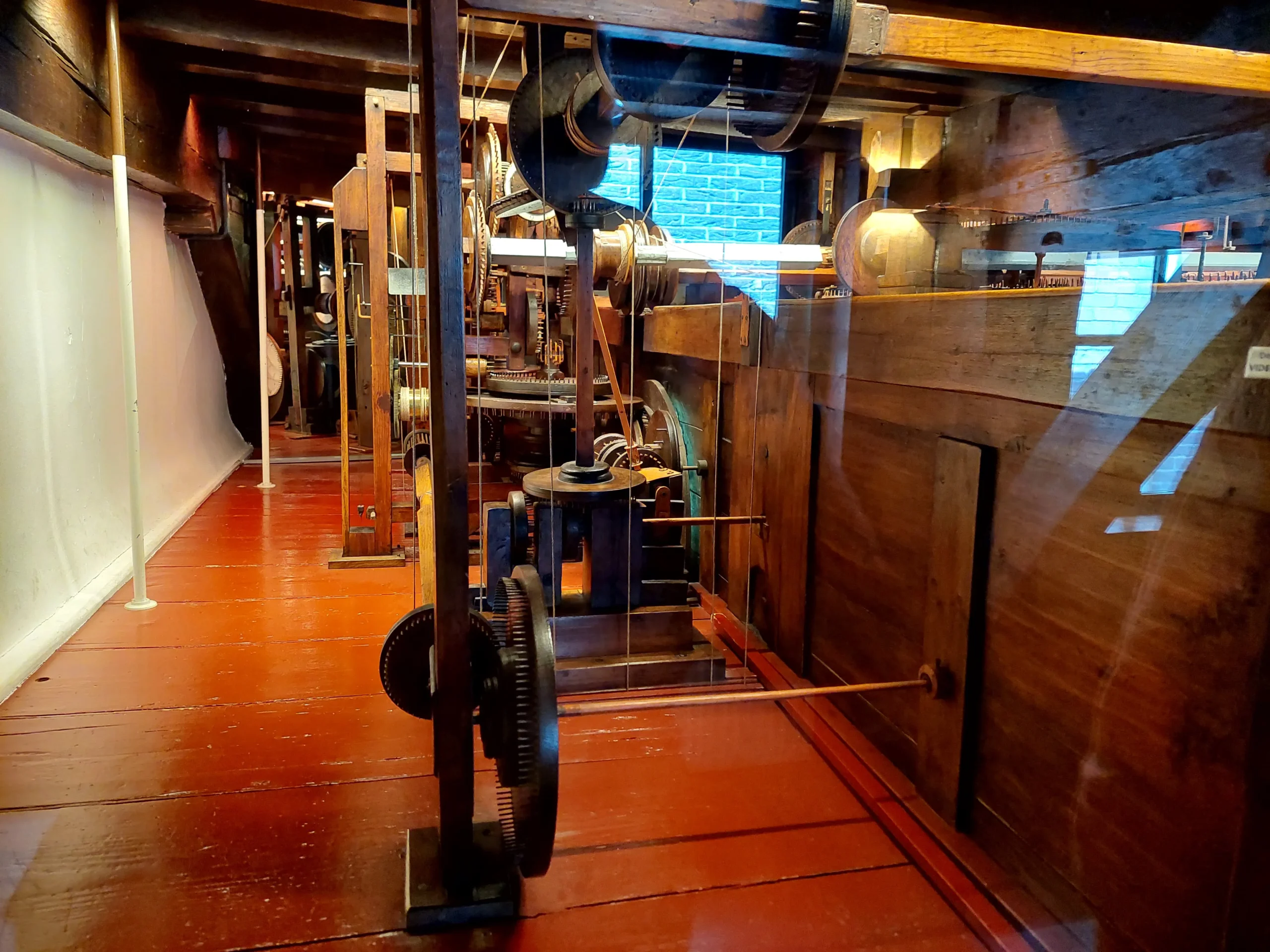
Before our turn comes to see the planetarium itself - the climax of a visit to the museum - we decide to go up the narrow wooden stairs to look at the mechanism of cogs and gears that keeps it running. This turns out not to be the best decision I make that day: failing to heed the warning signs, I crack my head on a vicious low beam and end up almost literally seeing stars by the time we move into the planetarium itself. Inside, though, I'm stunned not by the blow to my head but by the sheer beauty of the spangled blue ceiling and the astonishing ambition of a self-taught amateur astronomer more than two centuries ago.
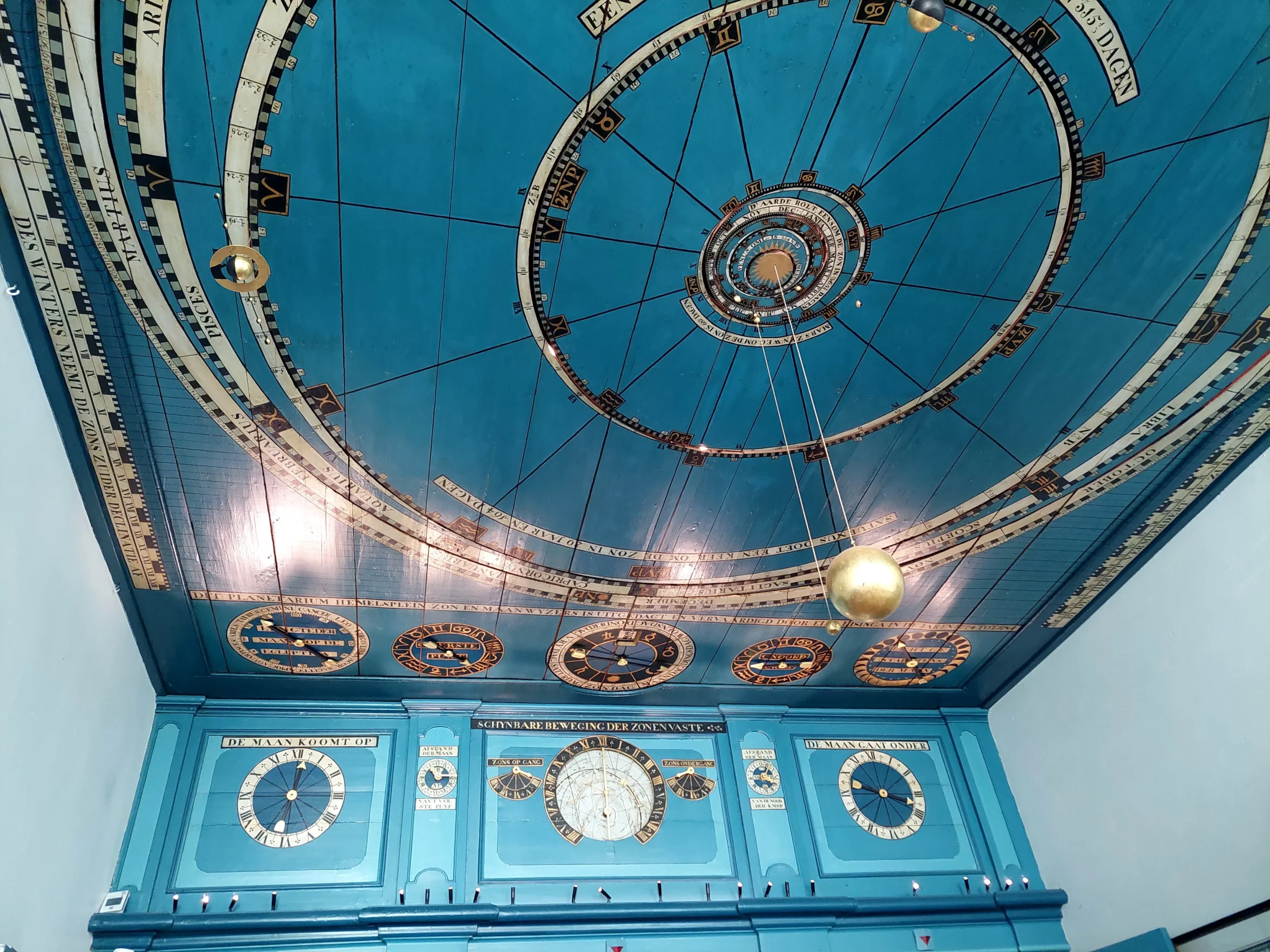
There are all the planets, some moving visibly, others so slowly their motion will always be imperceptible. Dials and displays show the phases of the moon and the signs of the zodiac. And Eise's stars must have been somehow misaligned when, in 1787, not long after completing his planetarium, he got himself into political trouble and had to go into exile in Germany. Even when he was allowed to return to the Netherlands he was banned from Friesland and so had to live in nearby Visvliet. He must have wondered when he would be able to see his precious planetarium again, but in 1795 he was finally allowed to return home to Franeker, with a new wife, Trijntje, poor Pietje having died while he was in exile.
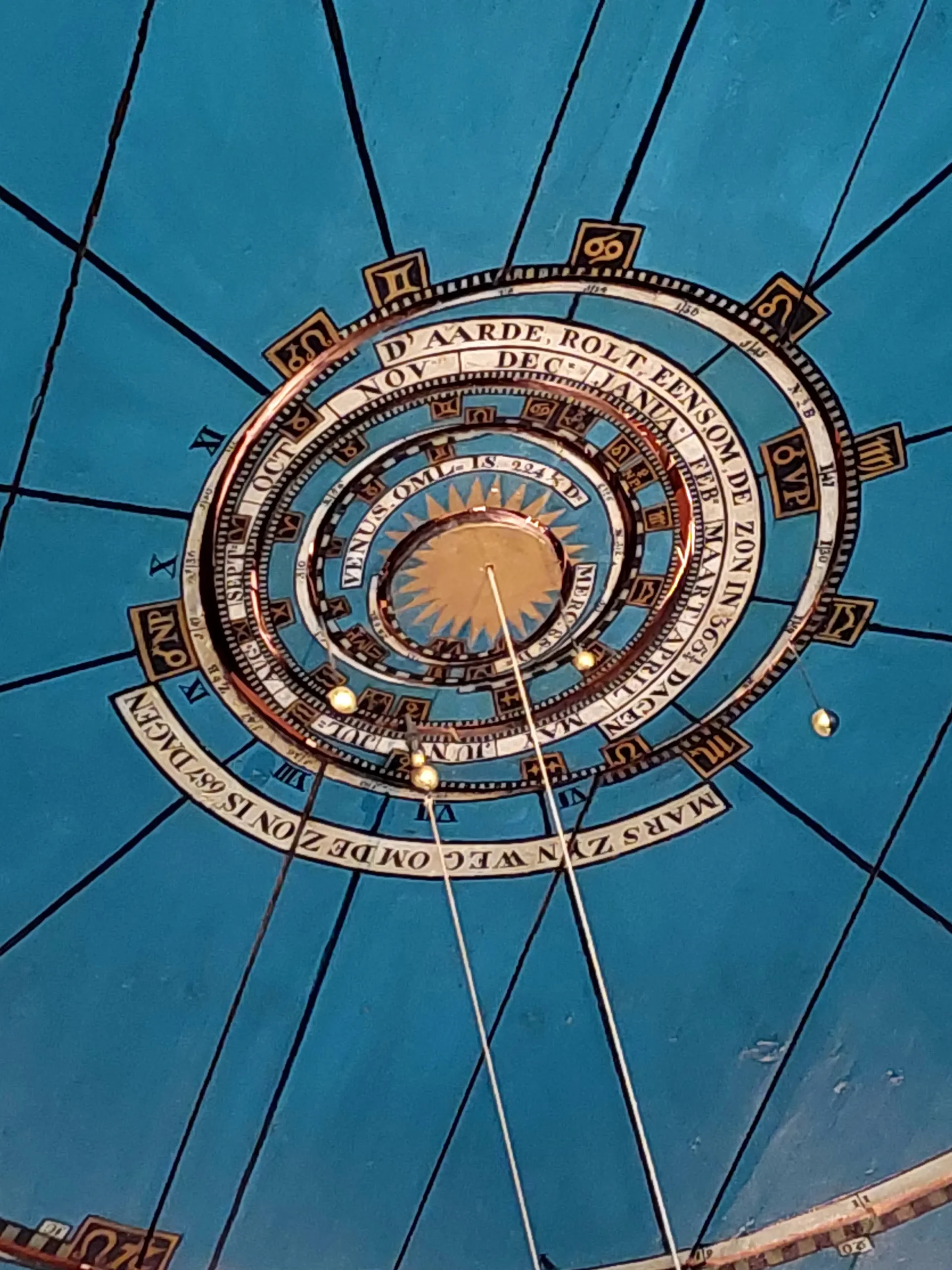
I'm drawn back to Monty Python as I wonder whether Eise had told Trijntje what she was going to find on the ceiling of her new living room. "This? Oh, this is just our planetarium. What do we need it for? Well, it plots the positions of all the planets as they go round the sun. So I know where they are. And that noise? That's just the weights that make the whole thing work. They fit right here, behind the headboard of our bed. Neat, isn't it dear?"
Comic possibilities apart, I can't help marvelling at an age when a person with little formal education, living in what must have been a rural backwater, could make something requiring such skill and knowledge all by himself. That Eise could know enough, at a time long before the internet, to calculate how to build his planetarium is astonishing. That he could then go on and make it, even hand-forging 10,000 nails to make the cogs, is even harder to believe. My grandfather, who built his own television set in the 1920s shortly after they were invented and was always making things out of wood and metal, would have understood. My generation can only look back with envy. And younger people? Well, they've probably got an app for that.