Niudàlia and Berga
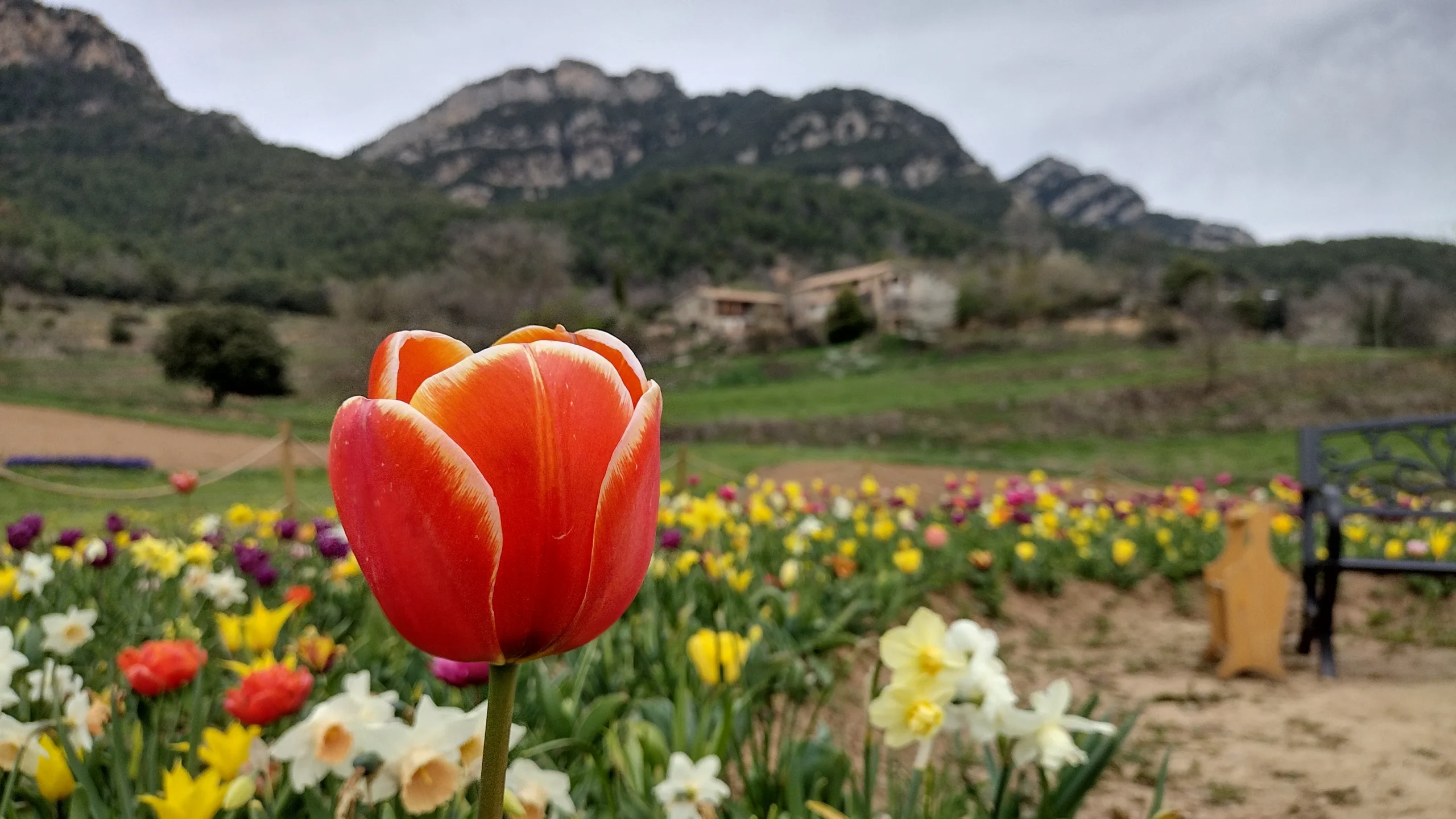
We're in the middle of thousands of tulips, but any delusion that we might be in the Netherlands is soon dispelled by the craggy mountain views all round us. We've come to Niudàlia, surely the favourite destination of Catalan Instagrammers judging by the marathon photoshoots going on all around us.
Niudàlia was once a hill farm like any other in the mountainous terrain around Berga. Then the landowners had the idea to plant flowers - hundreds of thousands of them. First it was a matter of growing them for commercial sale but now, for seven months of the year, Niudàlia is a tourist attraction booked up with visitors who come to see the tulips, later the sunflowers, and finally the dahlias that give the attraction its name (it means "Nest of dahlias").
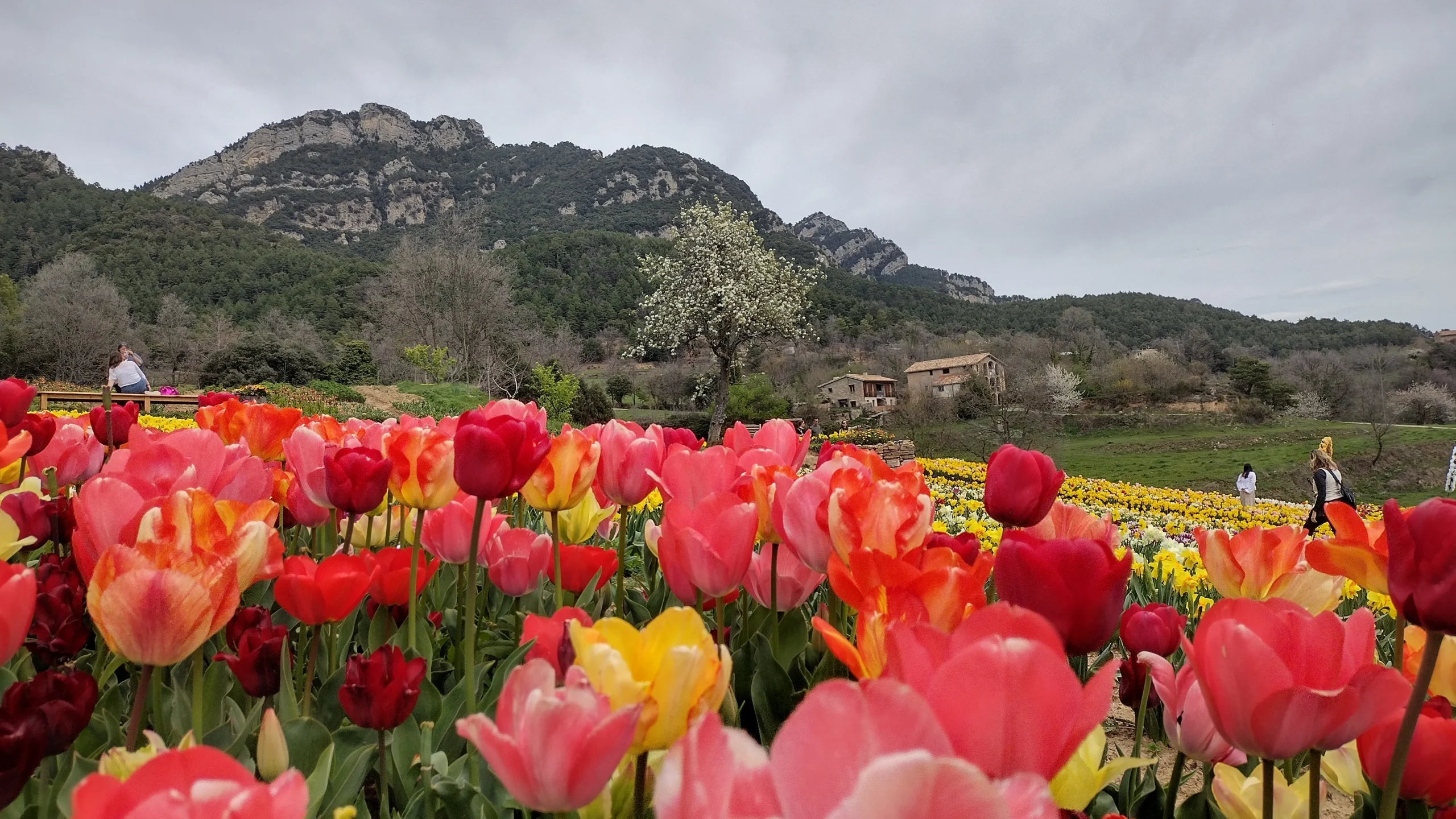
It doesn't have the seemingly endless expanse and majestic sweep of somewhere like the Keukenhof tulip gardens in the Netherlands, but it does have fields of artistically planted flowers as well as those wonderfully un-Dutch mountain views. There are also tastefully placed props - antique bicycles, milk churns, cute bridges, even some rather inexplicable old doors - to give provide the ideal backgrounds for the long-suffering Instagram boyfriends to use. These astonishingly patient young men are burdened with the thankless task of photographing partners whose sole aim in life seems to be to appear in on social media looking as attractive as they can in the most beautiful surroundings possible, even if the picture has to be repeated 342 times.
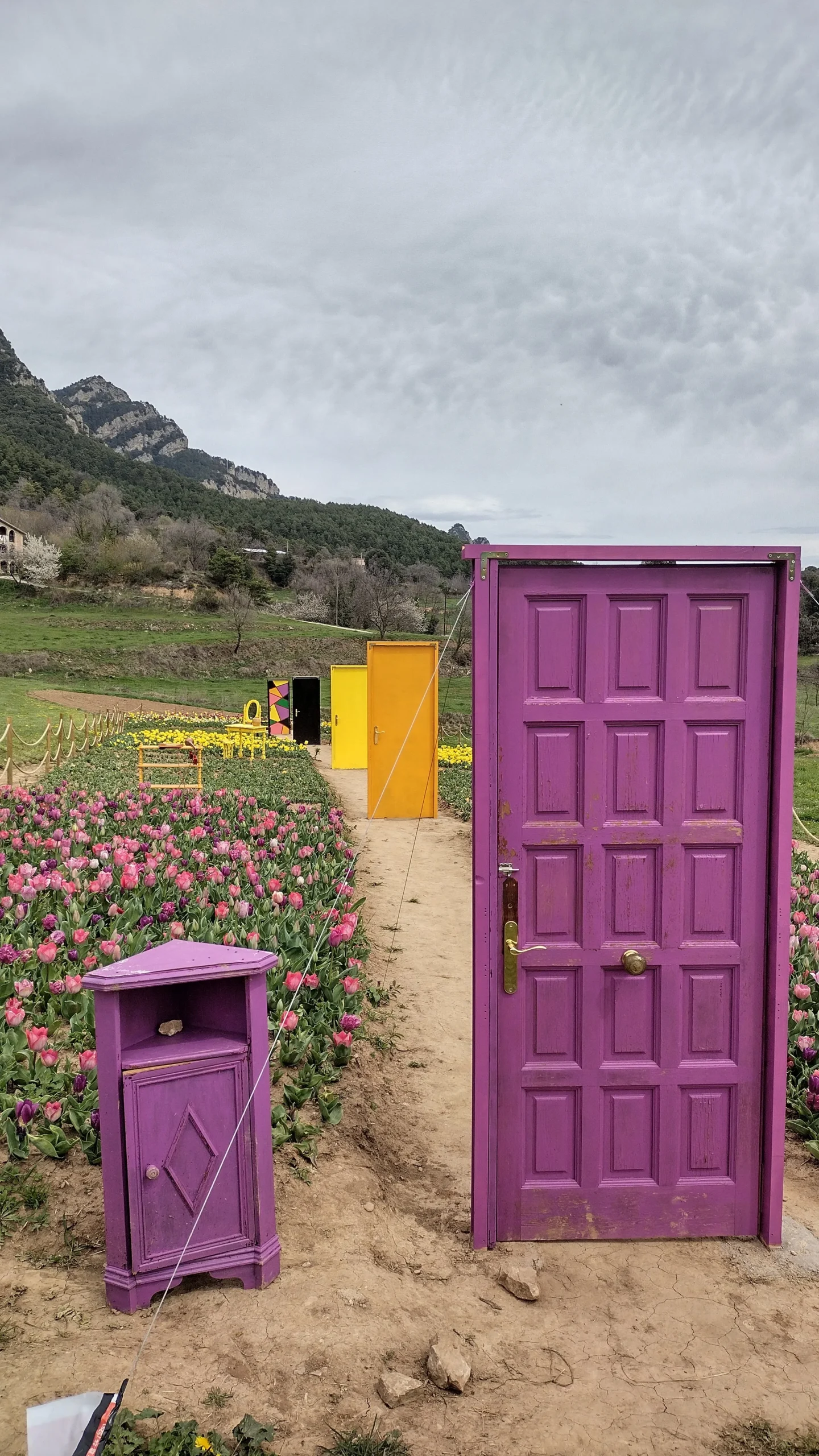
Fortunately, Niudàlia sells tickets in advance and restricts visits, otherwise all the tulips would be trampled by hordes of Instagrammers and Tik-Tokkers desperate to take the perfect photo or video. We take a leisurely wander around the attractive landscape, photograph spring flowers to our hearts' content and enjoy a glass of wine and a snack from the cafe.
It's been a pleasant morning but we're now ready to head on to a more urban setting. Despite its attractive old centre, parts of which date back to the 14th century, nearby Berga - our second destination of the day - is best known for an annual attack of collective madness known as Patum. Held every year in the early summer, coinciding with the religious festival of Corpus Christi, this is not a celebration for the faint-hearted. Because whatever Patum's traditional origins and close links to Catalan popular culture, it basically involves a large proportion of the young people of the town getting drunk, packing into the streets and bouncing up and down clutching lighted fireworks.
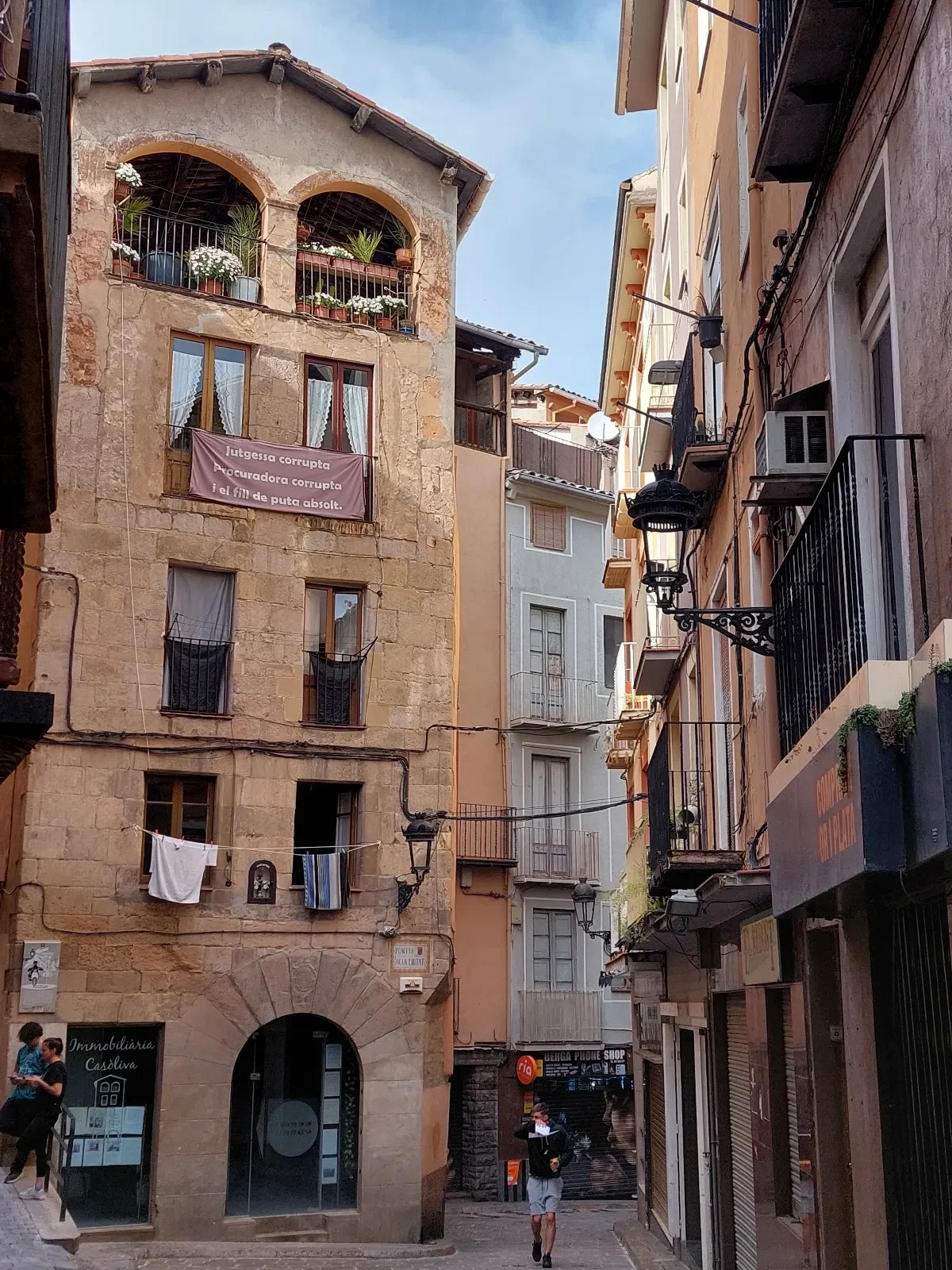
Fortunately, when we visit, Patum is still a way off. We decide to pass up the attractions of the county museum, the circus museum and the exhibition devoted to Patum itself and follow some of old narrow streets which in a couple of months will be jammed with revellers. Here, many of Berga's oldest buildings were lost when the town was devastated in a series of wars of the 17th, 18th and 19th centuries, although today the streets are mostly empty as we walk up towards the town hall. But echoes of conflict remain in the pro-Catalan and anti-Spanish slogans painted on many of the walls. If it were left to the people of Berga, and, in fact, many of the mountain towns and villages around here, Catalan independence would be a fait accompli, not an eternal question.
We decide to ponder this over a beer in the late afternoon sunshine outside a bar called Cal Negre in a little square, but it seems as intractable as ever. Because as much as swathes of rural and small-town Catalonia would happily become independent tomorrow, a majority in and around Barcelona in particular - where the bulk of the country's population live - would emphatically not. This is the uncomfortable truth with which Catalan and Spanish politicians alike must grapple. On balance, the harassed Instagram boyfriends we saw earlier probably have a much easier job.