Olèrdola and Vilafranca del Penedès
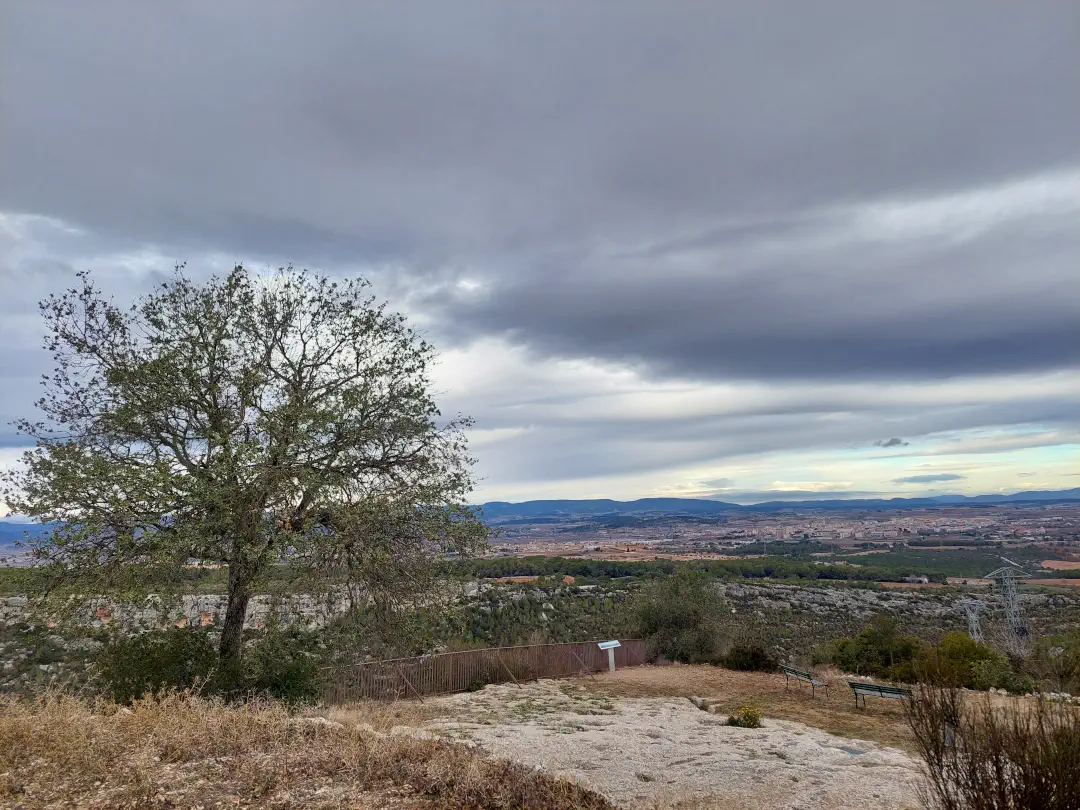
The trick to a good day out is to turn setbacks to your advantage. Because however well you plan everything – and I’m not one of life’s meticulous planners – things don’t always work out as you intend.
It starts well enough, speeding through El Penedès, probably Catalonia’s most iconic wine-making region and true home of that eternally underpriced sparkling delight cava. Seriously, you can keep your prosecco. Unless you can afford top-quality French champagne, cava is going to be the very best fizz you can get for your money.
We’re not here for the wine, though. We’re going to Olèrdola, a remarkable slice of history captured on a single hilltop site. Olèrdola was first settled nearly 4,000 years ago, during the Bronze Age, and sometime around the 8th century BC, the Iberians built the first defensive wall on the site, part of which still remains.
When the Romans came to Catalonia, they took over Olèrdola and built their own stronger, thicker wall, a large part of which still stands together with their watchtower, constructed on the summit of the hill. When the Empire declined, it seems the town may have been abandoned, and there is little evidence of it being used during the Muslim period.
But when the Christians took over the site again in the 10th century, it appears to have been repopulated, as part of a drive to bring people back to the semi-deserted conquered territory. The Roman tower was expanded and turned into a castle and new houses and workshops were built. Two churches were constructed. This being El Penedès, even this far back there is also a link with the wine business, as grape presses and a cellar have been found, dating from the medieval period. Gradually, though, the site lost importance, as the diminishing threat of Muslim invasion meant the hilltop location was more of a hindrance that an advantage. People began to move down the hill to the newly founded town of Vilafranca nearby.
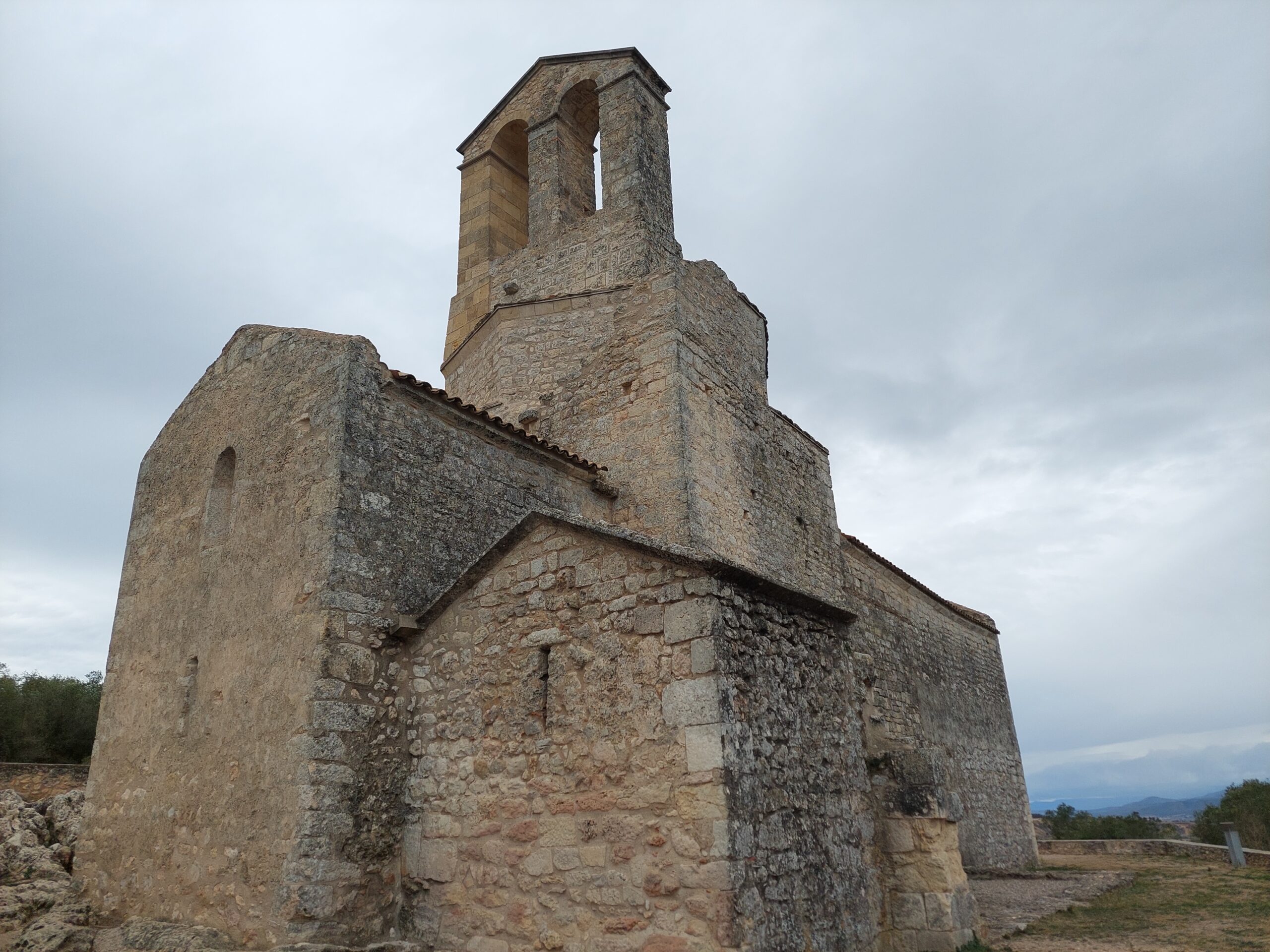
We find Olèrdola fascinating but visiting it is quite a hike over sometimes steep and often rough terrain. Fortunately, the views of the Penedès plain and beyond are splendid. But by the time we leave we’re more than ready for lunch. Here, best-laid plans sadly start to unravel.
We’d decided to go to a restaurant where we’d had an excellent meal before – Sumoll at the Ferré i Catasús winery – but we drive there only to find it was closed. I’d checked the opening hours the day before, but Mr. Google is not particularly reliable when it comes to times, especially in the no-man’s land between Christmas and New Year, when it seems many establishments are expecting that no-one would be fool enough to want to go out and eat.
The situation seems the same when we drive to the centre of Vilafranca del Penedès: lots of places closed and the few that are open, full. It’s getting late and just when it seems as if we won’t find anywhere at all, we decide to have a final look round the next corner. And there is La Vinya del Mar, exactly what we’re looking for to beat our lunchtime frustrations: a superb paella (we’re only a few kilometres inland after all) and an elegant Penedès white wine. Perfect!
So let’s go and find out about the local wine, then. The Vinseum wine museum is just the other side of the town centre – or at least, it should be. But when we get there we find that, once again despite what Google would have us believe, it’s actually closed for refurbishment. And looking at the exhibition on the project for the new museum next door, it would seem that its reopening in new, larger premises is long overdue. Judging from this, it will be magnificent when they finish it, but that doesn’t do us any good today.
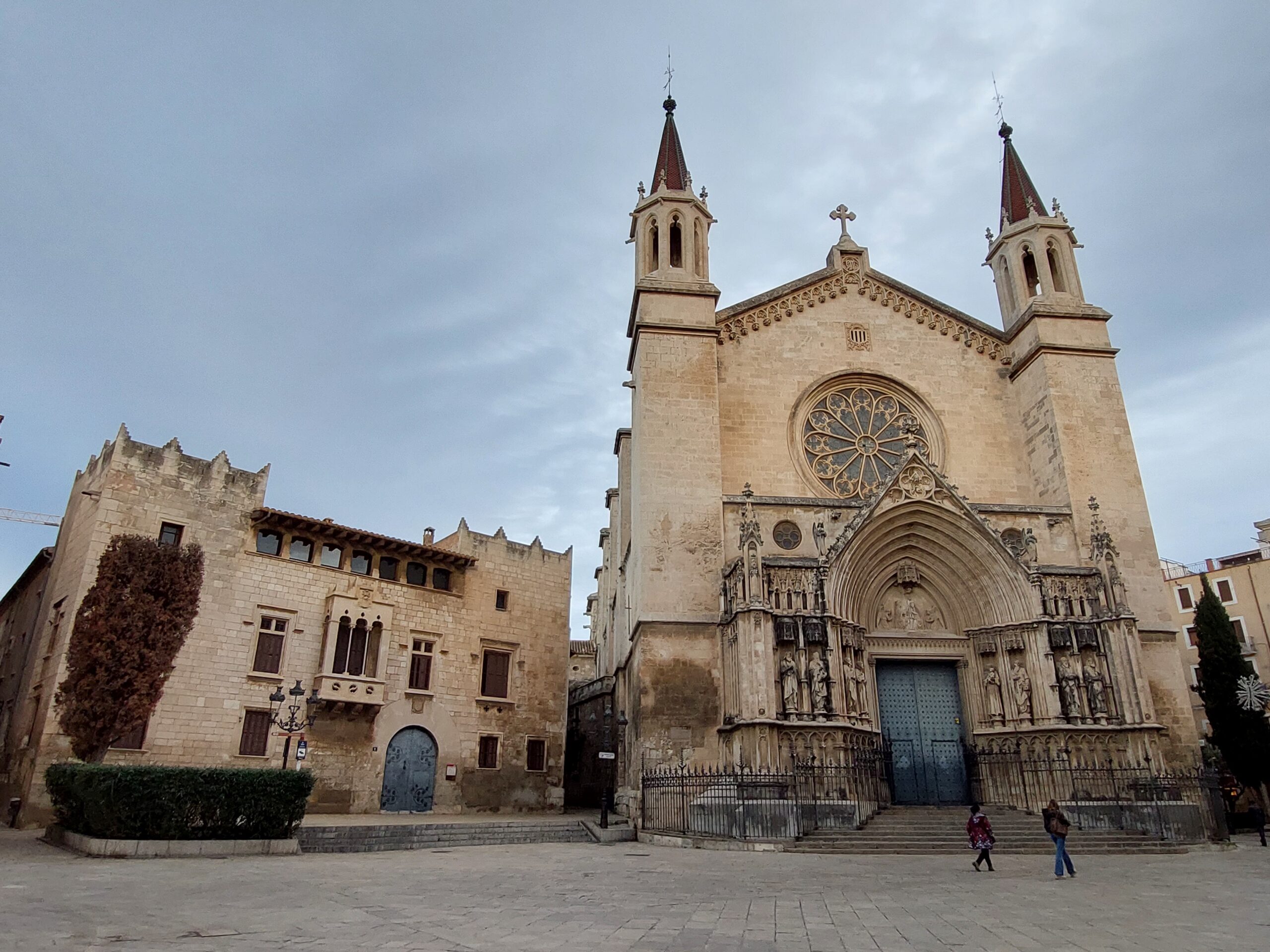
Fortunately, Vilafranca is a good town to have a walk around. Founded in the 12th century, and growing as Olèrdola declined, it originally attracted inhabitants by being a Free Town, as its name suggests. That meant no taxes were paid, encouraging settlement and economic growth. Now, in its old streets, we find references to the things the town is most famous for apart from wine. One is chickens, representations of which appear all over the place. It turns out we’ve just missed the “Fira del Gall” – both pre-Christmas marketplace and celebration of the special Penedès breed of chicken dating back to medieval times.
The other Vilafranca tradition, celebrated with a plaque in the main square, relates to the human towers known as castellers. It’s hard to decide whether this spectacle is a sport or an art, but either way, it is a key element in Catalan popular culture and Vilafranca is one of the main centres of it. The Vilafranca group, or colla, has several times managed to build a tower nine people high, although, because of their lightness, the top two layers always consist of children. Originating as a dance, castellers began to develop in their modern form during the 19th century and in recent years there has been greater competition between different groups, keen to construct the highest and most difficult towers. Attractive features still remain, not least the fact that a group of castellers includes people of all ages and genders who all have their role, from the brave youngsters who climb to the very top to the portly, grizzled veterans in the pinya at the bottom – vital for supporting a tower of any height.
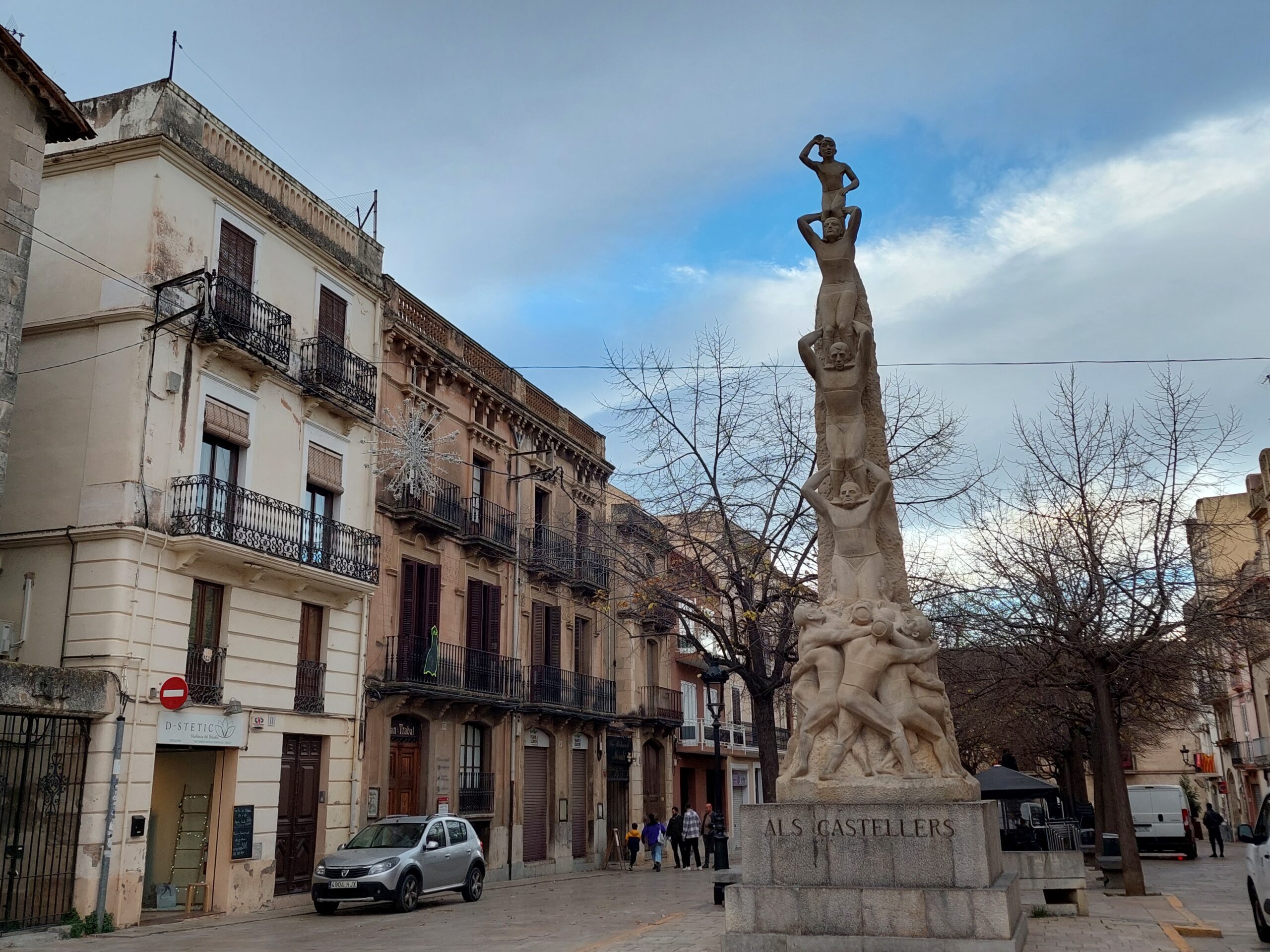
There are no towers being built in Vilafranca today, though, as the season generally runs from April to October. Instead we mooch round Christmas-lit streets, visit a couple of shops, laugh at a ridiculously pretentious art exhibition in the former Chapel of Sant Joan, and make plans to come back when the new wine museum is finally completed. As we drive home in the car, the English voice of Google’s maps application – totally unaware of the use of accents – tries and utterly fails to pronounce Penedès, coming up with something that sounds almost obscene (think Pee-needs). We giggle like teenagers.