Perpignan
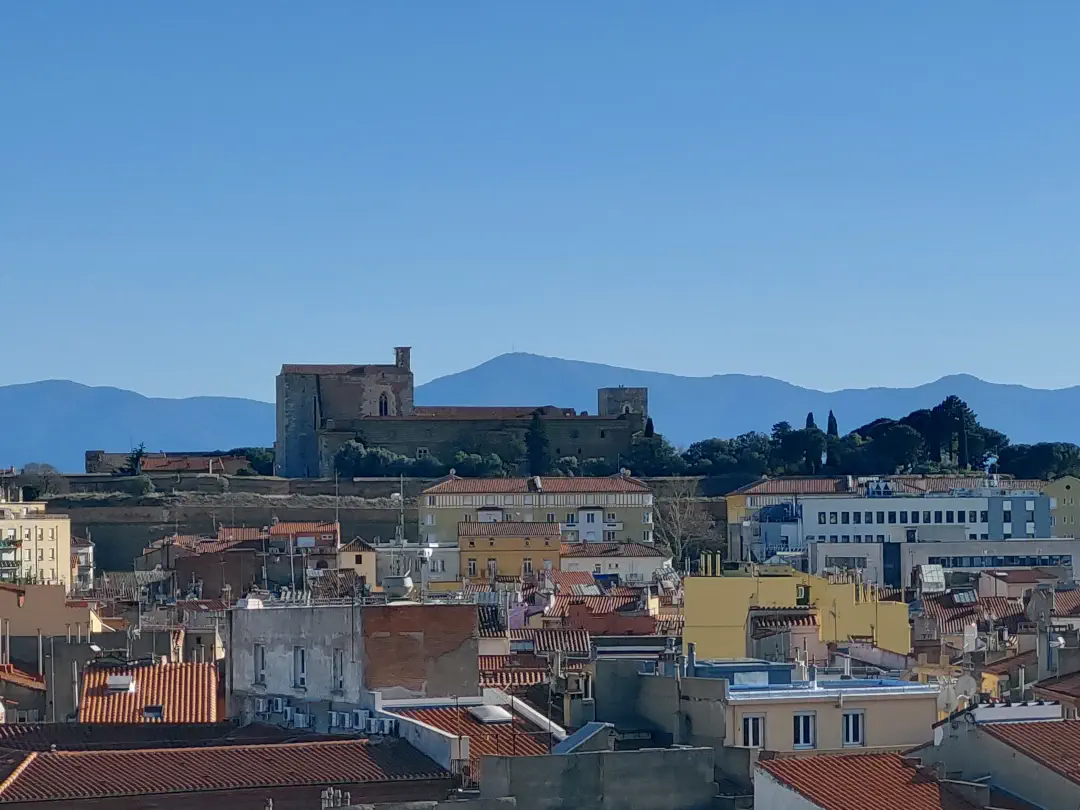
We’re in a French city. Or is it? Most people here certainly seem to be speaking French. And yet, if I want to, I can imagine I haven’t left Catalonia or crossed a national border out of Spain at all. As well as the French name of the place, on the way in the signs also said Perpinyà, which is what it’s called in Catalan. All the street names are in Catalan as well as French. And I’m sure I just heard a couple speaking the language I’m used to hearing at home in Badalona, albeit a heavily French-accented version.
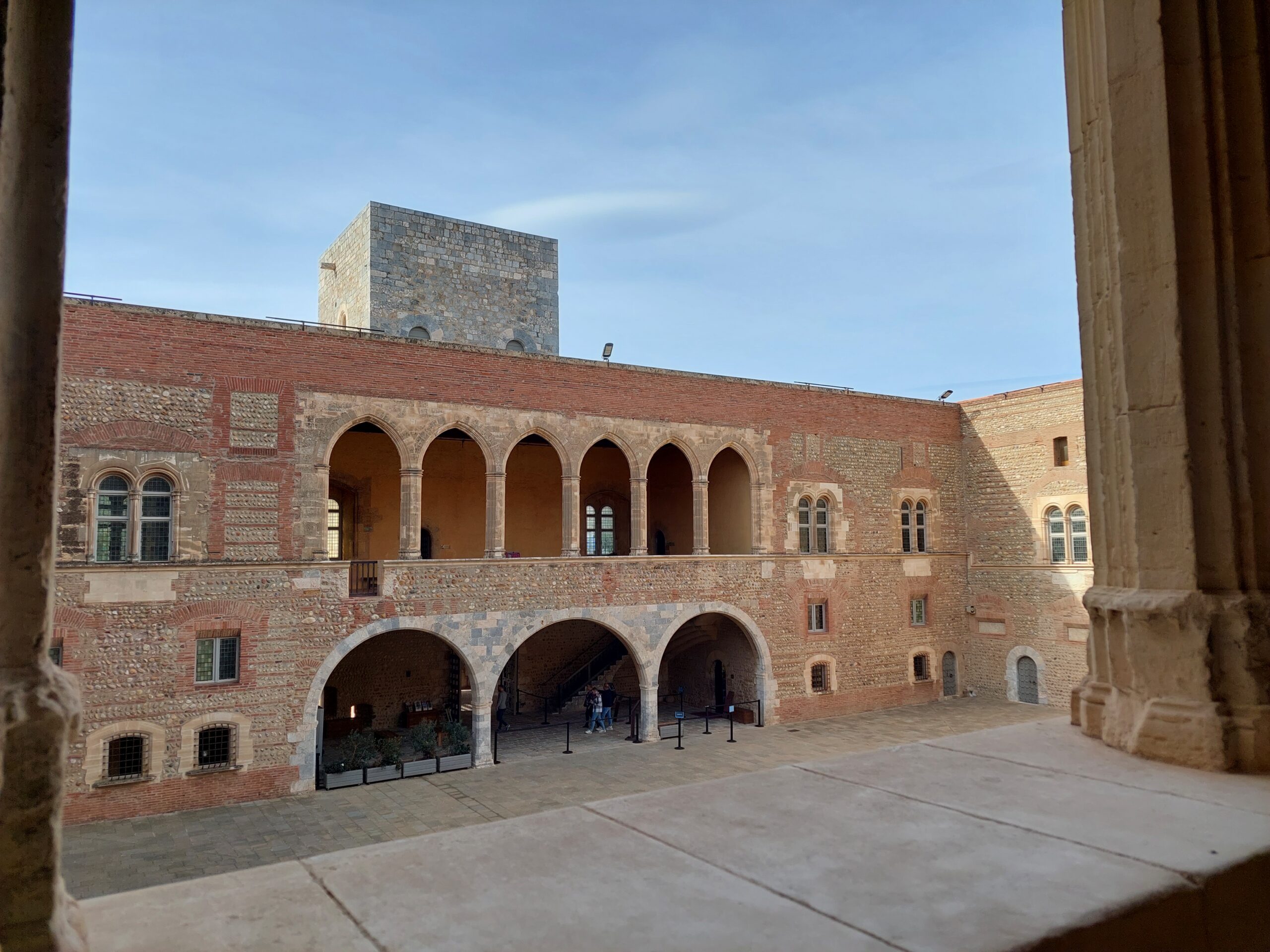
Perpignan is a city that invites reflections on identity, and on what identity actually means. We’re walking uphill in unseasonably warm February sunshine to see its main tourist attraction: the Palace of the Kings of Mallorca. Yes, that’s right. Not the kings of France, or Spain, or Catalonia or Aragon but Mallorca, an island 200 miles to the south. So what on earth has a French, or maybe slightly Catalan, city got to do with the Balearic Islands? The answer is buried deep in the medieval history of the Mediterranean.
Once there was a king who, because I’m writing in English, we’ll call James (although he called himself Jaume, as Catalan-speakers do today, while Spanish-speakers prefer to call him Jaime). He initially ruled over the kingdom of Aragon, as well as the principality of Catalonia, but he was a powerful, warlike monarch and he found it difficult to stop himself adding lands to his dominions. In 1229, he took a fleet to Mallorca to capture the island from the Muslims and, nine years later, he added the kingdom of Valencia. His prowess was such that he became known as James the Conqueror.
James’s conquests were not confined to the field of battle. He also won fame for his success with women, and he had a long list of children, both legitimate and illegitimate. His later reign was disrupted by conflicts between them, as he tried to provide lands and titles for them all, although, perhaps fortunately, only two male heirs survived him. One – Peter – succeeded him in Aragon, Catalonia and Valencia, while the other – James – took the Balearic Islands and his dominions in the south of what is now France. And it was this second son who became known as James II of Mallorca, but who preferred to build his palace in Perpignan.
We walk around the palace, trying to get some idea of its magnificence under the Mallorcan kings. The great hall, and fragments of wall paintings in the chapel and royal apartments give just a glimpse. Somewhat bizarre art exhibitions in some of the old rooms don’t honestly help a great deal, but they’re in line with the way the French like to do castles these days. Personally, I prefer mine the old-school way.
But it’s an interesting place to visit, characterised by the restrained beauty of its architecture, and by the time we come out it’s way past lunchtime as defined by French restaurants, with their rather annoying habit of switching into “je suis désolé” mode as soon as the clock strikes two. Fortunately, though, we’re in Catalonia, and there’s an Italian place open, called Il Gusto, which serves us mussels, pizza and café gourmand, all rather more delicious than we have a right to expect at that hour – a late lunch suiting us well after a more than adequate breakfast at the Hotel Mercure.
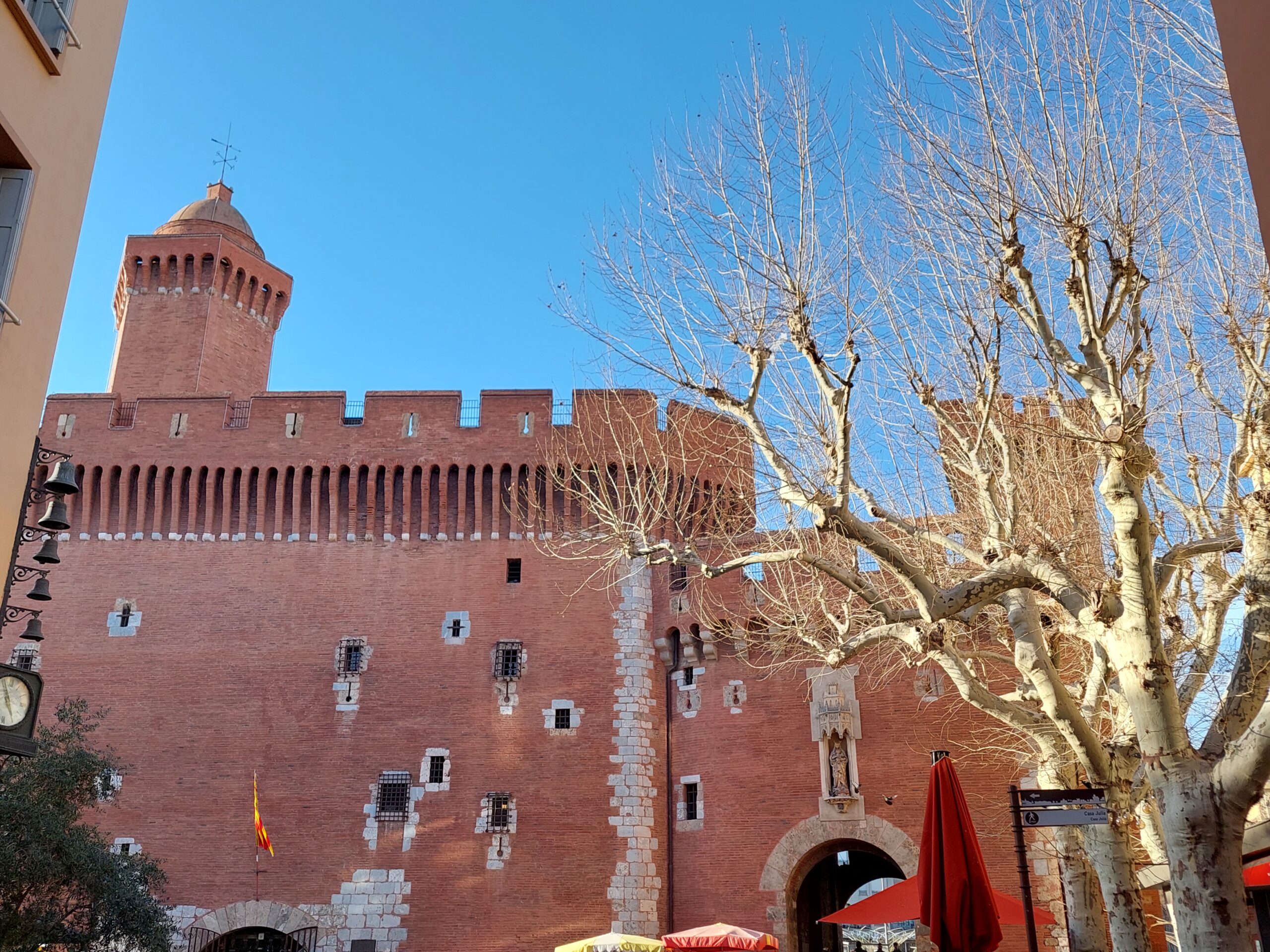
We arrived in Perpignan the day before, when we enjoyed a stroll round the old town, a look inside the, frankly rather dull, cathedral and a visit to the Castillet medieval tower, which is about all that remains of the city’s medieval walls. It’s now a museum of Catalan traditions and showcases exactly the same kind of popular festivals as are held on the southern side of the border – everything from traditional bands playing idiosyncratic instruments to gegants (giants made of plywood and papier maché who dance their way through the streets of towns and cities on feast days), and even strange pagan festivals in Pyrenean villages involving people dressing up as bears. The highlight is the turret, which is a worthwhile climb considering the wonderful views of the whole of the Roussillon (or Rosselló) area, from the mountains to the sea.
It was this area which, as late as 1659, was given to France by Spain (which had inherited it from the old Kingdom of Aragon) when the Treaty of the Pyrenees settled one of the sporadic wars between the two countries. This split Catalonia in two unequal parts, and it has to be said that France has done rather better than its southern neighbour in imposing its language and culture on its part of the region. The French are happy for Catalan culture to be a quaint curiosity providing regional distinction, largely for tourism purposes, and they make concessions to limited use of the language, but no-one here is under any doubt that they are French. On the other side of the border, you’ll find plenty of people who feel Catalan first and foremost and speak the language most of the time, only remembering they’re Spanish when they get out their passports and identity cards.
Wandering into Le Petit Mogador Moroccan restaurant later on that evening, questions of identity came to mind again. Is the rather splendid North African cuisine of this place any more significant in terms of identity than the “Catalan” menus in other restaurants in the city? Do the people working here consider themselves French or Moroccan? And how successful can, or should, France be in absorbing into its culture its North African and other immigrant population? This is especially relevant in this area, where a majority of people supported the far-right, immigration-unfriendly candidate Marine Le Pen in the last French presidential election. Not for the first time in Perpignan, there are rather more questions than answers.