Reims

Go on! Try to pronounce it (unless you're a native French-speaker, of course)! If you're someone who's learned French as a second or third language, I'm pretty sure you know how it should be pronounced, and also pretty sure that you think if you do pronounce it like that, more than half the world won't have a clue where you're talking about and might even ask you if you're feeling all right. And then there's the "s" on the end. Do they say it or not? It turns out, slightly surprisingly, that they do.
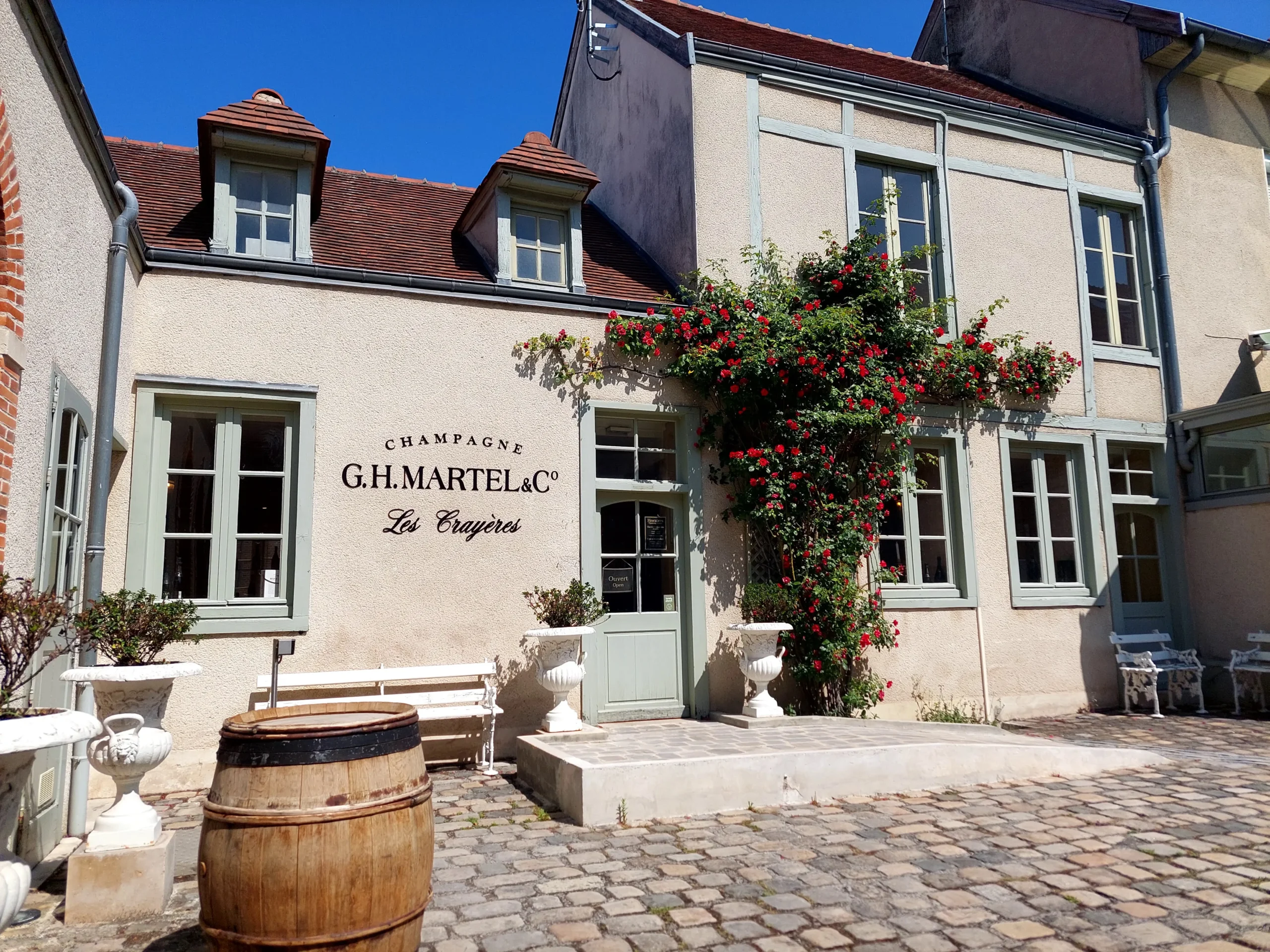
We're here on a journey through France, sampling the wine and the history along our way. It turns out that Reims has got plenty of both. It is, of course, a major centre of the champagne industry and, on our way to the Abbey of Saint-Remi, we decide to drop in to the G.H. Martel cellar as we're passing. We're too late for the tour, but we're offered a tasting in the courtyard and we decide there are a lot worse ways of spending half an hour or so. We agree with our expert taster that the extra brut is better than the rosé. I wouldn't turn up my nose at either of them, though.
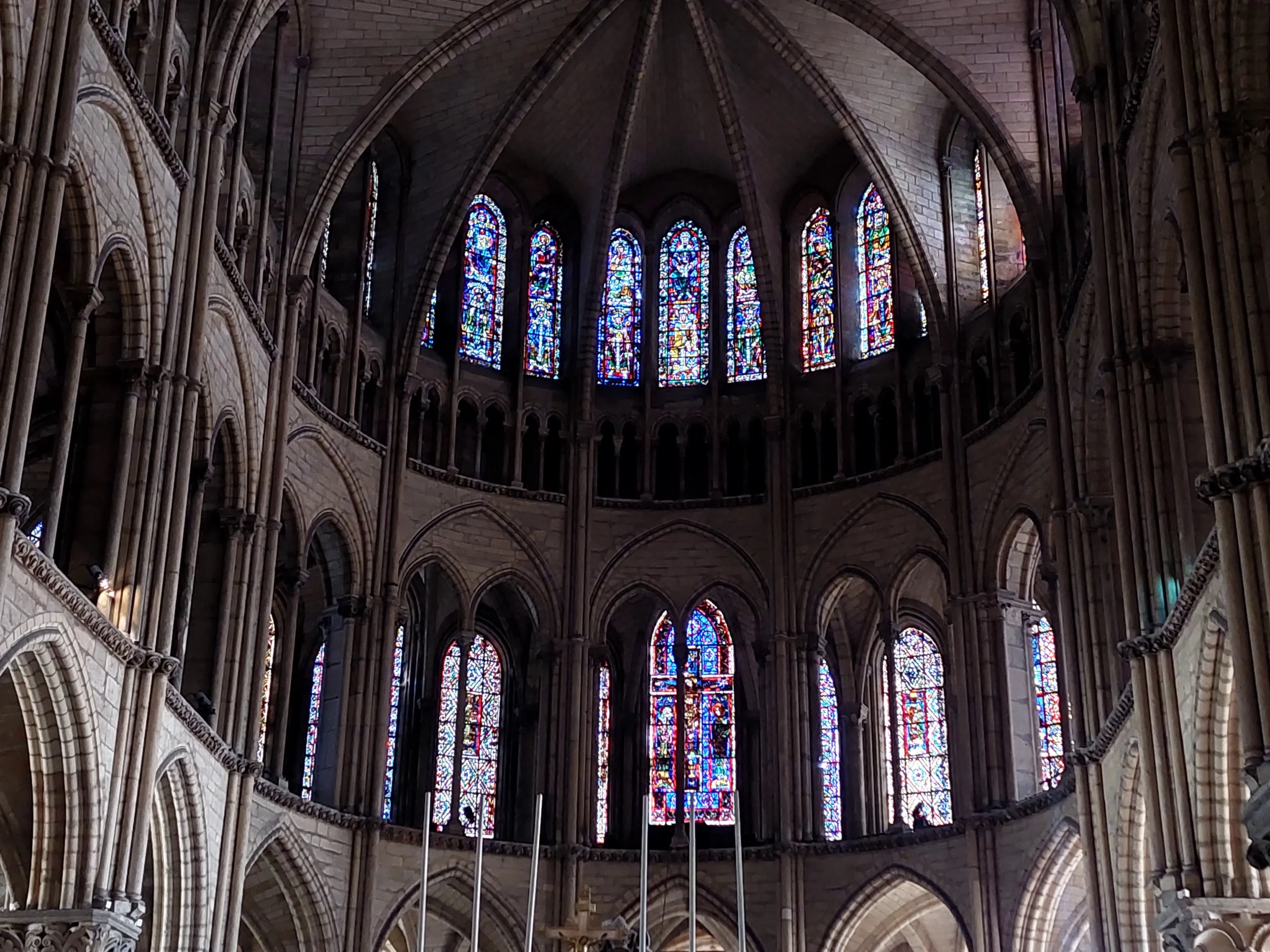
Fortified, we visit the abbey church, with its gorgeous 12th-century stained glass. As the site where Clovis, the legendary King of the Franks, is supposed to have been baptised in the early 6th century, you would think this would be the city's main attraction, but the real historical treasure is its cathedral.
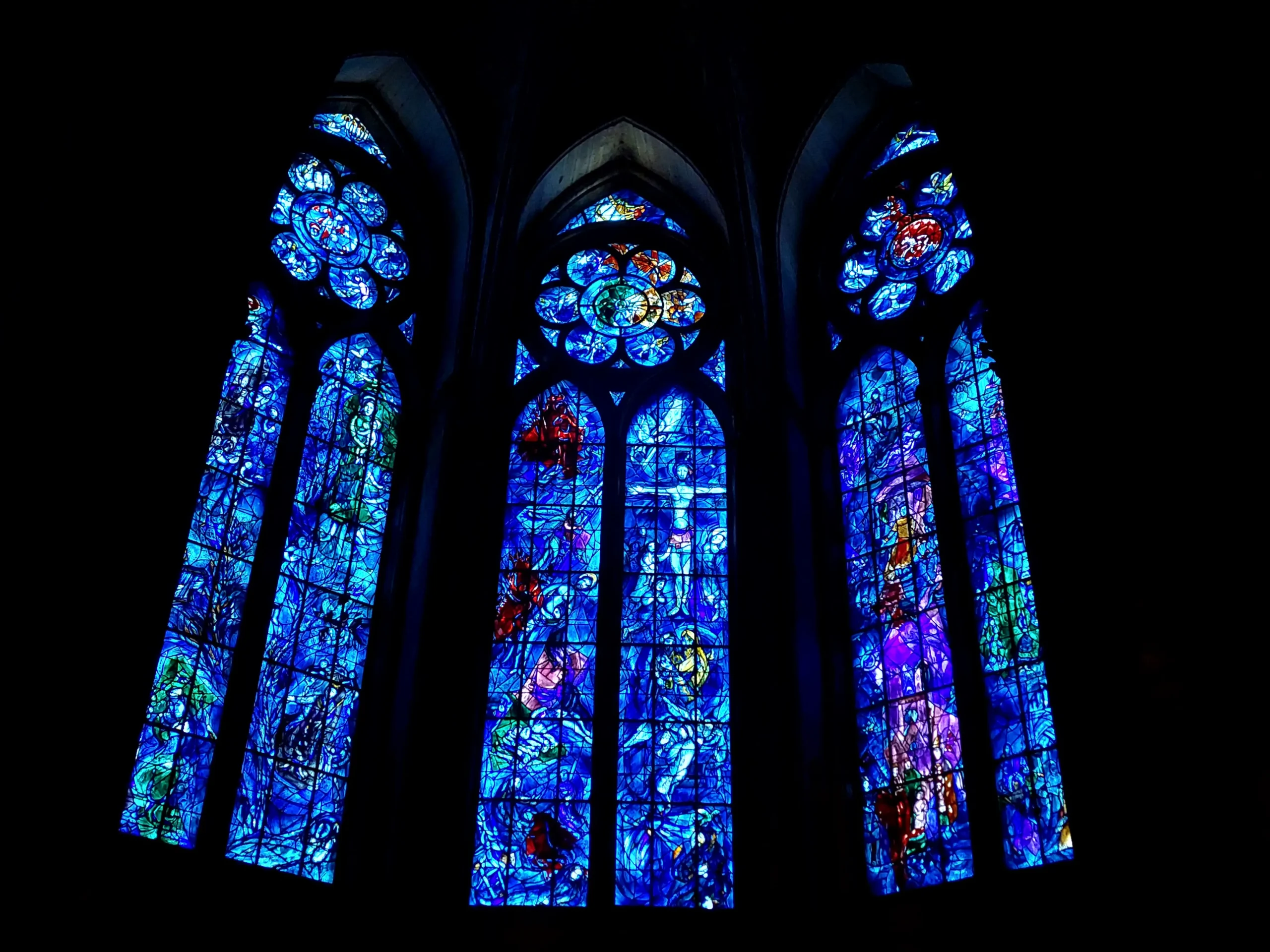
A lot of its stained glass here is modern, like the superb blue windows by Marc Chagall, but it's one of those places that just IS history. For a start, it was the traditional site where French kings were crowned, starting Clovis himself, who was said to have been anointed with oil from a bottle brought down by a dove presumed to be the Holy Spirit. This is, perhaps, difficult to picture.
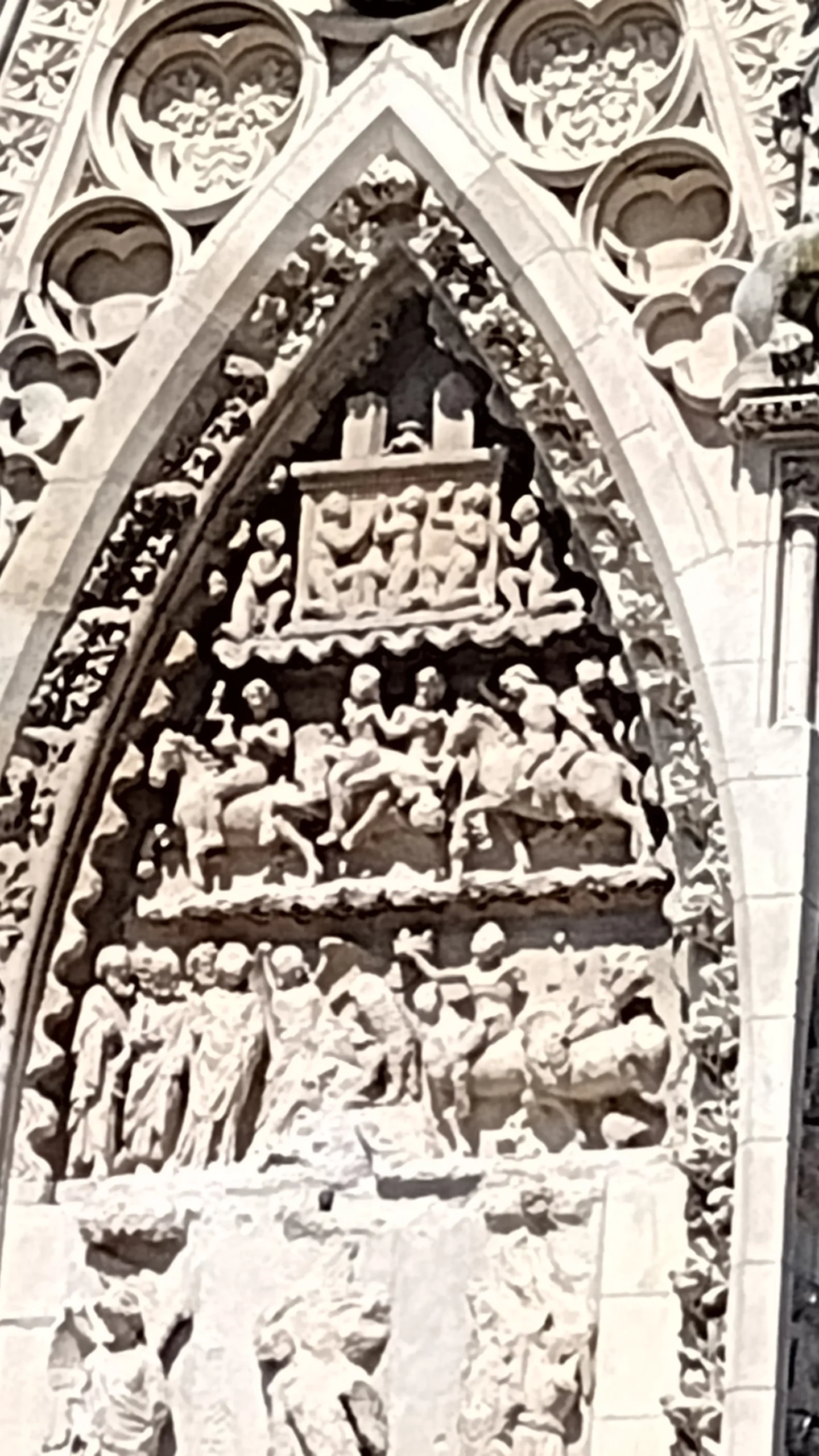
But imagine, for example, 17 July 1429, when the Dauphin Charles and his entourage approached the towering Gothic cathedral in procession shortly after Reims had been recaptured from the English invaders. Only a few years before, Charles had been disinherited by his own father, when Henry V of Agincourt fame had been made heir to the French throne after a string of victories. But three important things had happened since then: firstly, Henry had died, leaving a baby son as theoretical king of England and France; secondly, the old king of France had also died; and thirdly, a French peasant girl, Joan of Arc, had appeared, been adopted as a lucky charm by the French army, and rekindled Charles's conviction that he could and would be king.
After he was anointed with the holy oil in Reims cathedral and had the crown placed on his head, there was no looking back for Charles. Even though the talismanic Joan was captured and burnt at the stake as a witch by the English in 1430, he managed to use a mixture of war and diplomacy to reconquer the English-held territory and bring the French nobles who had supported the invaders over to his side. The French monarchy went on from strength to strength, whereas in England, bickering about failure across the Channel saw the country sink into the chaos that later became known as the Wars of the Roses. The power of a drop of oil, a crown and a sacred place!
Not that the magic worked for everyone. Three and a half centuries later, Louis XVI's coronation also took place in Reims and he was to lose not only his crown, but his anointed head. You might think he would be the last name on the illustrious roll of kings to be crowned in the cathedral, but you would be wrong. That place goes to Charles X, and, in truth, it is one of very few distinctions deserved by this member of the restored House of Bourbon following the Revolution and the defeat of Napoleon. Charles's coronation took place exactly two centuries ago in 1825, but by 1830 he had annoyed so many people that he was close to meeting the same fate as Louis XVI in another revolution. Unlike his older brother, though, he escaped the Paris mob into exile and died in what is now Slovenia six years later.
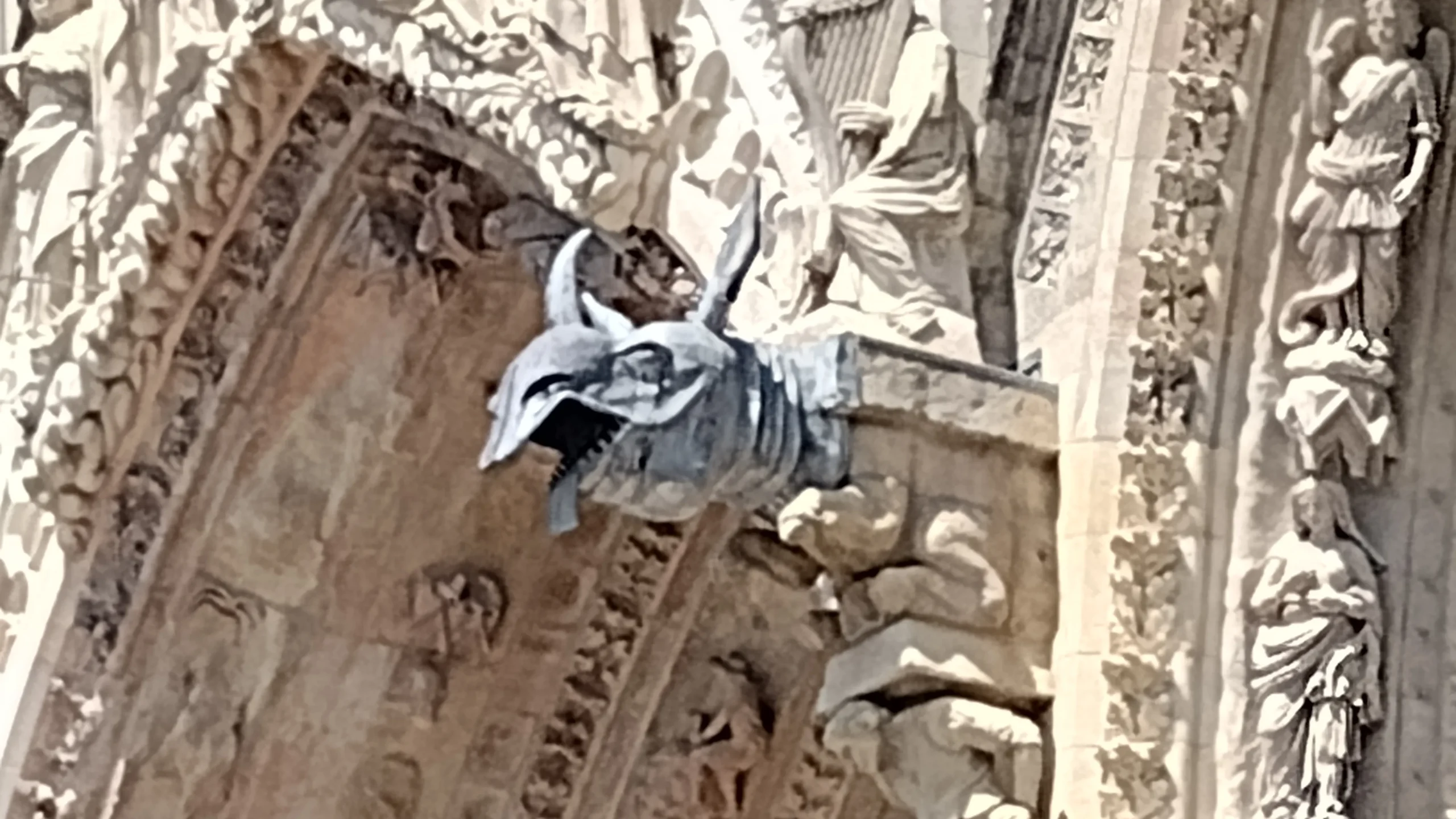
In the summer of 1914, Reims was definitely not the place to be. It was on the First World War frontline, repeatedly shelled and then captured by the Germans. The Cathedral was badly damaged and some said it should be left in ruins as a message to future generations. They were ignored. The cathedral was restored but, the year after it was fully reopened, the Germans invaded once again, this time inflicting minimal damage. It was in Reims, too, that the German army surrendered on 7 May 1945.
Now imagine a scene closer to our time, little more than 60 years ago. In Reims Cathedral, the President of France, General Charles de Gaulle, and the German Chancellor, Konrad Adenauer, are attending mass, kneeling and praying together, to seal the reconciliation of their two nations after three terrible wars in less than a century (the first, the Franco-Prussian War, was in 1870-71). They have chosen this symbolic place to mark the end of conflict and the beginning of a new era. And France and German have remained not only at peace but close partners at the heart of Europe ever since. It's perhaps the most deliberate and most successful peace process undertaken in recent history, and, as such, I'll raise a glass of champagne to that any time.