Ripoll
When you live on the Mediterranean coast, it’s easy to forget that, just a little way inland, they have real winter that isn’t simply a couple of chilly weeks in January, now more often than not reduced by global warming to a couple of days. We’re in Ripoll, it’s cold and we’re not properly dressed for it, with lightish jackets and one pair of gloves between us. We need to go somewhere indoors and a cup of coffee at Les Delícies is not going to keep us in the warm anywhere near long enough.
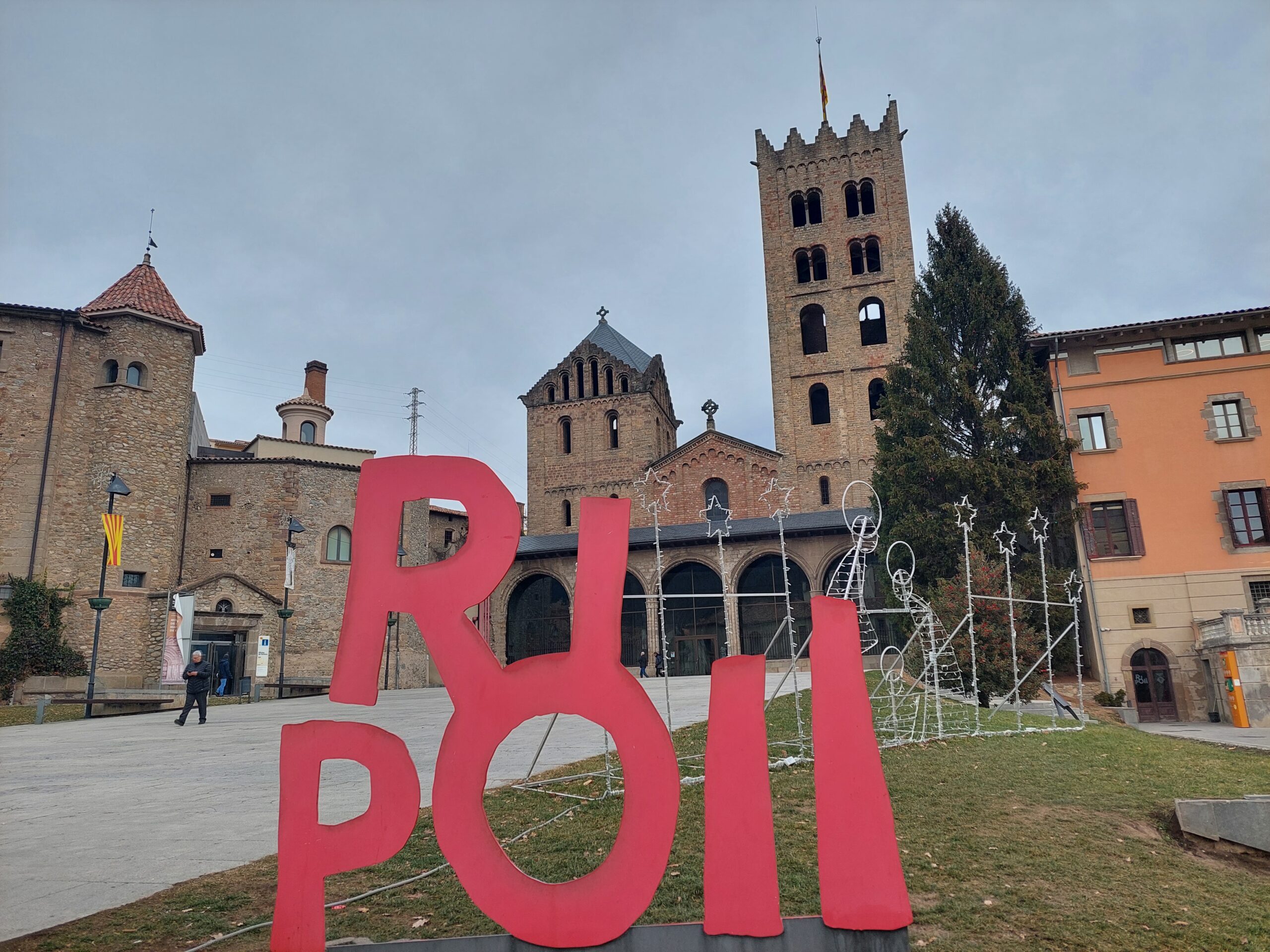
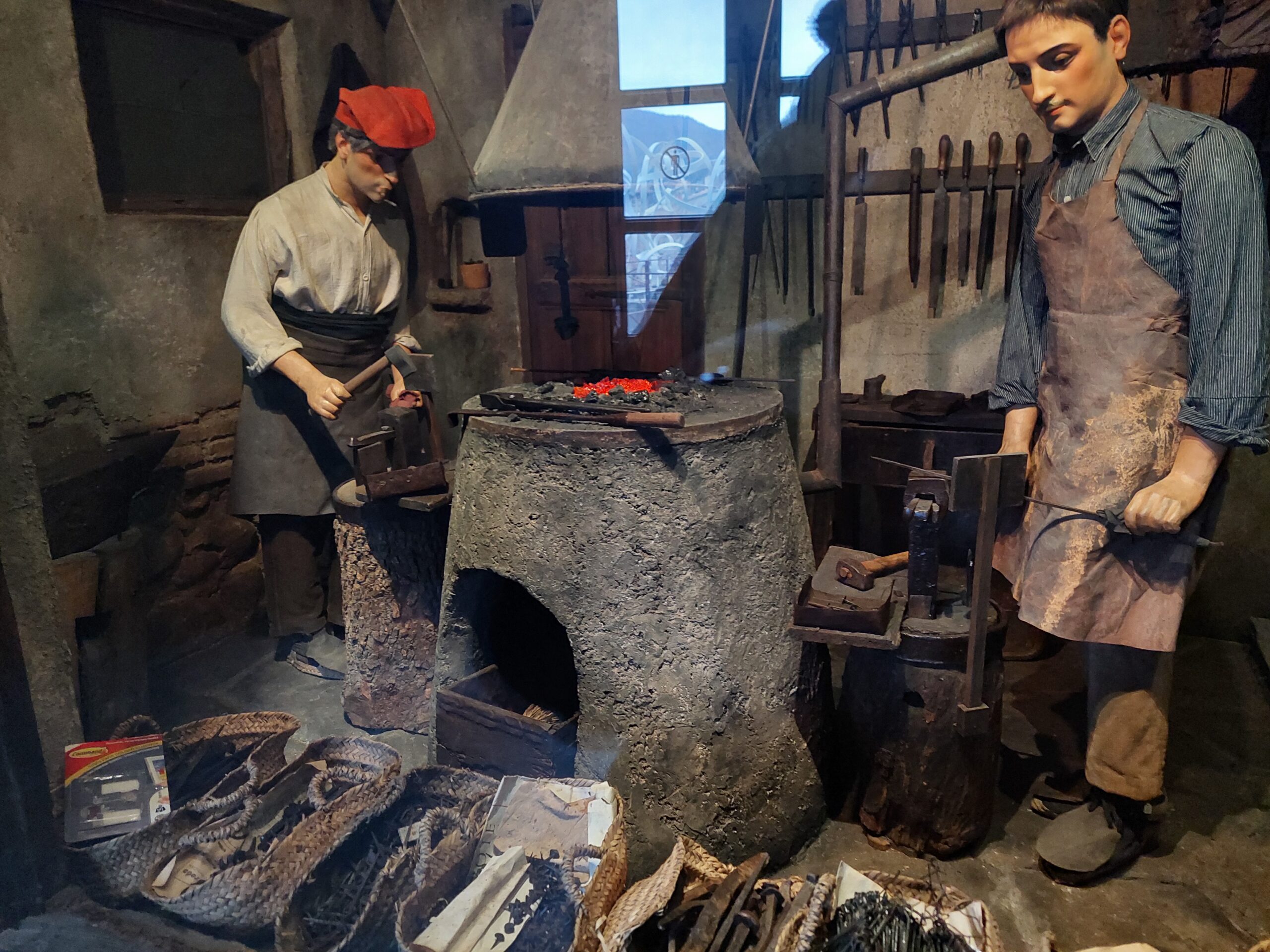
Luckily we’re right next door to Ripoll’s Ethnographic Museum, which will give us something interesting to look at as we thaw our frozen fingers. The museum was the first of its kind in Catalonia and it opened in its present form in 2011. It’s full of fascinating relics of a not so far-off, but in some senses very remote, past.
Ripoll is a mountain town, in the foothills of the Pyrenees and not far from the French border. And, until the 1950s or even the ‘60s, the people of the surrounding area lived a fairly simple, unchanging life revolving around livestock, agriculture and a close-knit society, where everyone knew everyone. It is this life, in all its rigorous simplicity, that is documented in the Ethnographic Museum: crafts, traditions, legends and beliefs. It’s a story that’s worth hearing, if only to remind ourselves that life was being lived up here in times when communication meant walking into the next valley to talk to your neighbour rather than jumping in the car to travel to Barcelona or simply going online.
The online world does have its uses, mind you, particularly when it comes to looking for somewhere to have lunch in a town like Ripoll, which seems to have large areas pretty much devoid of restaurants. Thanks to the ever-helpful Mr. Google, we find La Taverneta, which is full, but quite happy for us to wait at the bar with a very decent beer until our table is ready. When it is, the food is well-worth the wait – top-class Catalan home cooking.
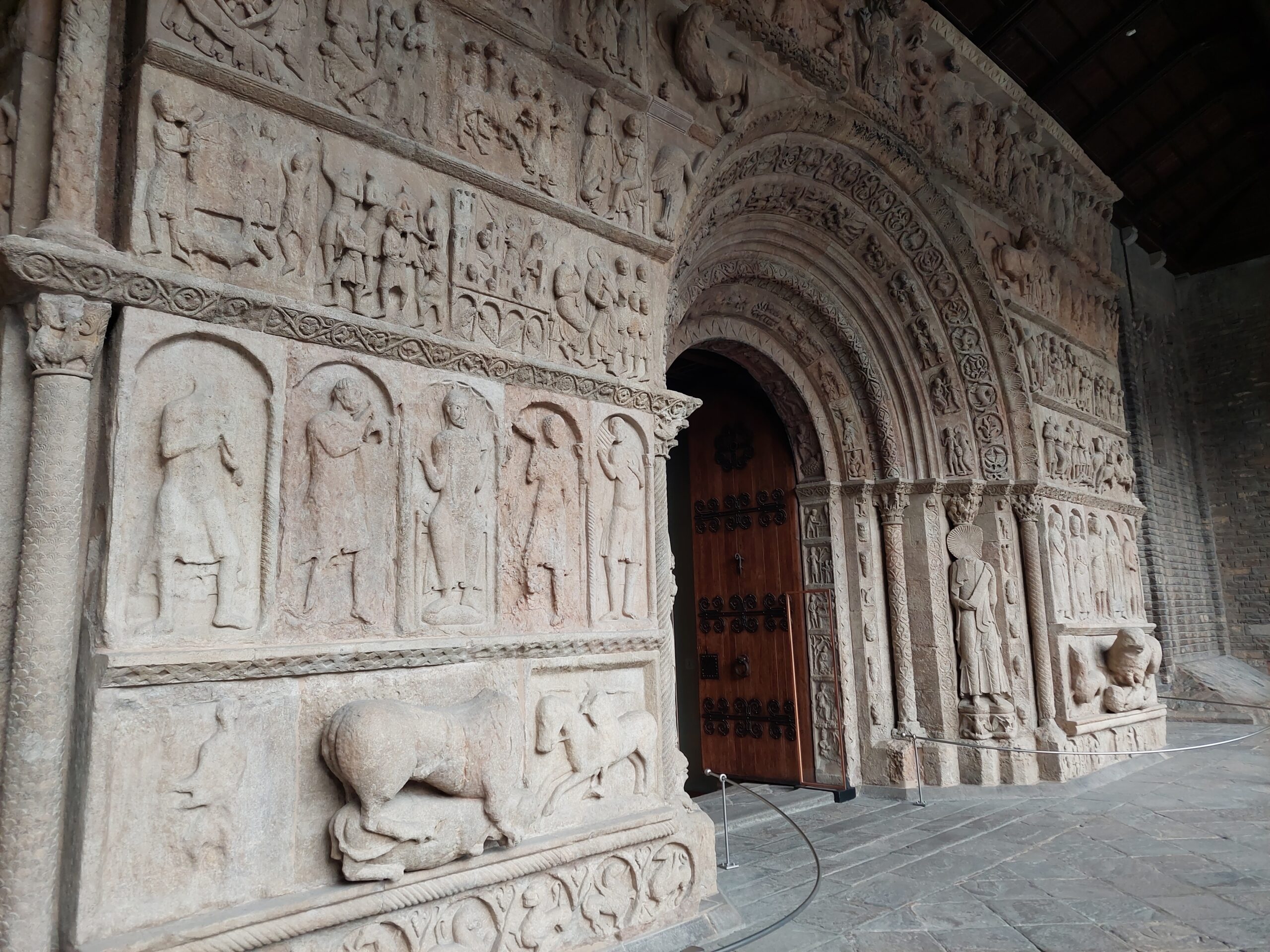
In the afternoon, we visit what is Ripoll’s main attraction – its ancient abbey. Originally built as long ago as 888 by a Count of Barcelona rejoicing in the magnificently medieval name of Wilfred the Hairy (Guifré el Pilós in Catalan), little of the original buildings still stand today. What we do see, though, is a real treasure of medieval architecture – the main door of the Romanesque abbey dating from the 13th century, covered in carved scenes from the Bible and mythical beasts.
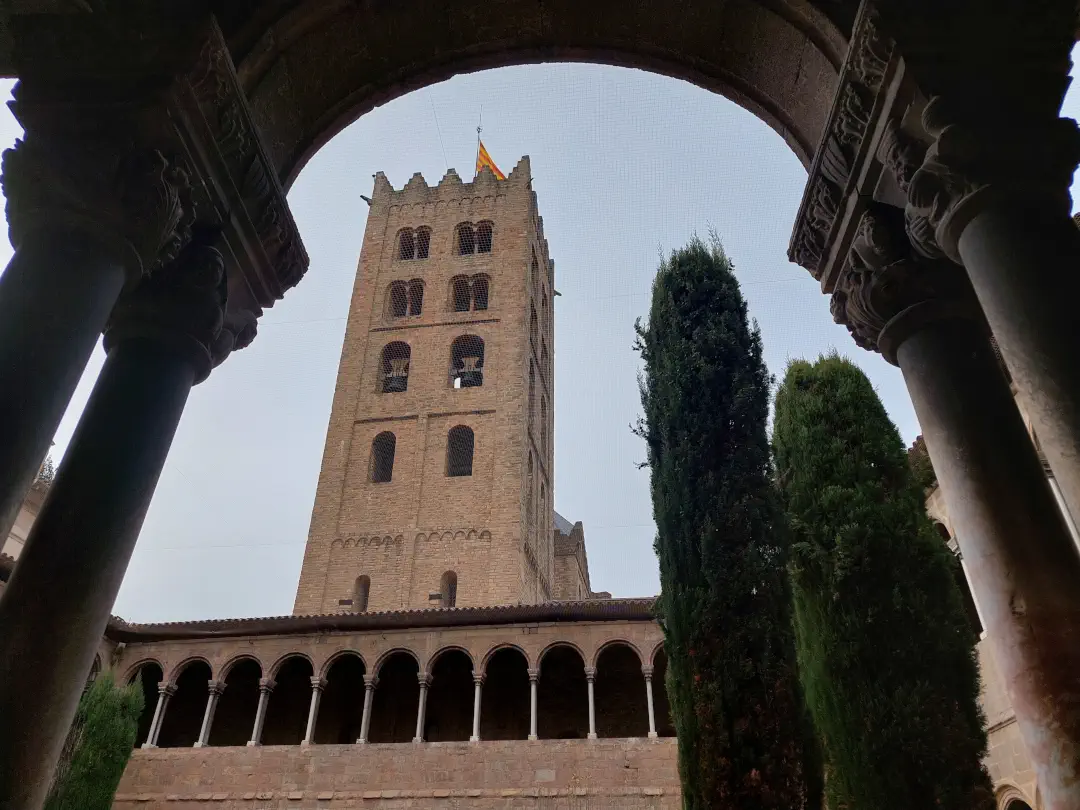
The rest of the abbey church was largely reimagined by enthusiasts for the medieval period in the 19th century after the monastery had fallen into disrepair and lost some buildings to demolition. Some original features remain, however, and there is also a beautiful cloister, built over three centuries in the medieval period, with carved capitals showing everything from mythological beasts to scenes from daily life.
This abbey is one of the symbols of Catalan identity both because it was from here that monks went to found the nation’s true spiritual home – the abbey on the magical mountain of Montserrat – and because of its links with the famously hairy Count Wilfred, so called, apparently, because he had hair “in places where other men did not”. Wilfred it was (or probably in fact was not, because the legend has absolutely no basis in known historical fact) who is popularly believed to have given his very blood for Catalonia. After he was wounded in battle, some say against the Normans, some the Muslims, his overlord Charles the Bald, King of the Franks, could apparently think of nothing better to do than dip his fingers in Wilfred’s blood and draw them down his plain golden or copper shield, making four red stripes – the stripes that appear today on the flag of Catalonia. Some even go as far as to say that Wilfred was the first ruler of an independent Catalonia, but he would scarcely have considered himself as such. He was an independently minded Count in a period when the power of his Frankish overlords was dwindling, but it was only a century later, when the Frankish king failed to assist Wilfred’s grandson, Borrell II, against the Muslims, that a kind of de facto independence was established.
The Catalan rulers were never kings, though, always Counts of Barcelona, who sometimes struggled to assert their authority against other local rulers of the same rank. That is, until the time of Ramon Berenguer IV, who, like Wilfred, is buried in Ripoll Abbey church. Because Ramon Berenguer pulled off a masterstroke – he managed to marry the sole heiress to the neighbouring Kingdom of Aragon. True, there was something of an age difference between him and his bride – he was 24 when they married, Petronilla just one year old – but he was clearly a man who knew how to bide his time, and the couple went on to have five children. One of these eventually became King Alfonso II, beginning an entire dynasty of Catalan kings of Aragon.
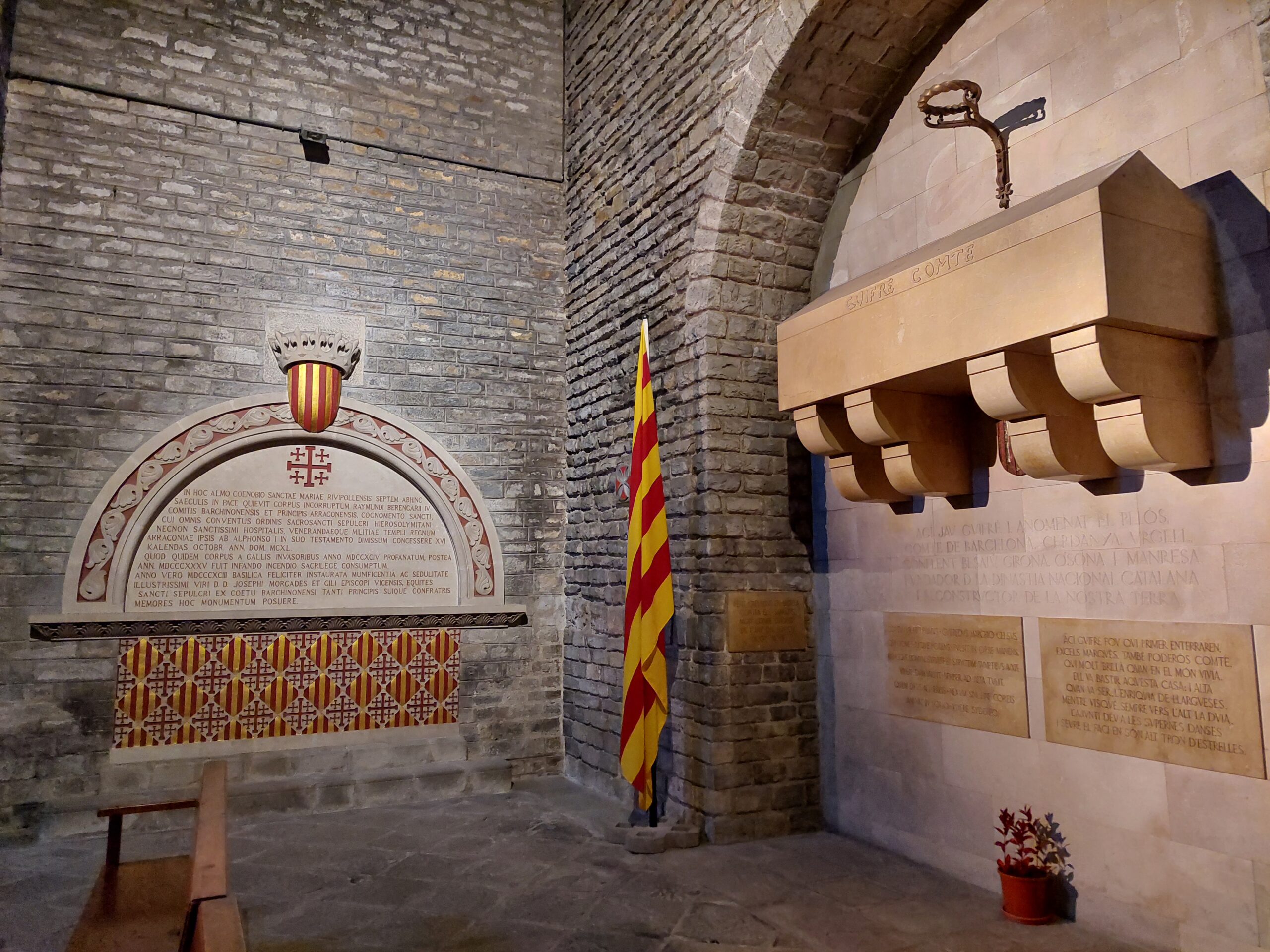
The quandary of Catalan nationalism is summarised in these two rulers: on the one hand, Wilfred, who had the aspirations of a nation projected back on to him a thousand years after his death with the popularity of his legend. And, on the other, Ramon Berenguer, who achieved the notable coup of royal status for his dynasty, while at the same time yoking his county, and what later became considered the principality of Catalonia, to the much larger neighbouring kingdom.
All this fascinating history and more can be found in the Scriptorium museum next to the Abbey. Although its name implies that it should contain rare and ancient books, its name is merely a reference to the fact that, in the medieval period, Ripoll Abbey’s scriptorium was one of the most renowned in Europe. It’s really an interactive museum with a wealth of information about the history of the Abbey itself and the surrounding area.
But we’re tired and it’s getting dark. We walk through dark, cold streets in our inadequate clothing, hurrying back to the relative warmth of the car. It’ll be over an hour before we can get back to our comfortable coastal microclimate, imagining how long that relatively easy journey would have taken before the days of dual carriageways, and just how tough people must have been to live in those mountains.