Salamanca
It's Halloween and we're in the middle of a traffic nightmare. We've arrived in Salamanca at dusk, there appears to be nowhere to park anywhere near our hotel and we're driving round and round in the gathering gloom. I've always been a rather reluctant and nervous driver, and once again I swear that the next time I travel across Spain I'll avoid this horror by only staying at hotels on the outskirts or in little villages.
We eventually find the way into a public car park not too far away and dump the car gleefully, followed soon afterwards by our luggage in our room at the Hostal Granada. We're soon off out. The Craft Bar has indie rock music blasting and a great atmosphere, with dimmed lights and some of the best beer I've ever tasted in Spain. They brew their own. I'm told the secret is the little bit of rye they put into the mix when brewing the British-style pint of bitter I'm drinking. The clientele are dressed for the occasion, with zombies, witches and vampires all in evidence, but no-one seems to care that we're not in costume. It's the perfect way to wind down after the stressful end to our drive.
The next morning Salamanca's keen to show us the flipside of its personality. The day is bright and clear and we're glad we didn't give into the temptation to have that extra hangover-inducing pint. It's that time of year in the middle of Spain when it's impossible to dress comfortably for a whole day. A chilly morning like this will work up to a rather warm midday and cool off dramatically by early evening. If you're out from, say, 8am to 8pm, you're going to go all the way from being glad of your buttoned-up coat, to desperately wanting to be rid of it, and then back again.
We haven't booked breakfast at our hotel and go in search of it. What we find, at a cafe whose name I've mercifully forgotten, is one of Spain's grumpiest waiters. He refuses to allow my companion, who speaks perfect Spanish, to order a "sándwich", despite the fact that the word has been accepted by the Royal Academy in charge of the language for almost a century, and then does something bizarre when heating up my croissant which makes it look as if it's been run over by a road roller.
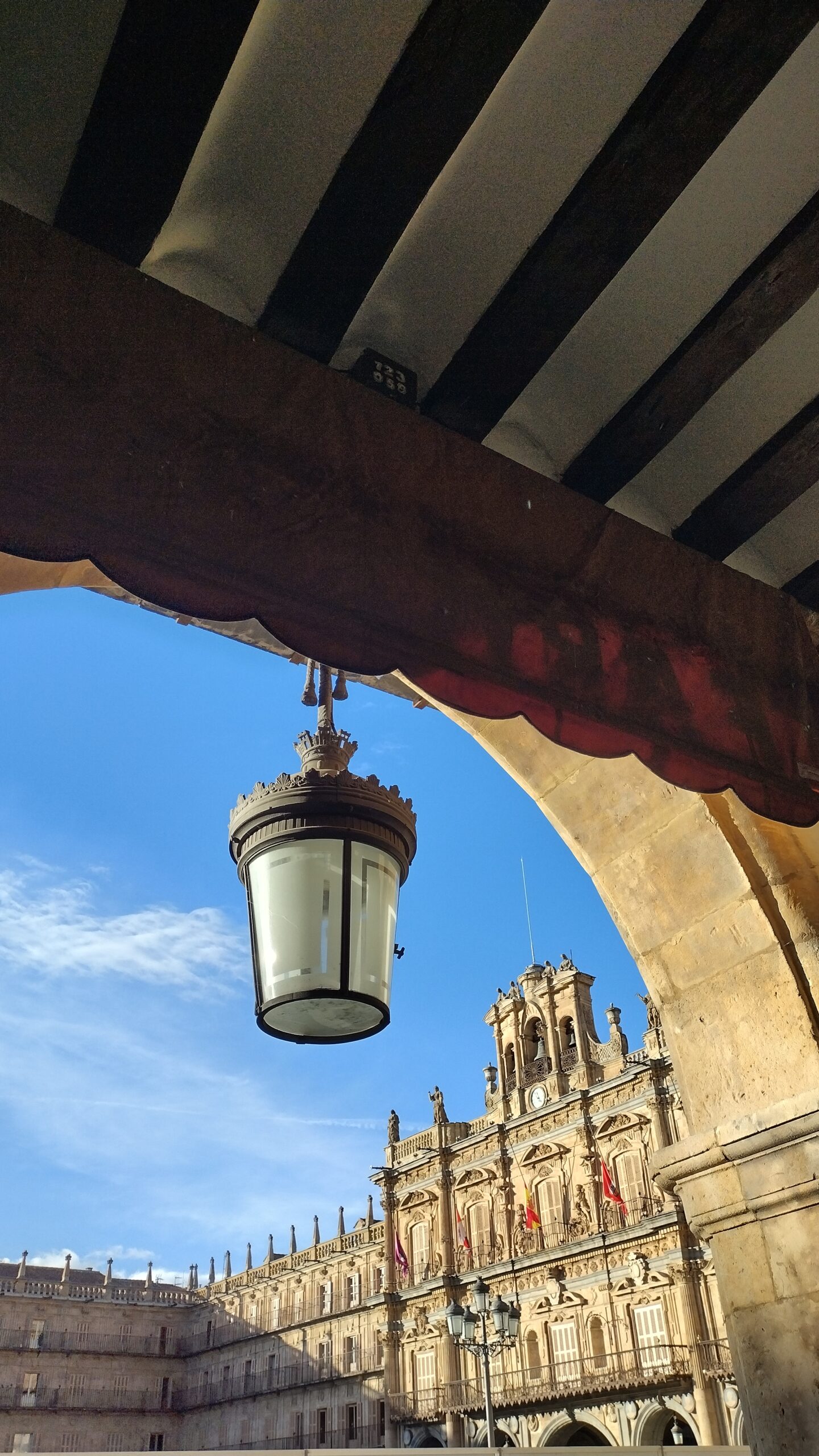
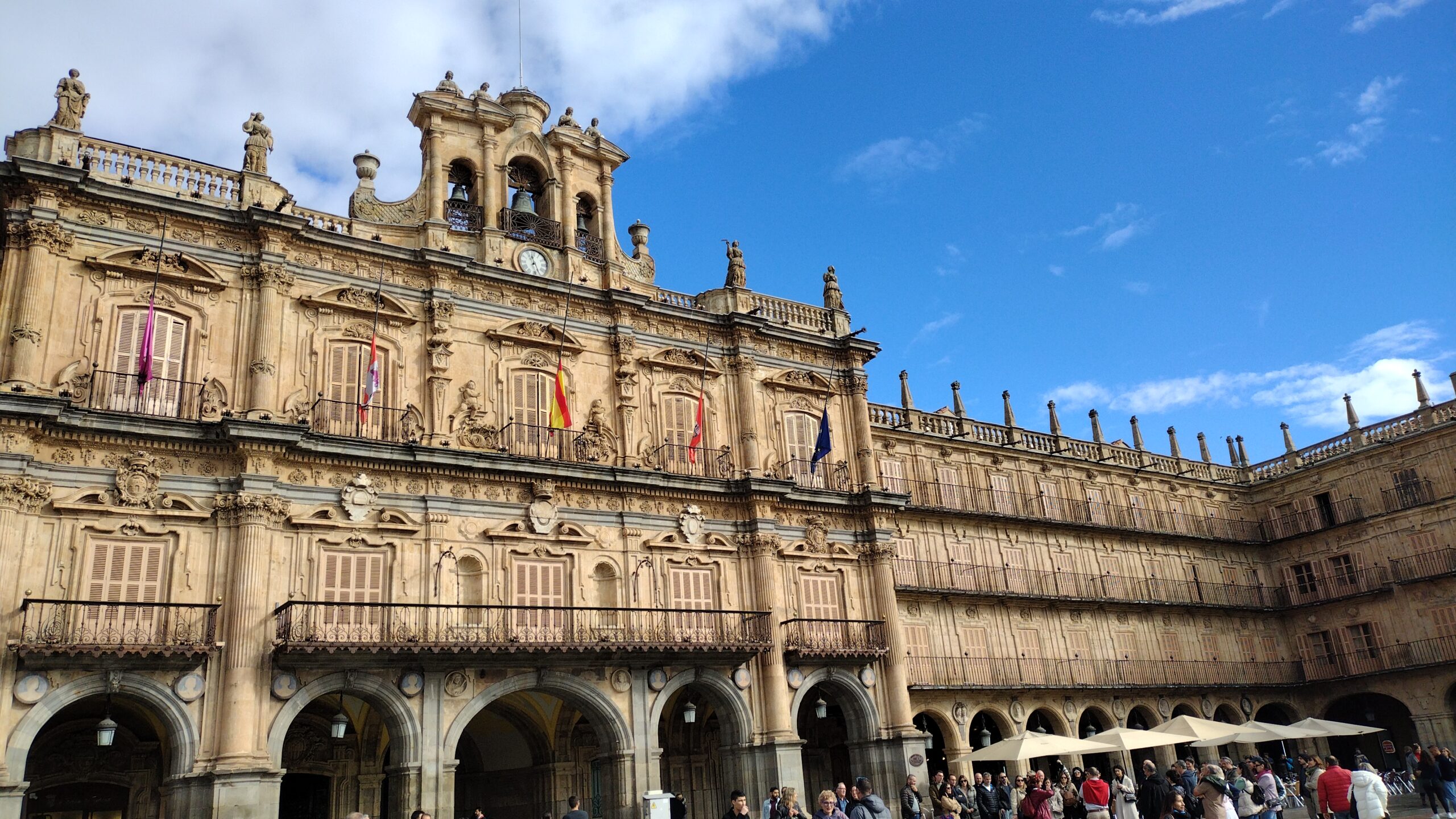
So it's not long before we're off to the spectacular, 18th-century Plaza Mayor. There's some kind of fair being set up, but it's clear that this a much more pleasant main square than its over-touristed counterpart in Madrid which we'd visited some weeks before. We'd probably have found much better breakfast at one of the cafes here too.
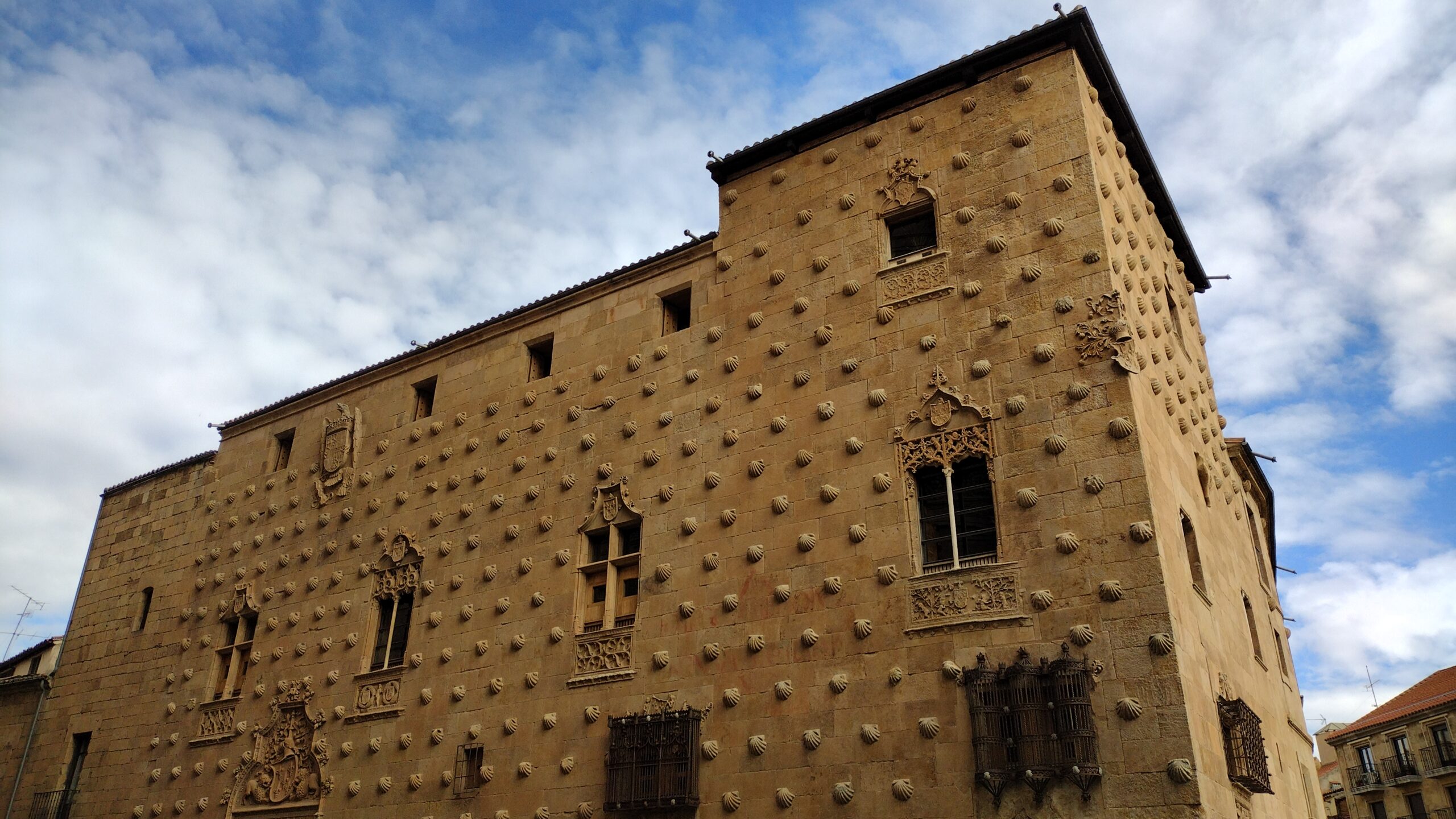
But on we go to one of Salamanca's most photographed buildings, the Casa de las Conchas or Shell House. This was built just as Spain moved into its Golden Age as the 15th century turned to the 16th and gets its name from the shell motifs decorating it. Most of the pictures you see show these all over the outside, but a lot of its charm is in the beautiful courtyard through the doors. Today this contains an interesting exhibition about the Spanish Republicans exiled to Mexico after the Civil War.
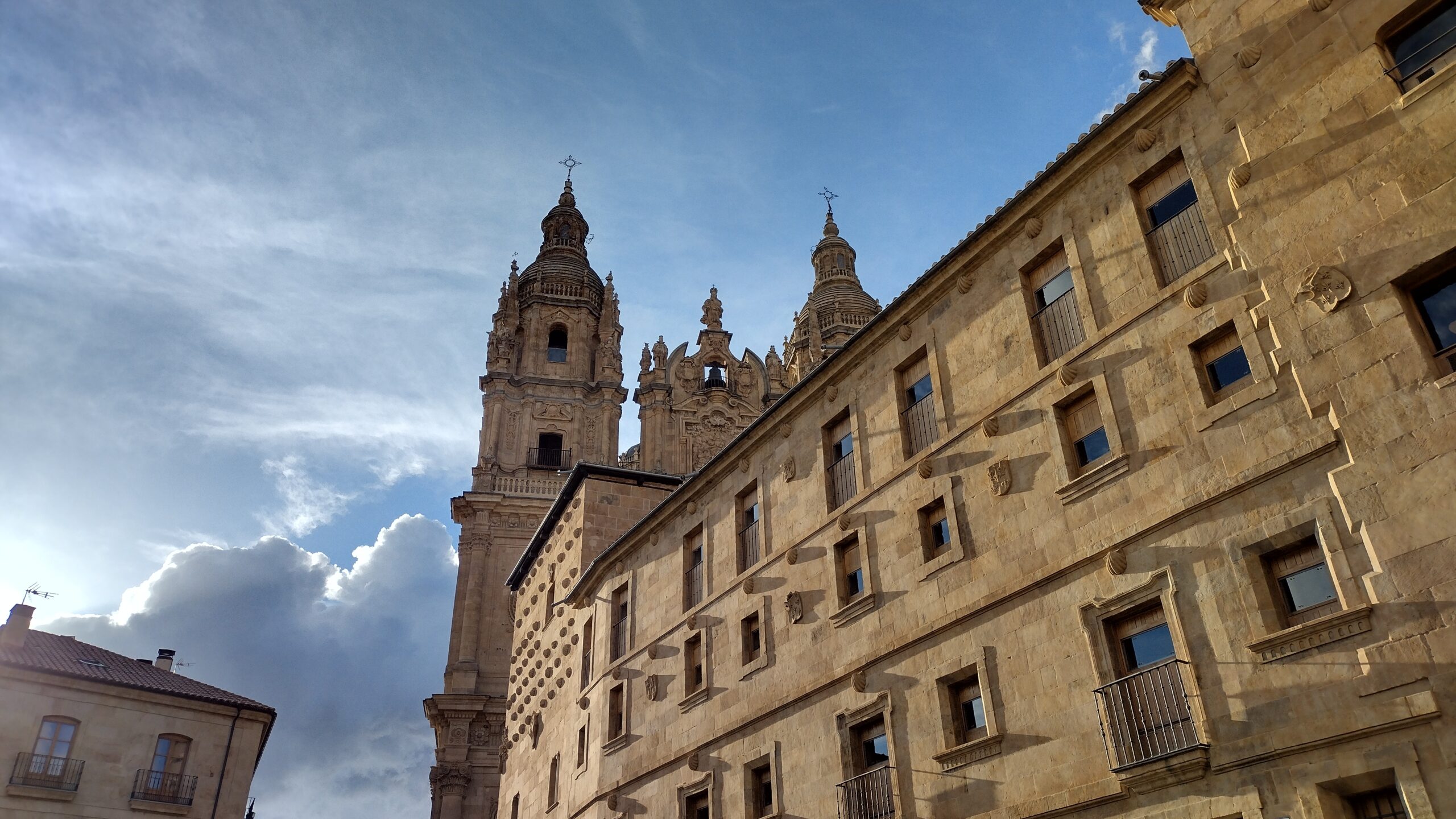
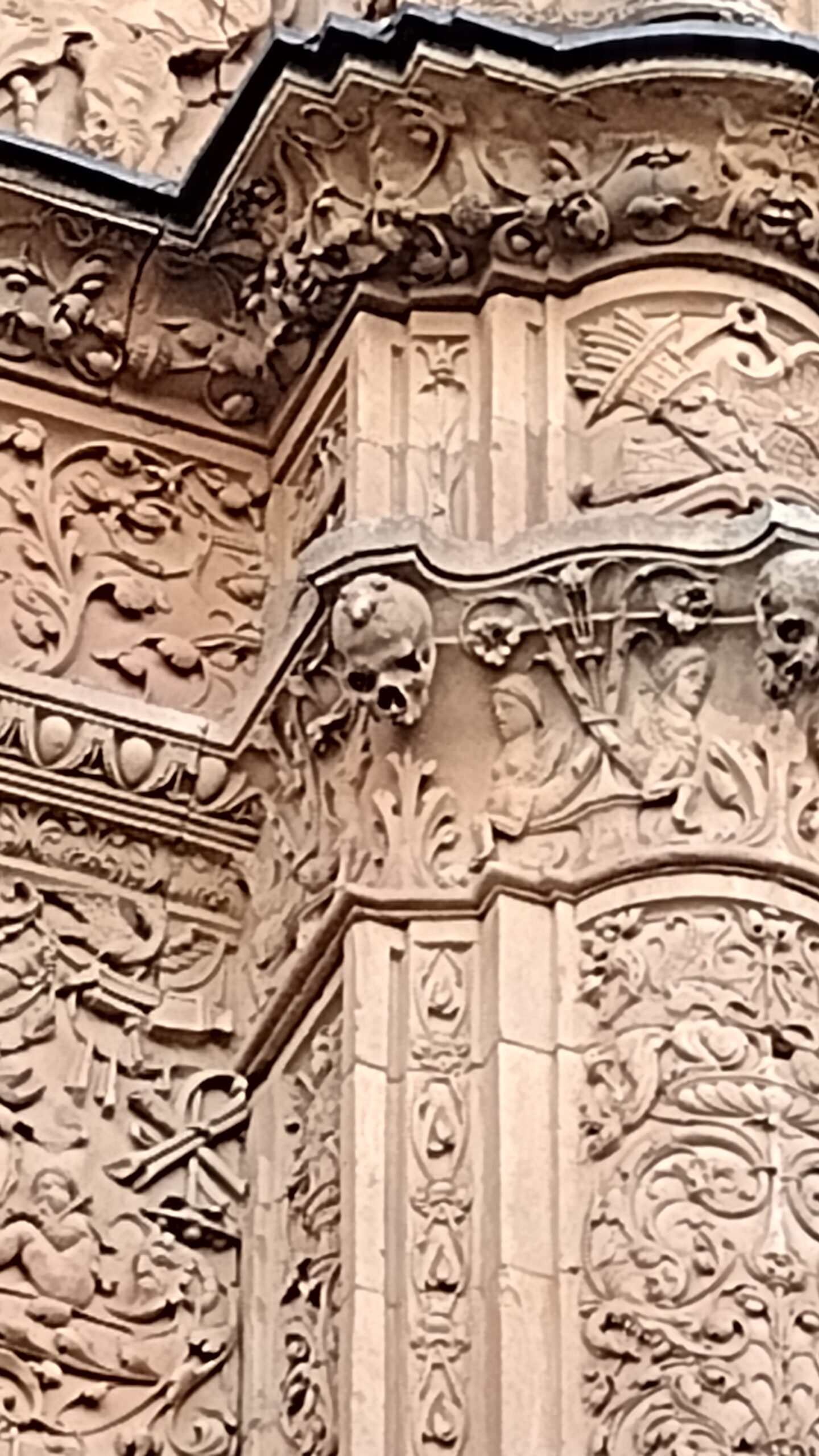
But now we're off on a frog hunt. Salamanca has one of the oldest universities in Europe, and the very oldest in Spain, dating back to 1218. The facade of its main building isn't quite that old and, like the Casa de las Conchas, was built at the end of the 15th century, but it does have an interesting curiosity - the Salamanca frog, carved into its decoration. It's supposed to be lucky to spot it and it attracts crowds of people trying to do just that. But is it lucky to find it if you've had to Google three times and study several photos to work out exactly where it is? We'd certainly never have tracked it down otherwise. If you want to seek it out without hi-tech assistance, my advice is to look closely at the skulls!
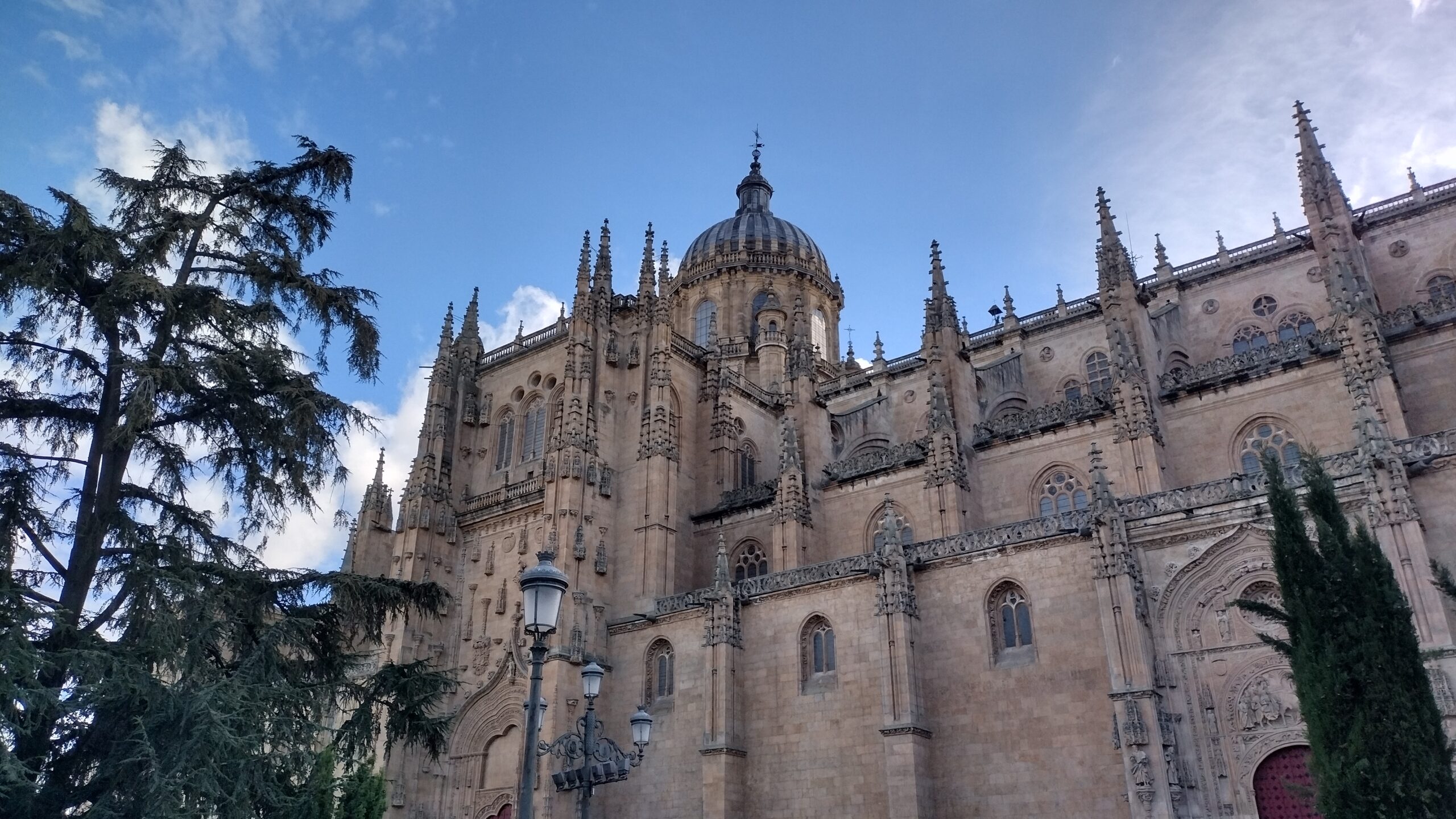
Google may be useful if you want to locate an elusive amphibian, but I don't recommend it if you need to find the entrance to anything, especially Salamanca Cathedral. It isn't the first time we've had to walk almost entirely around a rather large building to find the way in, and I suspect it won't be the last. The Cathedral is so big because it's in fact two buildings - the huge "new" cathedral, built over two centuries between 1513 and 1733 is impressive, but the really distinctive part is the "old" cathedral, from 200 years earlier, with its Gothic altarpiece, medieval wall paintings and cloister chapels. There's also an interesting museum, with archaeology, paintings and more, which can be visited on the same ticket. The whole package is well worthwhile.
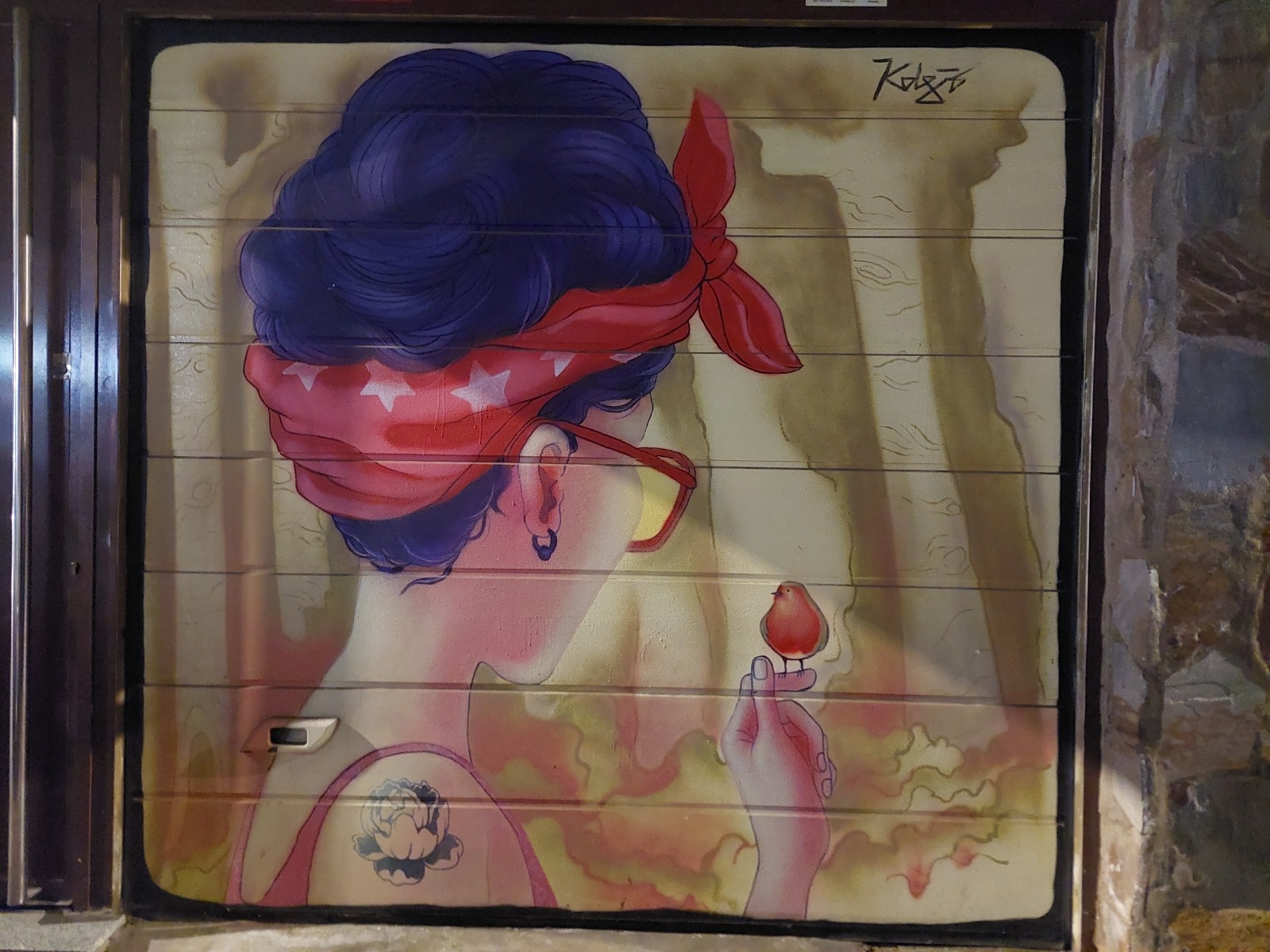
It's getting dark now, and we're heading back towards our hotel, which happens to be in a district where street art is becoming all the rage. In some places, almost all the metal shutters covering closed shops and car park and garage entrances are decorated with paintings, some of them impressive, others just amusing. It's part of Salamanca's twin soul we've been discovering - part medieval tradition from the city's ever-present past; part youth culture, probably down to its status as a student city.
We decide to return to our bar for another taste of yesterday's fun atmosphere only to find that it's completely different - today there are bright white lights and even children running around instead of the comfortable darkness and Halloween characters of the night before. That, we discover, was actually a themed party. The beer's still good though, and we sit and ponder on how a single place can contain two completely opposite identities.