Santes Creus
We’re sitting in a restaurant, wearing paper bibs and plastic gloves, with a ridge tile full of what look like giant spring onions, bowls of orange-red sauce and a jug of wine in front of us. I pick up one of the blackened vegetables, find the inner leaves with my right hand, and with my left pull down on the charred outer ones so that they come off smoothly on to my plate, leaving the softer edible part exposed. I dip this into my pot of sauce, tip back my head and dangle the calçot (for this is what I’m eating)into my mouth. It’s delicious. Calçots actually taste very little like spring onions – they’re a lot sweeter for one thing – and the sauce is nutty, with delicate flavours of red pepper and paprika. The three of us around the table repeat the performance until the tile in front of us is empty. Then the waiter brings another and we clear that as well. And that’s just the starter.
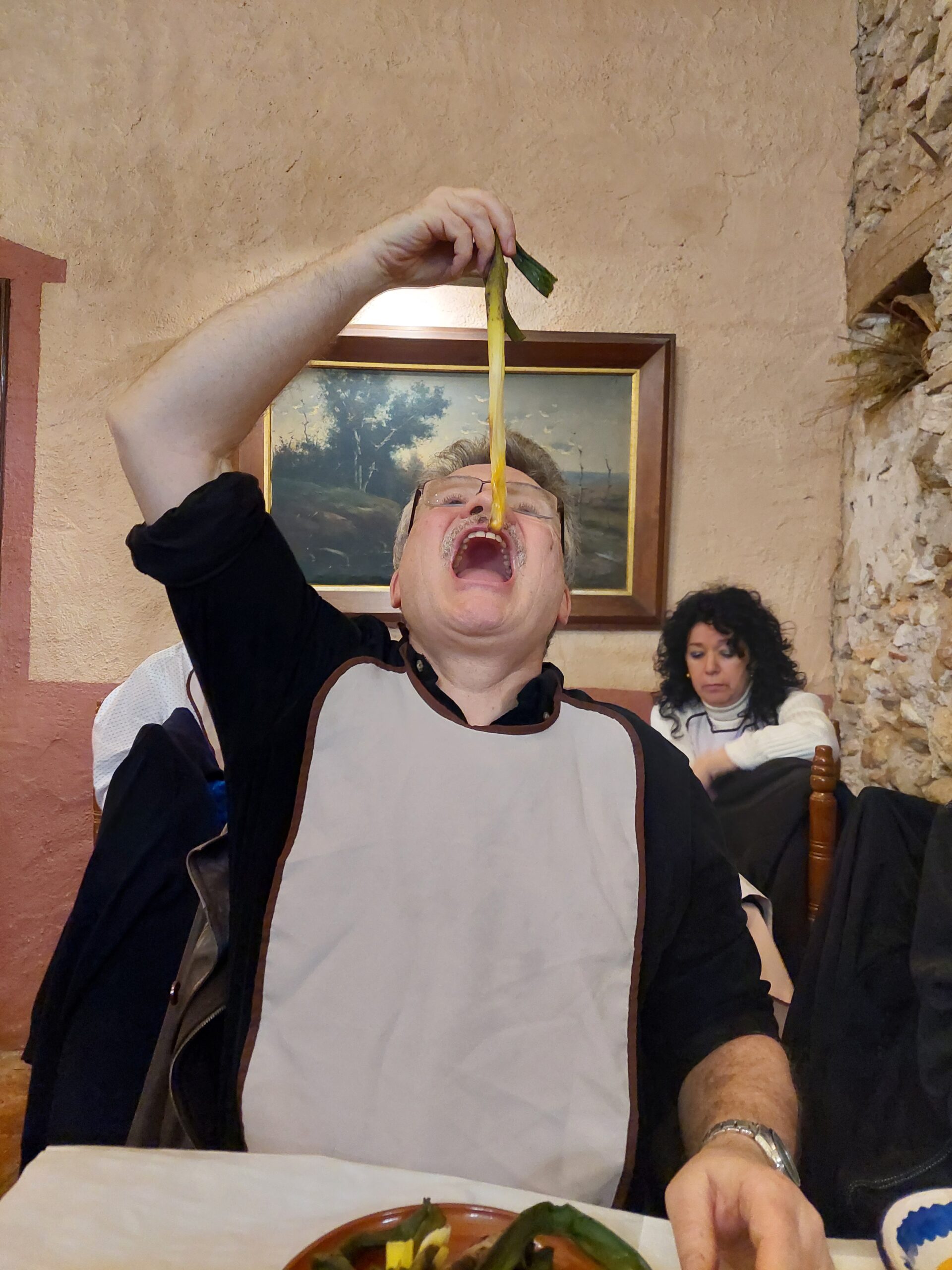
The ritual, which appears quite bizarre to a mere spectator, is performed all over Catalonia every weekend, particularly in the first three months of the year, although the season seems to be continually extending at both ends. It’s called a calçotada, and it makes an excellent Sunday lunch, including, to follow the barbecued calçots themselves, a plateful of meat and sausages with other vegetables. There’s crema catalana (a close relative of crème brulée) for dessert and it’s all washed down with red wine and cava.
We’re in the south of Catalonia, in the heartland of calçotadas, and this restaurant’s an excellent one: Cal Mosso in the village of Santes Creus. It’s one of those days of not-quite-spring when the field edges are laced with the promise of pink and white almond blossom, but the gnarled black stumps of the vines stand as a reminder that winter is not prepared to back down for a few weeks yet.
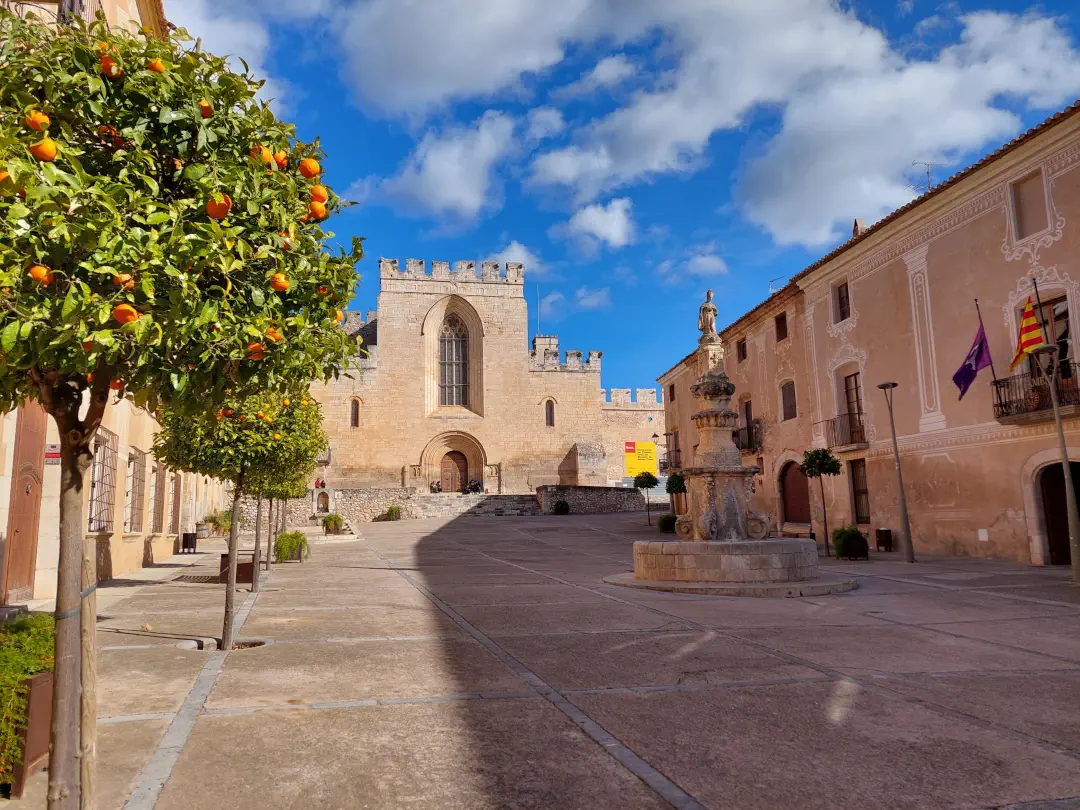
Cal Mosso is the ideal place for our lunch considering that, in the afternoon, we’re planning to visit Santes Creus monastery, one of the three great Cistercian abbeys in this part of Catalonia. They’re here because, when they were founded in the 12th century, this really was the middle of nowhere – and that was exactly where Cistercians liked to be. Almost empty land recently conquered from the Muslims, like this area just inland from Tarragona, was ideal.
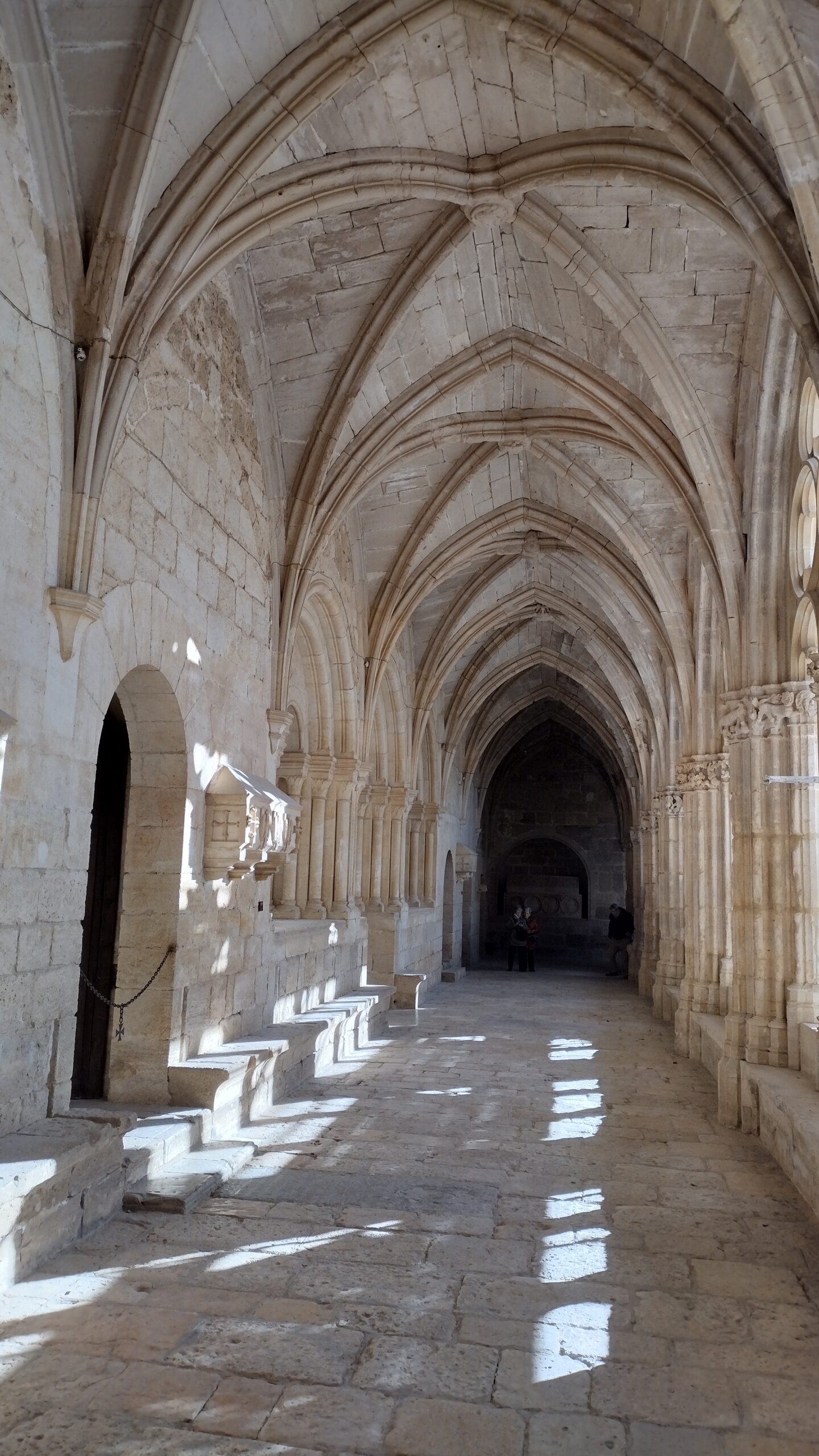
In typical Cistercian style, the beauty of Santes Creus is elegant and restrained. It’s Gothic – the pointed arches in the church are unmistakable – but there’s nothing flamboyant about it: the lines are clean and graceful. Unfortunately, we see little of the wonderful cloister, which is under restoration, although a well-made video gives us an idea what we are missing. But the dignified chapter house and enormous refectory offer an impression of what the monastery must have been like in its golden age.
The church is the burial place for two Kings and a Queen of Aragon: Peter III (known as “the Great”, his son James II (nicknamed “the Just”), and James’s wife, Blanche of Anjou. They ruled during the heyday of the Crown of Aragon in the 13th and early 14th centuries, when, as well as Aragon itself, Catalonia, and Valencia, the monarchs were expanding their rule across the Mediterranean in the wake of the trading empire focused on Barcelona.
James II liked Santes Creus so much that he had royal apartments built there, the remains of which can still be seen. However, the monastery didn’t last long as the pantheon of the Catalan kings of Aragon. James’s grandson, Peter IV preferred the rival monastery of Poblet not far away and, after he died in 1387, royal burials took place there instead.
We come out of the monastery into the afternoon sunshine. Opposite us is a stall selling cheese. Spanish cheese was a big discovery for me when I moved here 25 years ago. It’s interesting, varied and generally full of flavour. On this one stall we have cheese of different levels of maturity made from sheep’s, goat’s and cow’s milk and a blend of all three. After sampling the wares on display (the woman looking after the stall is free with her samples) we choose some mature sheep’s cheese and head for home, whizzing past almond blossom, vines and views of distant mountains all the more beautiful in the light of this almost perfect, almost spring afternoon.