Saving heritage or saving the world?
Imagine a museum in wartime. What if all the exhibits had to be put away for safekeeping? Would it still have a role? What could such a museum do?
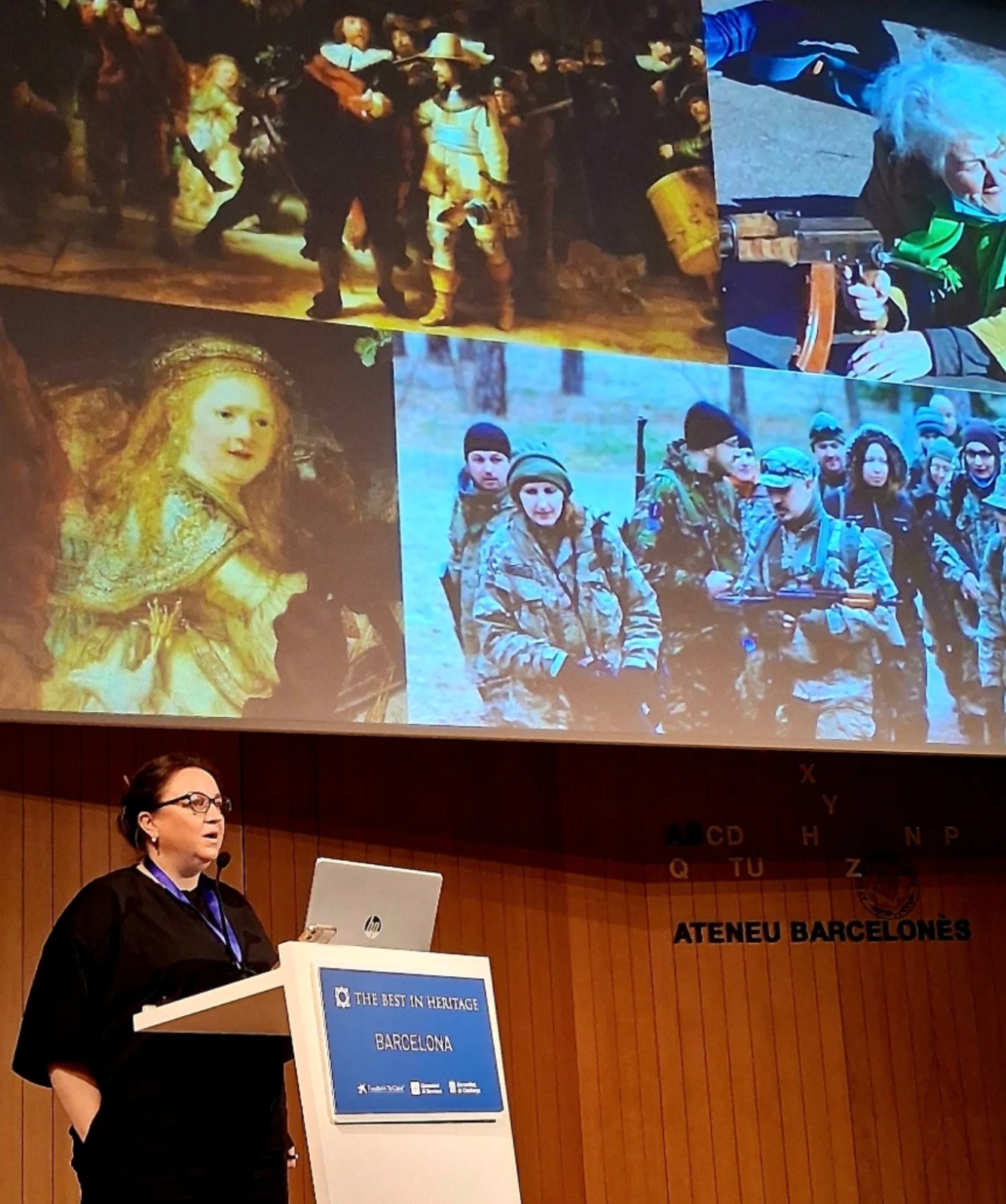
These are not hypothetical questions. Museums have always had to face the dangers of war, and some, like the Bohdan and Varvara Khanenko National Museum of Art in Kyiv, are under threat right now. How it has lived through the perils of the last three years was the subject of a brilliantly understated and moving presentation by Yuliya Vaganova at the Best in Heritage conference in Barcelona, which I was fortunate enough to attend a couple of weeks ago - a talk which, perhaps unsurprisingly, earned the museum the top Best in Heritage award.
The Khanenko is an art museum full of masterpieces. But when the Russian bombing and shelling started in 2022 there were real fears for the future of its collection of paintings, and they had to go into safe storage. With nothing on its walls, the museum invited the community in, sometimes just to get some food, a hot drink, or some relief from the pressures of having to survive while under attack or worrying about relatives at the front.
The curators were experts in fine arts, but they soon decided they wanted to have something on display, so why not link up with the contemporary artists who were creating work but had nowhere to show it? The result was a series of exhibitions and collaborations that would otherwise never have happened - and who knows whether some of those currently unknown modern artists will one day be as highly regarded as the old masters from the permanent collection? As for those great paintings, they are not lost to public view: collaborations have been forged with other museums in safe countries for some of them to be shown in exhibitions there.
This story from the Ukrainian war zone was just one of the often impressive and inspiring presentations given at the conference featuring museums and heritage sites all over the world. There was the previous year's winner - a museum in Istanbul devoted to journalist Hrant Dink, who published the first bilingual Turkish and Armenian newspaper and was murdered for his activism as recently as 2007. From Argentina came the tale of conservation work done by an entire community, advised by experts, to preserve the legacy of mural artist Santiago Maldonado, an activist on behalf of indigenous people, who died in highly suspicious circumstances in 2017. The silence in the hall when the presenters revealed the end of their story - the sudden total destruction of the murals by a local authority making some spurious excuse - told its own tale. But if there could be a last laugh in such sad circumstances, they had it as part of the conservation work had involved meticulously photographing the lost murals, which now live on through a website.
There was much more. I enjoyed the story of the museum of the Sami people of northern Finland, and how artifacts stolen from them many years before were finally returned to them by the Finnish national museum in Helsinki. The abuse of the Sami - the only recognised indigenous people in Europe - was one piece of history I was almost entirely unaware of at the start of the conference. Another was the awful treatment suffered by Chinese people in Canada in the 20th century, when they even had to pay a special racial tax. This, along with the traditions and the resilience of the Chinese community, is now commemorated and celebrated in what looks like a wonderful museum in Vancouver.
One of the things good museums do is to tell stories like these, with their full political dimension. Another, as revealed time and time again at the conference, is to involve their local community. This was nowhere more evident than in the presentation by the Kalamaja Museum in the Estonian capital Tallinn, where the people living in this homely but unremarkable part of the city were involved at every stage of building their own museum, including recording stories to be played for visitors to what used to be the local phone box. There were stories of community cooperation from all around the world, including different initiatives from the Young V&A, Museum of the Home and Tees Valley Museums in the UK, the Louis Armstrong House in New York, where a former neighbour of the great jazz trumpeter ended up leaving her entire home to the museum to give it an extra site, and a traditional bathhouse in Tokyo, which was restored with the aid of local residents as a memorial to a dying tradition.
Community also includes museum staff, of course, and the winner of the conference's second award, IMAGINES, for use of technology, decided to include them. The Museu Nacional de Arte Antiga in Lisbon, made ten surprisingly moving promotional videos of room attendants talking about their work and their favourite pieces of art in their care.
Whether telling stories or involving their communities, the really important common denominator was the human connection. Museums shouldn't be about boring objects in glass cases, or even spectacular technology, they should be about people, and if they can do that they have a role to play even in the biggest challenges we face. As conference organiser Professor Tomislav Šola put it in his opening address: "Museums might not save the world, but they can certainly help."
The photo, by the Best in Heritage team, shows Yuliya Vaganova giving her award-winning presentation on behalf of the Bohdan and Varvara Khanenko National Museum of Art in Kyiv.