Setúbal
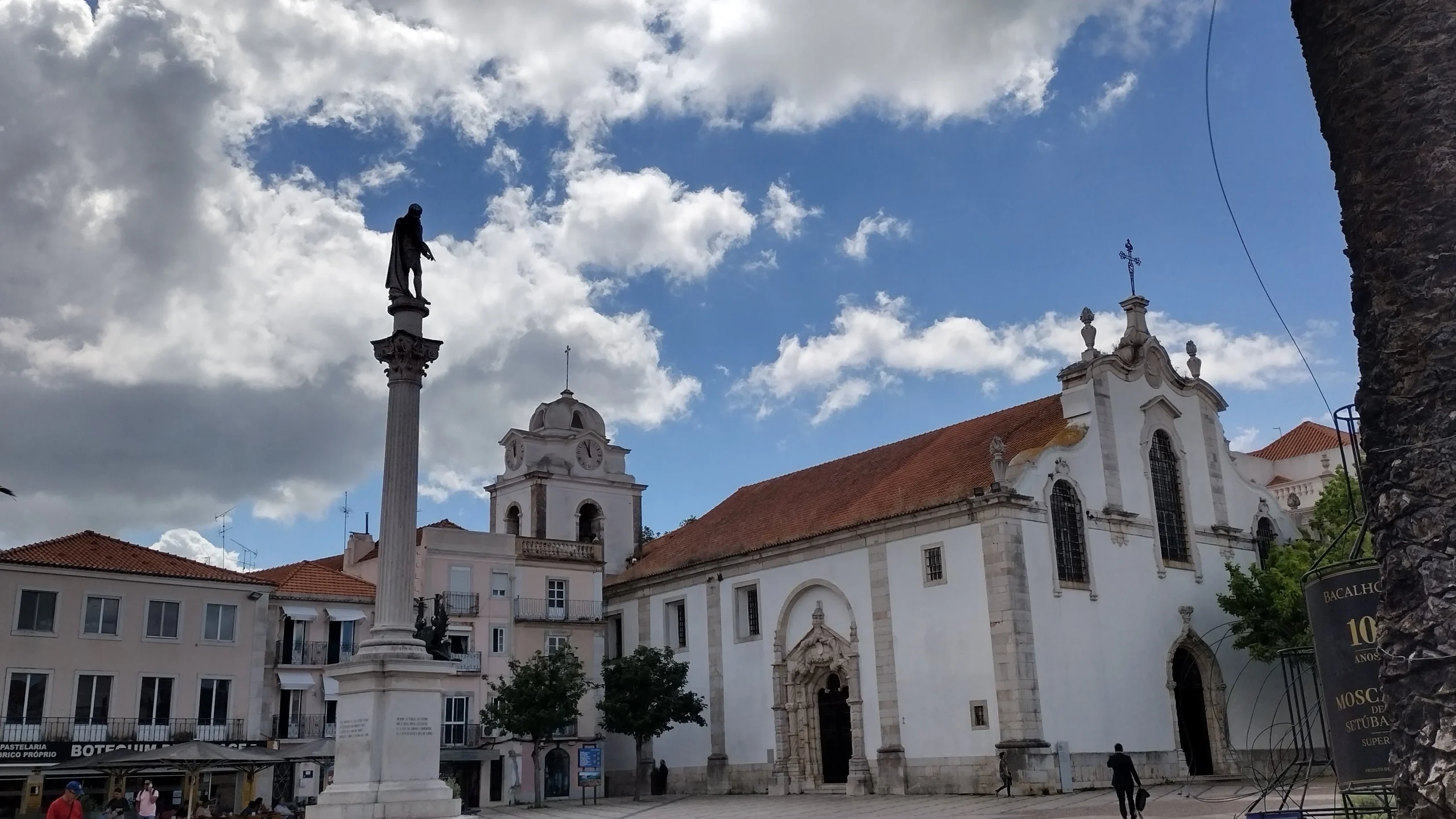
We're back in Portugal, this time in a town for which we've had contrasting reports. "Setúbal's my favourite city in Portugal," said one contact, recommending a beach bar. "It's not very nice," said another. "Lots of social problems and full of weirdos." We shall see.
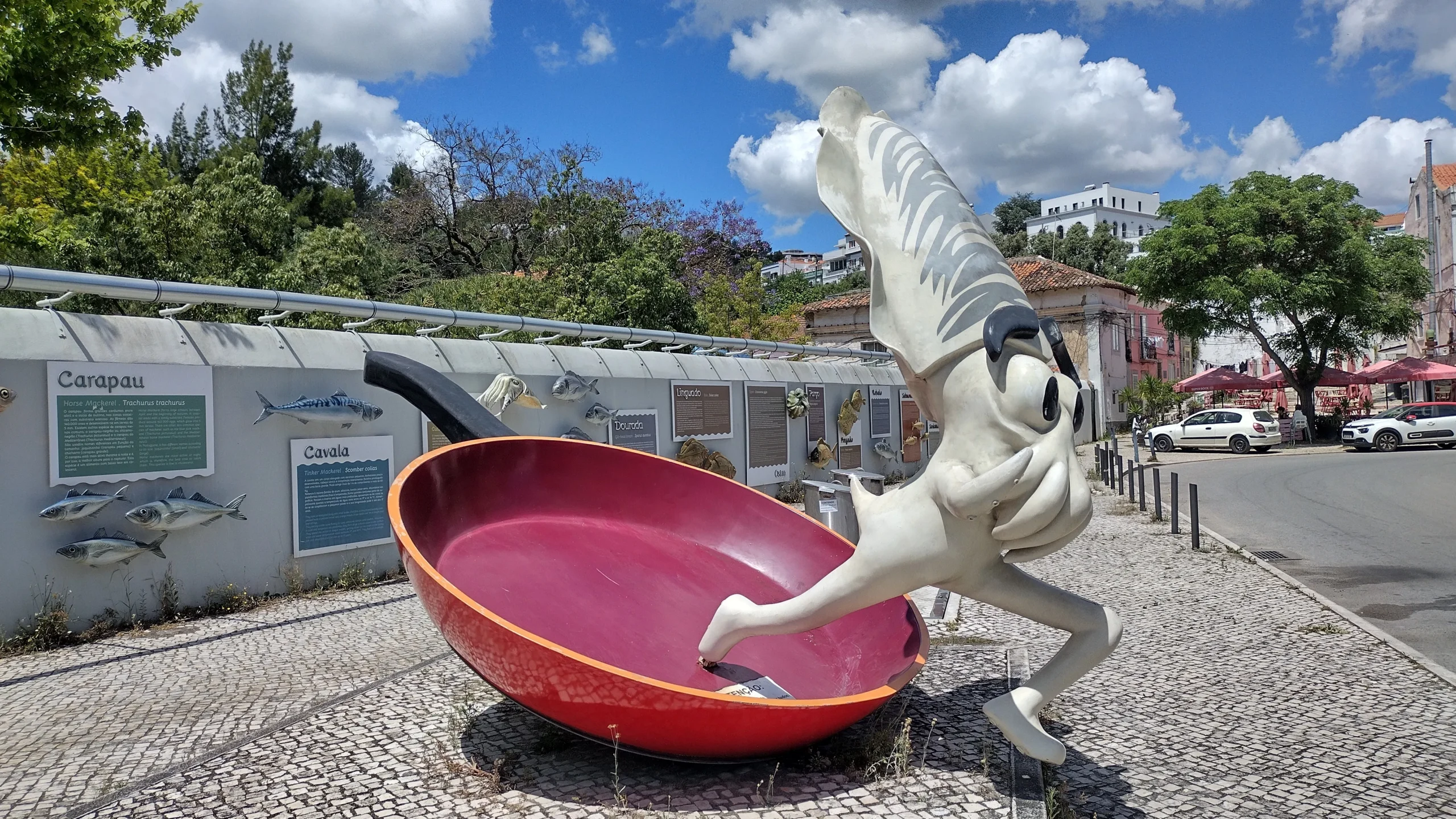
For the moment, it seems like a pleasant place, positively glowing in the spring sunshine and not a weirdo in sight. We're making a tour of the street art and sculptures, of which Setúbal seems to have more than its share. Finding them isn't always easy, though. There IS an official route, but it seems to cover the entire Lisbon province and is almost impossible to work out. But we can't miss the giant cat, striding across its roof in the central square or some huge murals. And here, at the end of the main avenue, is a cuttlefish trying to escape its fate as a "choco frito" in a frying pan.
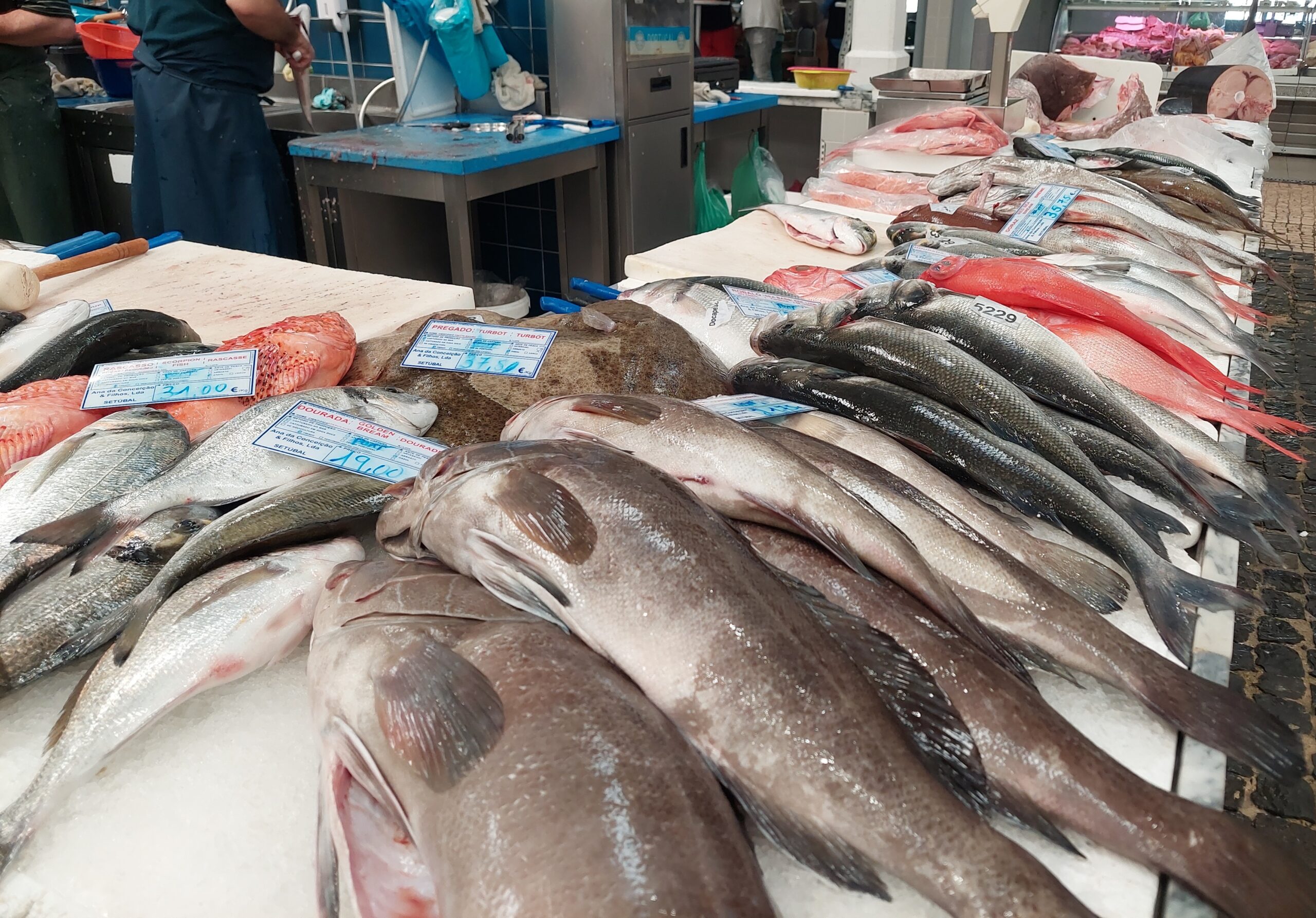
That reminds us of one of Setúbal's main attractions - its enticing market, with a more appetising selection of fresh fish and seafood than I could have imagined, as well as meat, fruit and vegetables and other goodies. The century-old building it's held in has been revamped, and the blue tiles on the end wall gleam, but the main attraction is all that delicious fish. I use my phone to translate some of the Portuguese names. As a Brazilian, it's my partner's language, but some of these creatures are never seen on the other side of the Atlantic and there are certainly some I've never even seen before. Like the scabbardfish - both jet black and burnished silver varieties, which the Portuguese confusingly refer to as a swordfish because it's shaped like a sword, rather than having one on the end of its nose.
We spend a long time looking and wishing we could take some of this wonderful food and cook it, but today that's impossible, and we reluctantly leave the market behind. Not the seafood, though. We are fortunate enough to have been recommended the Copa d'Ouro restaurant, and our lunch is an absolute delight from start - some of those famous fried cuttlefish and an octopus salad - to the finish - a prawn feijoada (prawns cooked with pinto beans) and some grilled sea bream. The local white wine is splendid too - just like the Setúbal red we'd tried the night before!
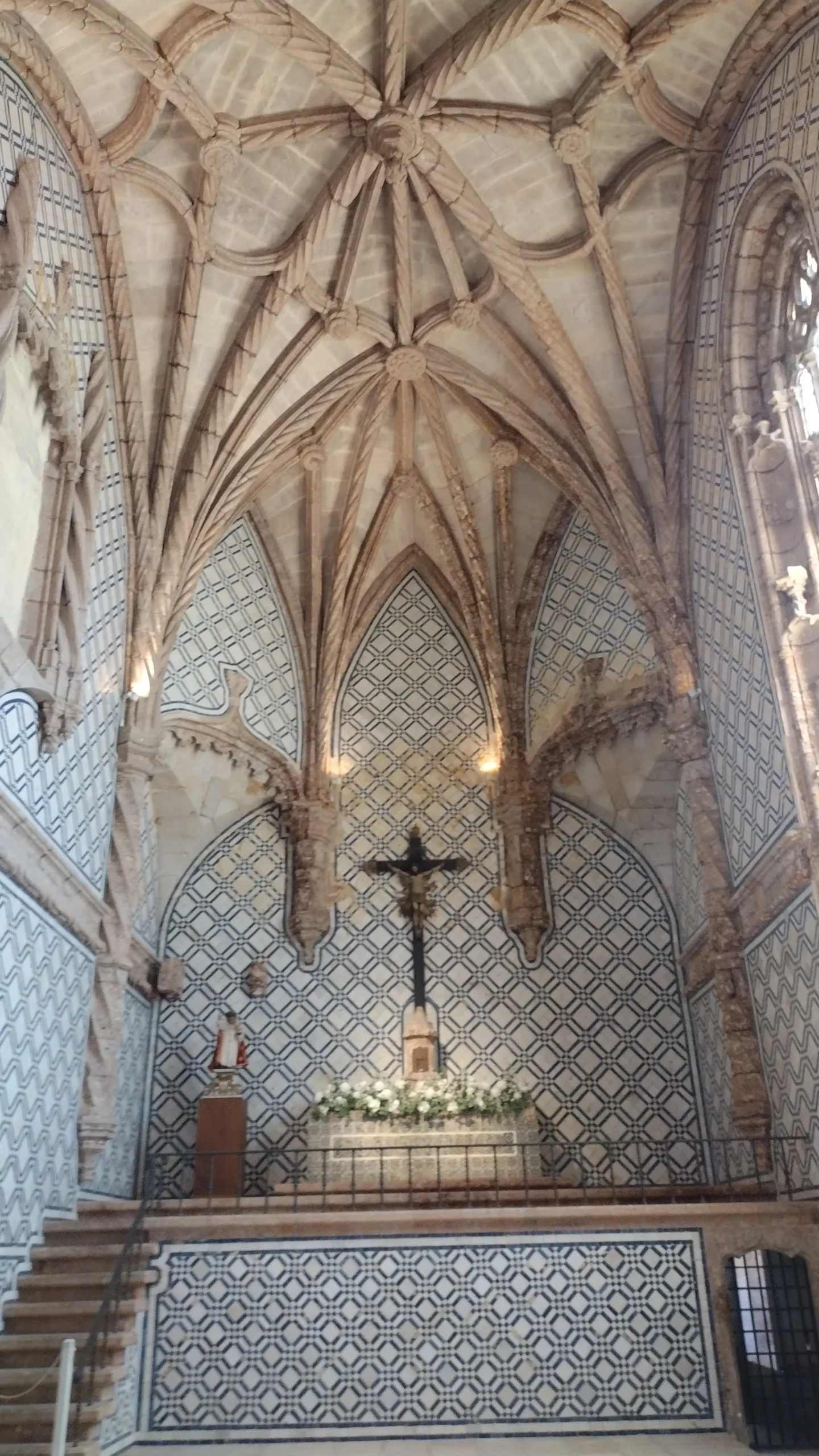
We work our way back to the main square and from there to the spectacular church at the former Convent of Jesus. It's built in that ornate but elegant Portuguese late Gothic style known as Manueline and it's a little architectural treasure, with its intricate vaulting and twirling columns. The church was built at the end of the 15th century, but 100 or so years later it was enhanced inside with typical Portuguese blue-and-white tiles, making it even more beautiful. The atmosphere's peaceful too, unlike some tourist-attraction churches.
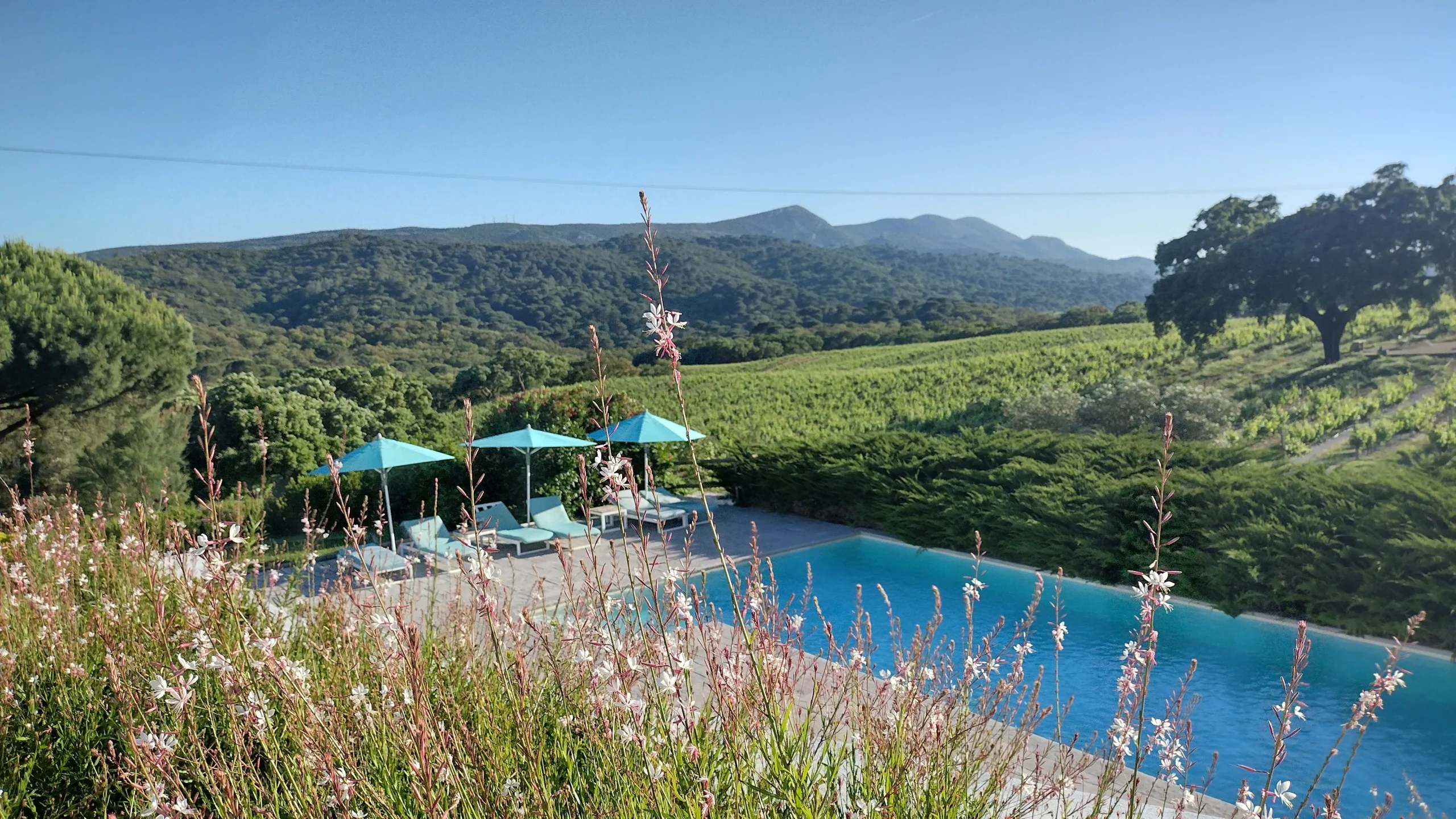
The monastery next door is now the local museum, but we decide not to go in. We could visit the São Filipe fort on the hill overlooking the city, or take a boat out dolphin-watching in the bay. But instead we order a car - in Portugal Uber and its clones are often cheaper than a bus would be if there actually was one - and return to our hotel just outside the city. Here, surrounded by vineyards and flowers, it's warm enough for an afternoon dip in the sheltered swimming pool, with the green Arrábida hills rising attractively behind us. Sometimes it's best to leave extra things to do for another visit - and we'll definitely be back here!