Trier
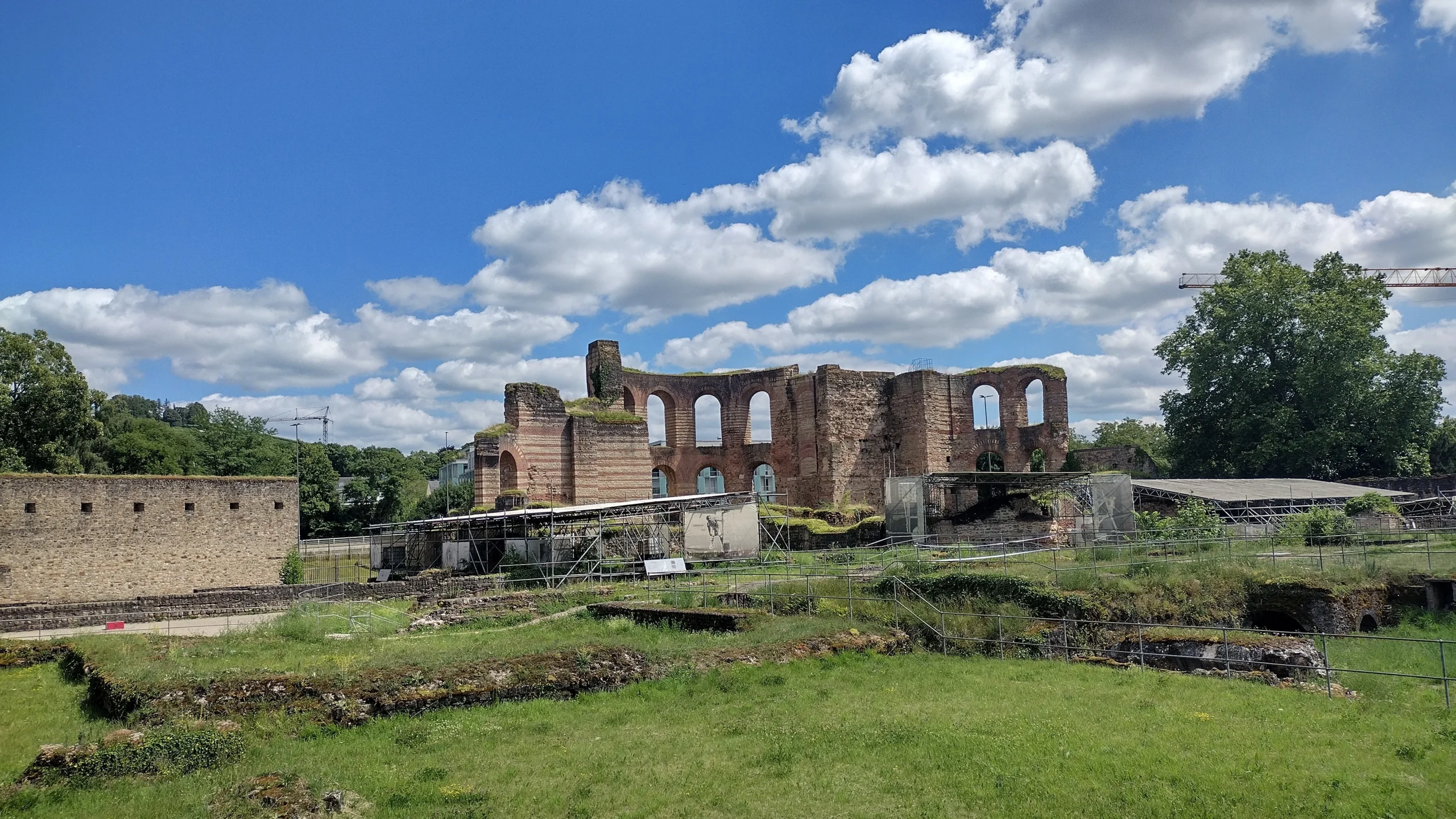
Some places have more history than they know what to do with and Trier, in the German Moselle valley, on the border with Luxembourg, is one of those cities. If its enormous Roman heritage wasn't enough, it has several medieval churches and a Renaissance and Baroque palace, not to mention the birthplace of a certain Karl Marx! It's also at the heart of a region with a 2,000-year-old tradition of making excellent wines.
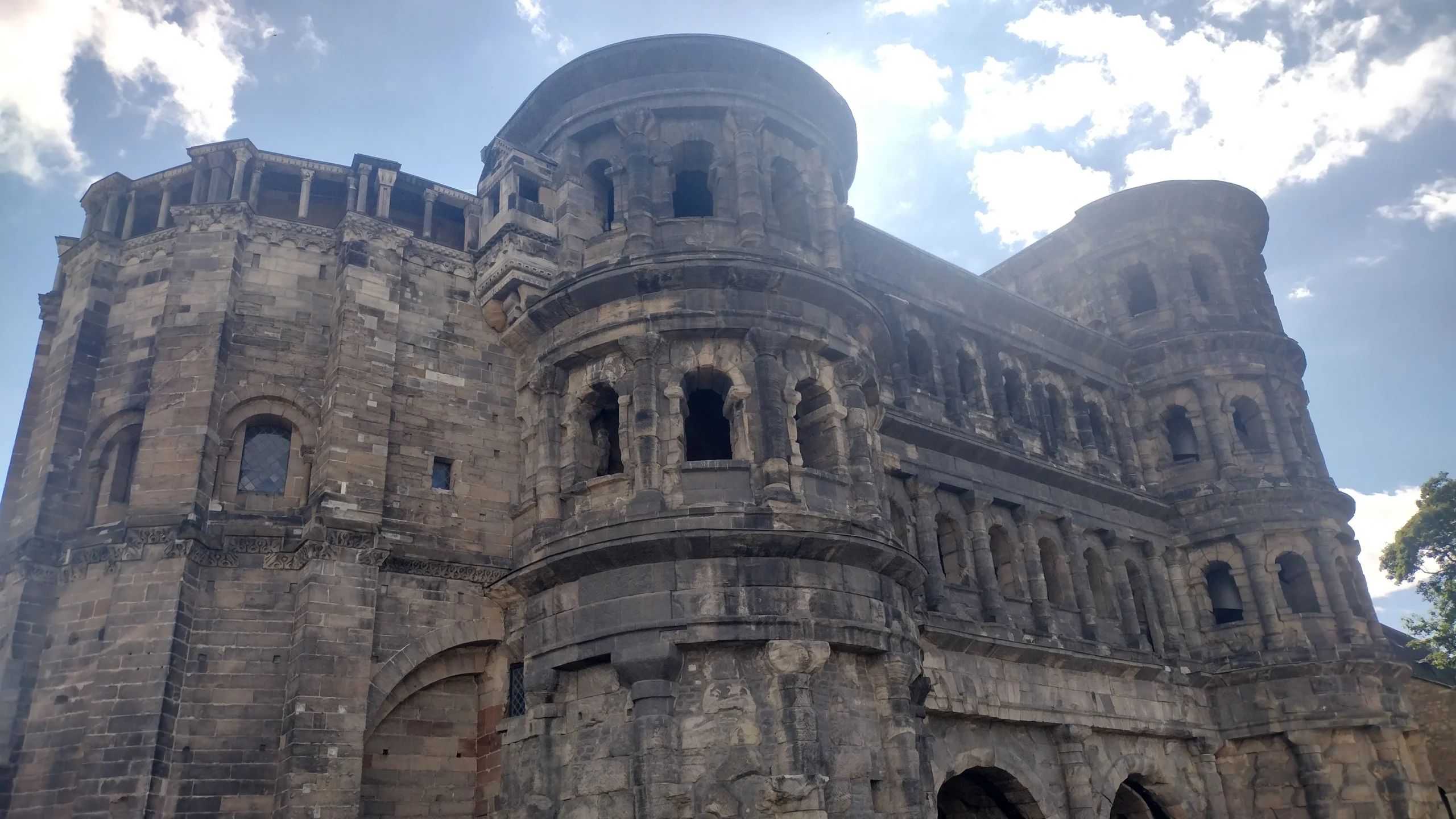
So what you see in Germany's oldest city is very much a matter of your perception. We've mostly come for the Roman and medieval sights, as well as a few glasses of wine, although as it turns out there's a big local festival on when we visit, probably the reason why we couldn't find a hotel in the city. Fortunately, parking's still possible and we set off through stalls selling some kind of lethal fruit punch, and other evidence of the festivities, to see Trier's most spectacular landmark, the Porta Nigra. This immense gateway dates back to the second century and gives some idea of how important Augusta Treverorum was in the Roman Empire.
The city became a provincial capital and, later, one of the most important places in the Western Roman Empire. For most of the fourth century, it was an imperial residence, ranking almost as high as Rome itself, and the Emperor Constantine spent several years here, building a lavish palace whose baths, audience hall and other remains can still be seen. Then, it seems, he found the business of trying to win and run an empire, not to mention stopping the persecution of the early Christians, something of a distraction and eventually moved east to found Constantinople.
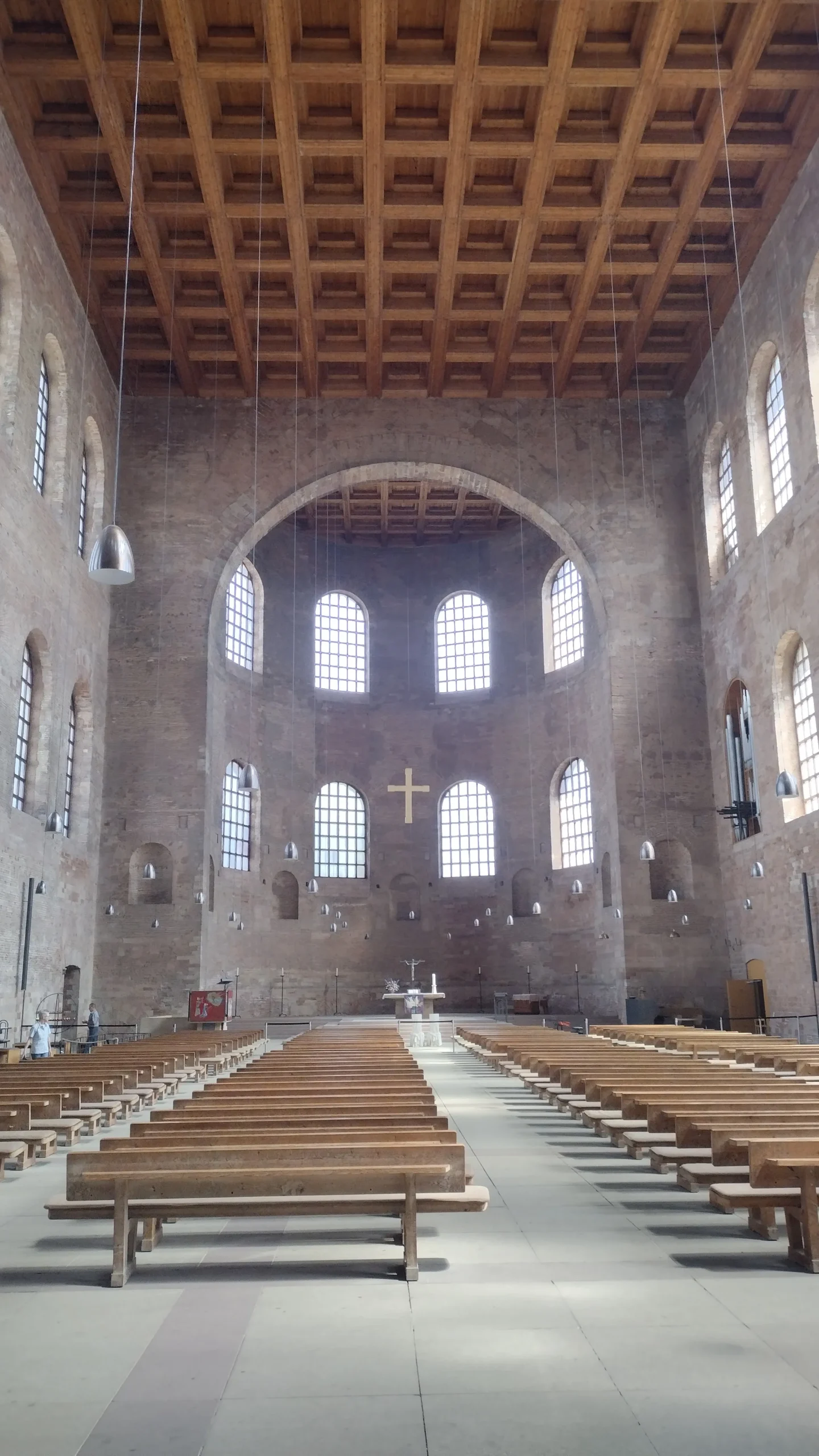
It's hardly surprising that such a huge Roman city should have left its mark on modern Trier. There are the remains of three sets of baths, an amphitheatre and a still-used Roman bridge, for example. Even some parts of the medieval Catholic Cathedral go back to Constantine's time, as it's supposed to have been built on top of a palace belonging to his mother, Saint Helena. Curiously, Constantine's Basilica, or Imperial Audience Hall, has met a parallel fate and is now a Protestant church, restored to its former glory by architects working for the 19th-century rulers of Trier, the kings of Prussia - a dynasty no strangers to imperial pretensions themselves.
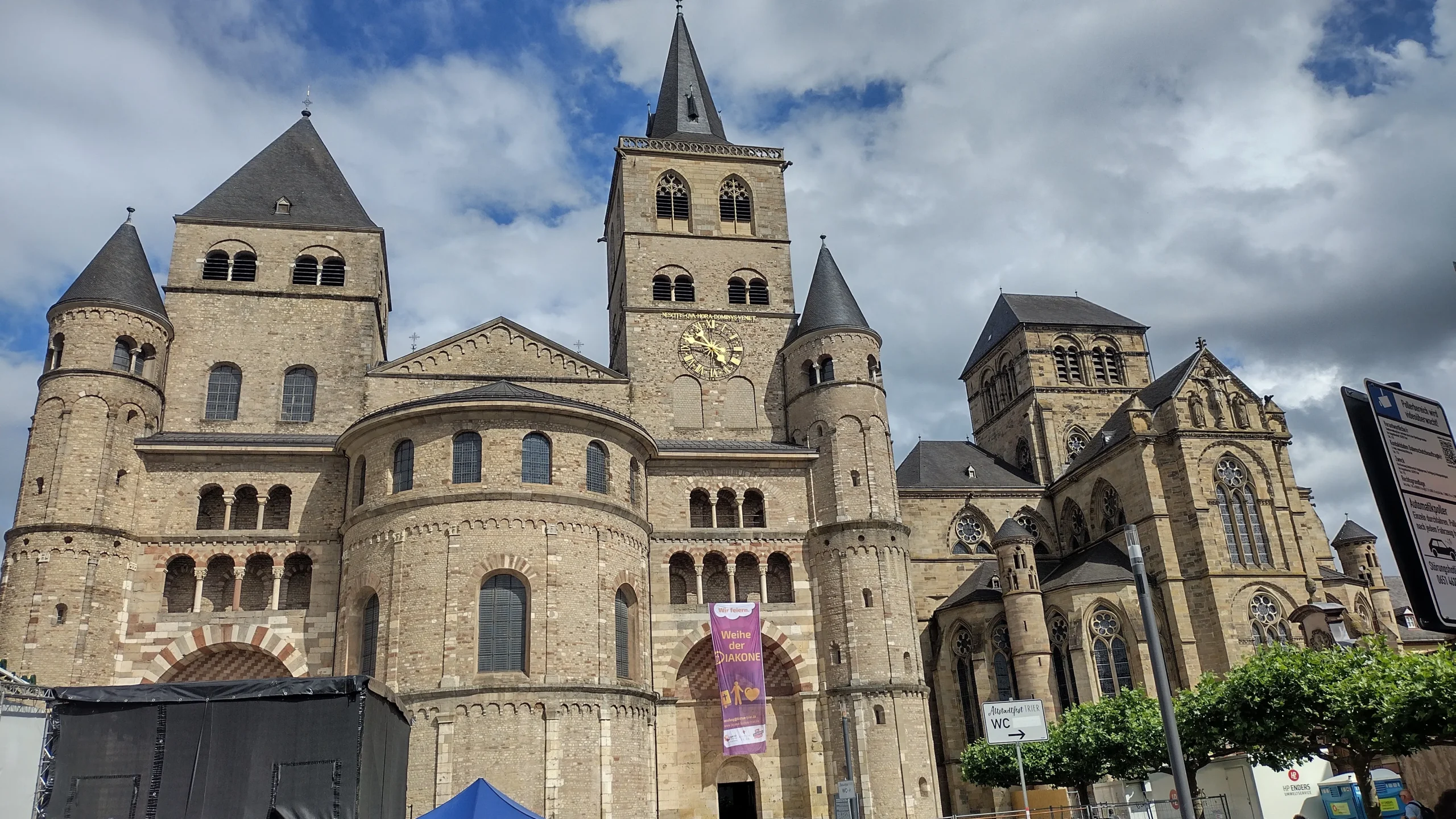
Once again, it's all about perceptions and interpretations. In one building, Roman heritage has been swallowed up by medieval tradition; in another the restoration of a non-religious building to make it a religious one has, paradoxically, emphasised its austere magnificence. And both Cathedral and Basilica had to be restored yet again after severe Allied bombing during the Second World War. In Trier, it's impossible to see where one story ends and another begins.
We sit down outside a restaurant and a friendly retired German starts talking to us. His interest quickens when we tell him we live in Spain. "I spend half the year in Malaga," he says - the German winter, of course. The way he sees it, things are not good in Germany, a sentiment we have heard elsewhere during our brief stay in the country. "Germany is kaput. Nobody wants to work anymore," he maintains. Although that's not necessarily how we find things when talking with our friendly waiter, originally from Bangladesh, who finds out I'm from England and tells me how much he'd like to visit his relatives in London. "But I couldn't take the time off," he says. "Much too busy here." It really does depend how you see things.